
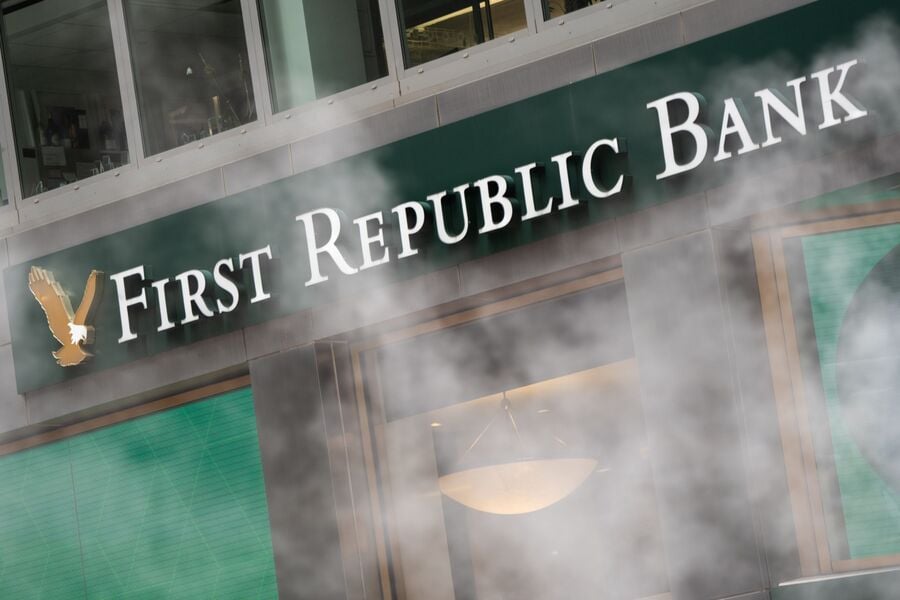
First Republic Bank plunged to a record low as investors sorted through rescue scenarios, none of which is likely to be good for current shareholders.
The San Francisco-based bank gained as much as 6.6% and then collapsed more than 50% before trading was halted amid speculation that a takeover by regulators, while not the only possibility in play, is becoming more likely.
U.S. officials are coordinating talks to rescue First Republic, with the Federal Deposit Insurance Corp., the Treasury and the Federal Reserve orchestrating meetings about throwing a lifeline, Reuters reported, citing unidentified people.
But some of the biggest U.S. banks, which have already contributed $30 billion in deposits to prop up First Republic, have balked at getting more involved and potentially throwing good money after bad, Bloomberg News reported.
The focus has shifted to a U.S. takeover, according to CNBC. For its part, First Republic has acknowledged it’s engaged in discussions with multiple parties about strategic options.
Some of the banks involved in the previous rescue favor the FDIC seizing First Republic and selling it off, Bloomberg reported. Such a resolution, they said, would be cleaner, even if banks lose some money, and some have already taken reserves. But it’s an outcome the FDIC would prefer to avoid, in part because of the multibillion-dollar hit to its own deposit insurance fund.
Either scenario is perilous for current stockholders. Analysts have said the existing shares have little or no value, regardless of whether the bank is salvaged by new owners or goes into receivership. The FDIC has specifically said in recent takeovers that shareholders won’t be protected.
First Republic has been under pressure ever since Silicon Valley Bank’s demise last month stoked concerns about the soundness of other regional banks in the U.S. First Republic was left paying more for funding than it earns on many of its assets, meaning it faces what analysts predict will be at least a year of losses.
The bank’s executives emphasized in an earnings report earlier this week that it has ample cash reserves.

South Carolina estate planning firm joins Osaic’s IBD network, citing succession planning tools and multigenerational growth resources.

A new SIFMA and KPMG study of more than 2,100 US investors finds satisfaction high, AI-only trust falling, and demand for human guidance growing across every generation.

Retail banks and private wealth firms scored 40 in Fitch's AI stress test, signaling possible one-notch downgrade risk under an adverse scenario.

Elsewhere, Wells Fargo Advisors adds a $400 million Morgan Stanley veteran in Naples as an ex-Cetera advisor goes independent with LPL.

According to a federal charges Bradley Heppner, 60, received more than $150 million in payments through funneling money from GWG Holdings to a shell company.
Knighthead Life entered the market with a competitive MYGA. A strong launch earned advisor confidence and paved the way for FIAs.
As AI makes financial information more accessible than ever, Lana Hock explains why human judgment, trust, and empathy remain the qualities clients value most in a financial advisor

