The hard selling was relentless, even infuriating, prospective customers said. Marketers called their homes, spammed their work email and impersonated friends, colleagues and government officials.
"CALLS REPEAT EVERY DAY. I SUBMIT A COMPLAINT EVERY DAY. NO CORRECTIVE ACTION TAKEN. WHAT CAN I DO???????????????????," a resident from Waterford, Pa., wrote in a July 2016 email.
Would-be clients were complaining about a single company,
Fisher Investments, government records show. Billionaire Ken Fisher, the firm's founder and chairman,
provoked a firestorm and
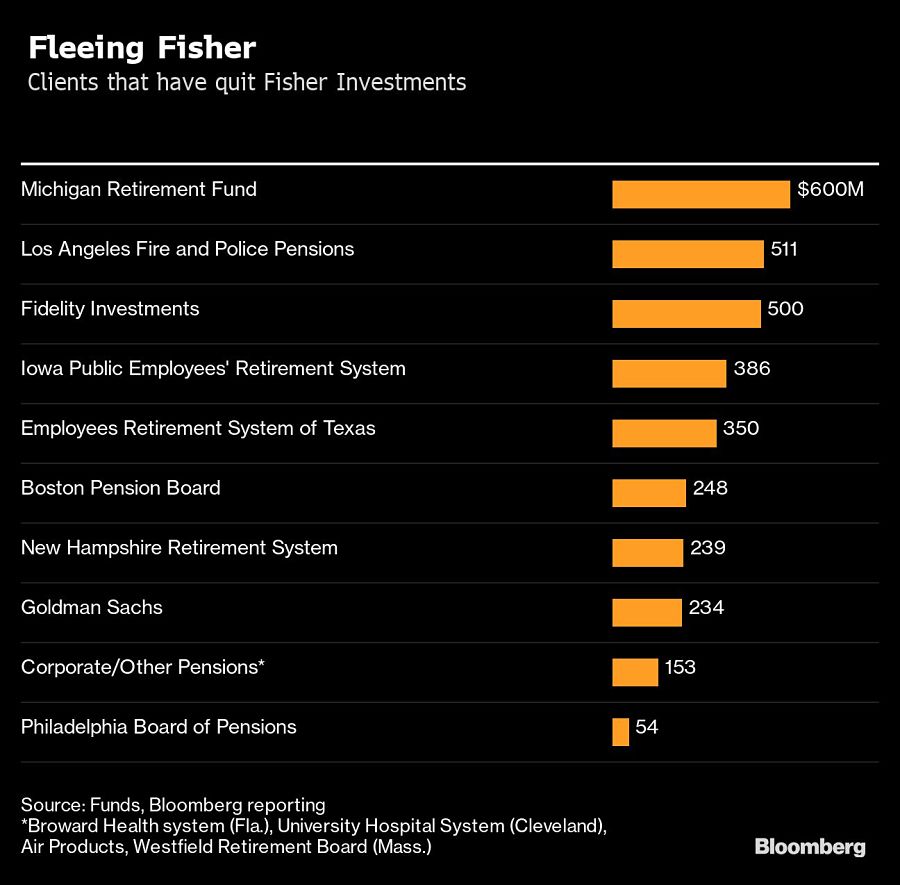
more than $3 billion in client defections after telling an investment conference on Oct. 8 that wooing clients is like "trying to get into a girl's pants."
Long before then, however, some prospects were already fuming because they said Fisher's sales force wouldn't take no for an answer. Since 2016, 125 people have filed grievances about Fisher with the Federal Trade Commission, according to records released under the U.S. Freedom of Information Act.
Industry giants Vanguard Group,
Fidelity Investments and
Charles Schwab Corp., each had more complaints. Vanguard, for example, had 190, the fewest of the three. But Fisher oversees about $114 billion, while the others manage trillions.
[Recommended video: Advice firm compliance manuals may need to be updated for June 2020]
John Dillard, a senior vice president at the Camas, Wash.-based investment firm, said the comments contained in the complaints to the FTC "bear no resemblance to Fisher Investments or its communications with prospective clients." (Ken Fisher has apologized for the comments at the conference.)
"We respectfully and professionally communicate with people who request information from us, and we only contact them using telephone numbers and email addresses people provide to us," Mr. Dillard said. "We do not make 'cold calls,' and we immediately add individuals to our contact suppression list if they tell us that they do not want us to contact them in the future."
The FTC complaints add to the descriptions of current and former Fisher employees that the company has
an aggressive sales culture that stands out in the often staid money management business. The FTC said the complaints hadn't necessarily been verified and, citing agency policy, declined to discuss whether they were under investigation.
Fisher has received no communications from the FTC relating to the kinds of complaints in the agency's public records disclosure to Bloomberg, according to a person familiar with the company's operations who asked not to be identified because of a policy of not discussing regulatory matters.
The FTC has sued hundreds of companies and people, alleging they have violated the National Do Not Call Registry or otherwise engaged in abusive telemarketing. The agency has collected more than $120 million as a result. The FTC hasn't filed any do-not-call cases against Fisher.
Fisher's high profile in the news recently and the number of complaints against the company may lead the FTC to investigate, according to Mozelle Thompson, who served as an FTC commissioner between 1997 and 2004. "It seems they would be within the gun sights of the FTC,"Mr. Thompson said.
Complaints about Fisher came from individuals in 35 states, with the most from Pennsylvania, Texas and California. Almost 90% involved phone calls. Prospects often considered them excessive, abusive or in violation of the rule forbidding contact with those who sign up for the Do Not Call Registry. The FTC said it redacted names and identifying information to protect citizens' privacy.
![]()
Some griped about being solicited at work, such as one aggrieved prospect from Durham, North Carolina in January 2017: "I am not interested and they keep calling. I know they need to reach their sales goals/quotas, but this is a work number. I do not want to be called."
In one case, Fisher solicited a customer's father who'd been dead for three years.
"I am not sure how they get their mailing lists, but it is appalling and upsetting that you would be sending mail to a deceased person," the child of the dead parent wrote from Louisville, Ken., in January.
Those who showed interest in offers for free investment advice found that it came with a steep cost: endless phone calls.
"When you send for a 'Free' brochure advertised on the internet, the company follows-up the material relentlessly on a weekly and sometimes daily basis," a prospect from Massachusetts wrote in March 2017.
Fisher would put pressure on unsophisticated consumers, according to a Washington State resident, who wrote in May 2018: "In their sales pitches they routinely ask prospective clients, many of whom are elderly and vulnerable, to hand over hundreds of thousands, if not millions of dollars to their care. This type of sales technique is despicable."
Mr. Dillard, the Fisher spokesman, disputed that allegation. "Dollar for dollar and client for client, we are proud to put our history of taking care of elderly clients up against anyone in the world," he said. "To argue we aren't world class in caring for elderly clients is blatantly false."
Some comments to the FTC suggested mounting desperation. "I have emailed them as well and asked them to stop. It just seems to get worse," one customer wrote. "It is way beyond harassment," said another.
Seven of the complaints fell under the category: "Calls pretending to be government, businesses or family and friend."
Other aggrieved prospects said they received what they considered spam email, at home and at work, as well as constant mailings.
The company is known for packing snail-mail boxes with thick missives on heavy embossed paper. One sought-after potential customer from Pasadena, Texas, wrote in June: "The large envelope I receive bi-weekly is very expensive and uses special paper. What a waste to our environment. Please help me stop Fisher Investments from sending me mail."
[More: Is it time for Ken Fisher to step down?]