
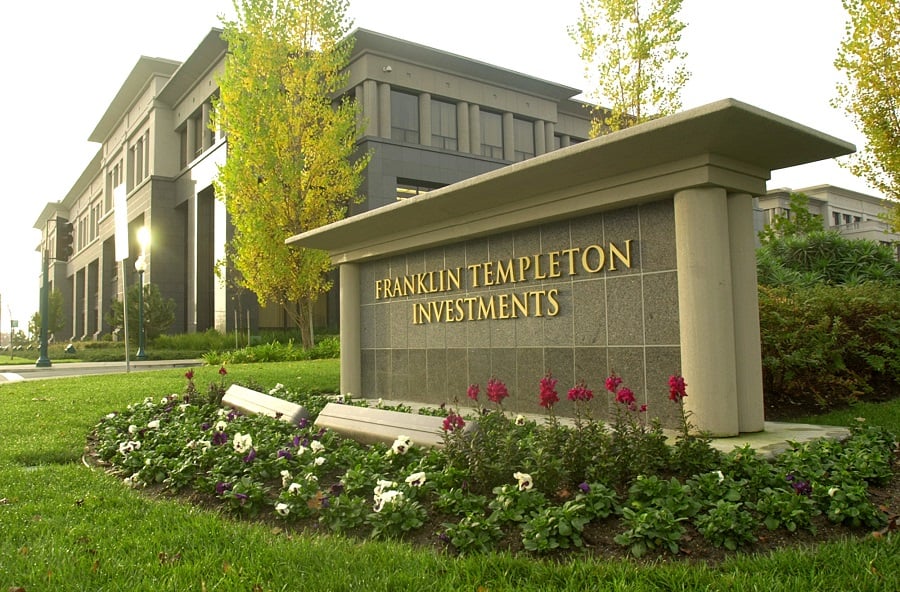
Franklin Resources Inc. will buy Lexington Partners for $1.75 billion to expand into private equity as its mutual fund business struggles. The asset manager's shares surged on the news.
The deal will complement Franklin’s offerings in real estate, private credit and hedge fund strategies, Franklin said in a statement Monday. After the transaction is closed, Franklin Templeton’s alternative assets under management will be about $200 billion.
The deal is the second in two weeks for the industry, after T. Rowe Price announced last Thursday that it was buying Oak Hill Advisors, a big player in alternative credit.
Mutual fund companies are making acquisitions to broaden their offerings and cushion the blow of losing customers who are favoring index funds. Franklin focuses on actively managed funds and has seen outflows as larger competitors such as Fidelity Investments and BlackRock Inc. have aggressively pushed into low-cost products including exchange-traded funds.
Franklin shares rose 14% at 9:42 a.m. in New York trading, the biggest gain since November 2016. The shares advanced 26% this year through Friday.
“This acquisition will position us to capitalize on the highly sought after secondary private equity market,” Jenny Johnson, chief executive of Franklin Templeton, said in the statement.
With low interest rates hobbling investor returns, the private equity industry is benefiting from robust demand for higher-yielding assets. Buyout firms including Blackstone Inc. and Carlyle Group Inc. have been raising record sums from investors.
San Mateo, California-based Franklin reported Monday that assets under management fell 1% in the last quarter to $1.53 trillion, partially due to long-term net outflows of $9.9 billion.
Closely held Lexington was founded in 1994 and has raised $55 billion. The firm is a big player in the booming secondaries market, which involves buying maturing portfolios from private equity investors seeking to cash out.
Lexington raised $14 billion for its ninth secondaries fund in 2020. Secondaries transactions have gained favor in private equity as institutional investors seek to offload stakes earlier in funds that can be locked up for a decade or more.
The transaction is expected close in the second fiscal quarter of 2022, Franklin said.
T. Rowe Price Group Inc. agreed to buy Oak Hill Advisors, one of the biggest players in alternative credit, for about $4.2 billion. The purchase was aimed at helping T. Rowe expand into private-debt investing.
Broadhaven Capital Partners, BofA Securities, and Citigroup Inc. were financial advisers to Franklin Templeton. Goldman Sachs Group Inc. advised to Lexington Partners.

Goldman Sachs retirement survey finds 83% want guaranteed income, while the annuities providing that income increasingly hold private credit.

The AI meeting assistant's Advisor Intelligence plugin turns client conversation data into annual reviews, tax scans and attrition alerts.

Chuck Roberts and Stifel have been facing scrutiny due to sales of structured products and structured notes.

Among other updates, the proposals would let advisors to regulated funds earn performance fees and allow interval funds to offer monthly repurchases.

What will financial advice look like 20 years from now? Evan Vladem explores how AI may transform wealth management while reinforcing the enduring value of human guidance, trust, and empathy.
As AI makes financial information more accessible than ever, Lana Hock explains why human judgment, trust, and empathy remain the qualities clients value most in a financial advisor
Northern Trust’s Ken Lassner shows advisors how to convert volatility into after-tax portfolio gains

