
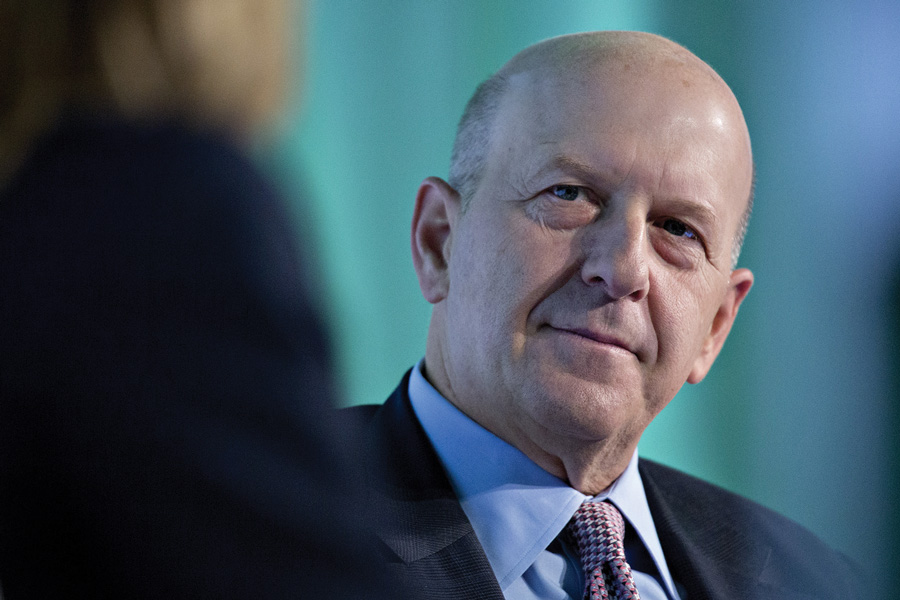
Goldman Sachs is considering selling part of its wealth management division, the registered investment advisor unit formerly known as United Capital Financial Partners, in a bid to shift its focus back to the ultra-rich, the company said Monday.
The Wall Street titan’s RIA, since renamed Personal Financial Management, caters to the high-net worth and oversees approximately $29 billion in assets under management. This division was integrated into the Goldman portfolio through the acquisition of United Capital in 2019 in a deal worth $750 million.
While a clear effort to broaden the bank’s client base, PFM has retained a relatively modest presence in the overall business. Goldman’s private wealth unit, geared towards the ultra-high-net worth, safeguards a colossal $1 trillion in assets and has more than 16,000 clients.
Reuters said that news of a potential sale, which was first reported by Citywire, comes after CEO David Solomon spearheaded a comprehensive reorganization, dividing the institution into three distinct units, while simultaneously scaling down the bank's objectives for its consumer-oriented operations. The bank's fintech venture, GreenSky, is also for sale.
Solomon is a man under pressure to reverse the storied bank’s fortunes after the bank’s second-quarter profits plummeted by a staggering 60%. This dismal performance was attributed to write-offs linked to its consumer-centric endeavors and real estate investments, which inevitably impacted earnings.
Solomon’s character is also under the microscope after he was the subject of a recent New York Magazine profile, headlined “Is David Solomon Too Big a Jerk to Run Goldman Sachs?” The Financial Times has since reported he retains board and investor backing amid an “internal backlash.” These issues will reportedly be on the agenda of the bank’s board meeting next month.
People familiar with several members of the board say they remain supportive of Solomon and “had taken the view they should not be swayed by what they see as external noise,” FT reported. Goldman Sachs declined to comment to the newspaper.
Strategically, the sale of what was United Capital emphasizes a move towards cementing the bank’s core wealth management sector, targeting the ultra-affluent.
"In this context, Personal Financial Management (PFM), our proprietary RIA business, is a very small component of our overall wealth franchise," Goldman Sachs said in a statement provided to InvestmentNews. "We see continued opportunities to invest in this segment but with less strategic impact to GS. As such, we are currently evaluating alternatives for that business as we determine where to invest our resources and where we see the greatest opportunity. We expect to find an outcome that benefits both our clients and our advisors.
"We also continue to invest in and grow our services to the third-party RIA market through our asset management, custody, structured notes, stock lending and deposit taking products and services."
According to Reuters, this reaffirms the bank's strategic blueprint unveiled during its investor day held in late February. Complementing its initiatives are other integral services including workplace financial planning facilitated by Ayco, and the Marcus Savings platform.

Retiring RIA seller David Laidlaw alleges the Carnegie valued his stake on $11.7 million EBITA while pitching potential buyers on $21.3 million.

New tool gives RIAs and family offices AI help vetting private market deals, with some users reportedly halving review time.

Investors got projected returns dressed up as real ones, SEC says

Parents must still act to get the $1,000 federal seed and employer contributions, giving financial advisors a role in the rollout.

FINRA booted Rudy Anguiano from the industry for “conversion - the intentional and unauthorized taking of another person’s property.”
As AI makes financial information more accessible than ever, Lana Hock explains why human judgment, trust, and empathy remain the qualities clients value most in a financial advisor
Northern Trust’s Ken Lassner shows advisors how to convert volatility into after-tax portfolio gains

