

The idea that you can’t go wrong investing in brick and mortar is robustly dismissed by new research that shows just how risky these assets can be.
Among residential real estate investors, 90% said that they have lost money on their investments, with 52% revealing that they have lost at least $100,000 on a single investment and 42% losing at least $200,000.
The poll by education resource Clever Real Estate found that 45% of respondents have been almost ruined financially by a residential real estate investment and 40% with they had never invested in the asset class.
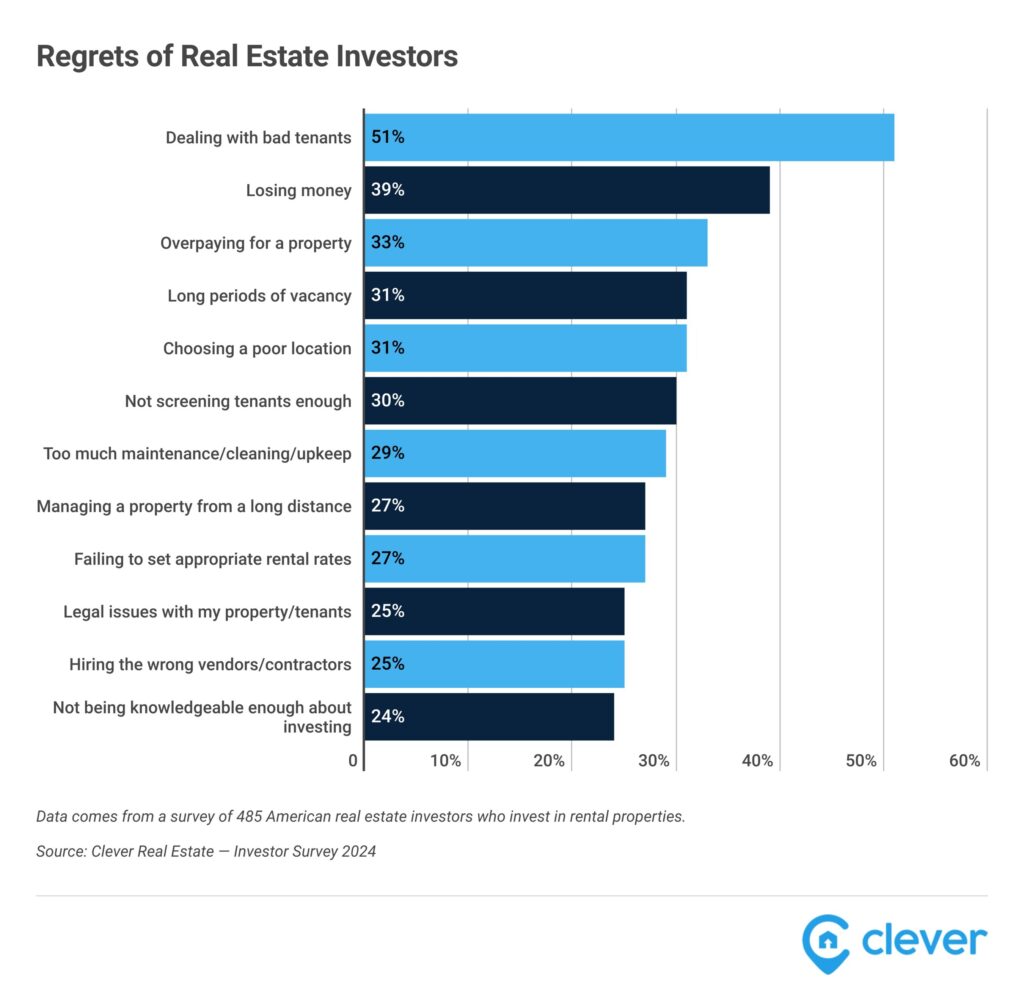
Almost nine in ten of those who took part in the poll said they have regrets about their investments with dealing with bad tenants and severe property damage cause by tenants among the main issues.
Almost two thirds of investors said they have to deal with complaints about their tenants from neighbors at least once a week, 56% have had to evict a tenant, and 61% say they have to track down missed rent payments every month.
That said, four in ten respondents said they rely on their real estate investment income and 75% are making at least as much in 2024 as they were last year with 41% making more compared to 14% who are making less.
Most respondents are investing in more than one type of residential real estate investment, including traditional long-term rentals (51%), buying land for future development (45%), house-flipping (42%), and short-term or vacation rentals (40%).
High interest rates, high home prices, and inflation are the top concerns identified by the study.

LPL Financial and Raymond James also add independent advisors from Osaic and Edward Jones in Michigan and Arizona.

The SEC-registered RIA advises on more than $1 billion in client assets, with no advisory fee through 2027 and no human financial advisors.

95.8% of house trades were winners. For clients? The SEC says just 14.9%.

The complaint says Duolingo added friction on purpose, then lied about it.

The four wirehouse firms lost 1,449 experienced advisors and recruited 932 in the first six months of the year, according to Diamond Consultants.
Knighthead Life entered the market with a competitive MYGA. A strong launch earned advisor confidence and paved the way for FIAs.
As AI makes financial information more accessible than ever, Lana Hock explains why human judgment, trust, and empathy remain the qualities clients value most in a financial advisor

