
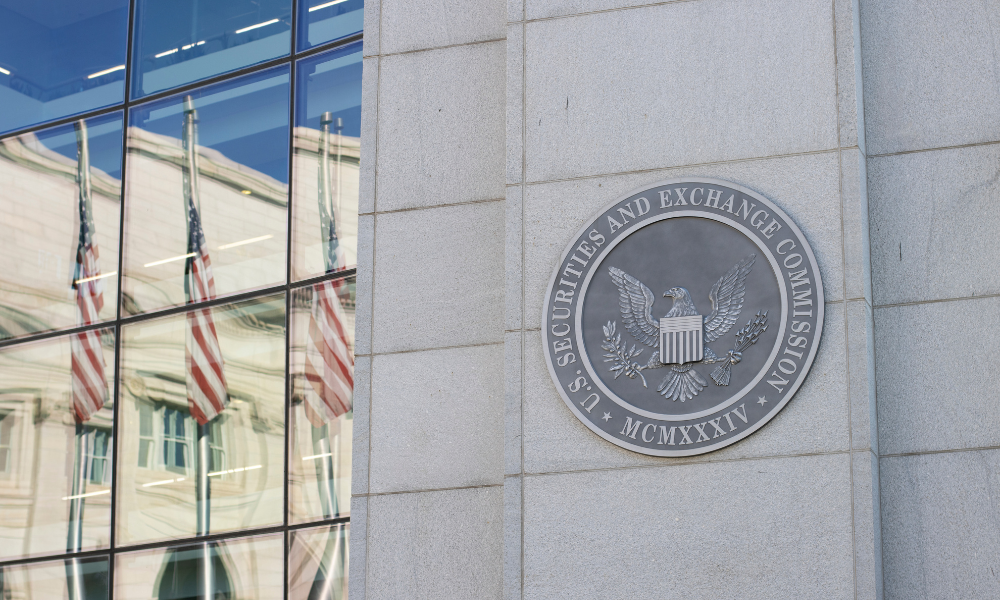
Donald Trump’s return to the White House is set to lead to changes in the way investment managers are regulated, but what could that look like?
With Wall Street firms including Goldman Sachs and Citi seeing their stock surge after Wednesday’s election result, experts including former senior regulators, chief compliance officers, LPs, and lawyers have given their reading of the potential shift in priorities for the Securities and Exchange Commission.
Firstly, advisory firm Iron Road Partners’ analytical note to clients highlights that “the upcoming change in administration will impact the regulatory landscape for investment managers, likely shifting focus areas and marking a new phase in the regulatory cycle” while noting that there will no clear steer on this until a new SEC chair is appointed – which it says could be as far as nine months away.
However, the team’s analysis is that there will be “a shift toward a more deregulatory SEC stance, which could introduce future risks for investment managers who may grow too comfortable or become complacent with short term compliance efforts.”
The reality is also expected to be mixed with some areas of investment manager operations more likely to face tighter regulations while others are relaxed.
Specifically on enforcement, Iron Road Partners says issues that mostly affect institutional investors and which are technical violations that do not result in investor harm may be reduced in importance while those impacting retail investors, especially where there is clear investor harm, will be deemed of greater importance.
Registered investment companies, marketing rule cases, and Reg BI could all gain greater importance, while crypto cases may face a lighter touch unless there is fraud.
Much of this priority shift could carry over to examinations.
The firm also sees potential changes to rulemaking with a focus on deregulation and simplification such as more practical guidance related to the Marketing Rule – which advisors have said is currently hard to navigate - and rules easing retail investors’ access to private funds and other complex financial products.
Meanwhile, the Securities and Capital Markets attorneys at New York law firm Harter Secrest & Emery also expect there to be some significant changes ahead.
This could include intervention by Elon Musk, who they note “has been subject of SEC enforcement actions in the past and has great disdain for the SEC.”
If, as has been suggested, the uber-rich businessman takes a role in the Trump administration, potentially looking at government efficiency, the law firm team believes that “it is possible that he would try to gut the SEC or at the very least gut its enforcement mechanisms.”
Aside from Musk, the team will be watching to see if SEC rules face new legal challenges and that “the SEC is unlikely to defend the more controversial rules subject to current court challenges – namely the climate disclosure rule that has been at the heart of numerous challenges since being adopted by the SEC in the spring.”

New launches tackle succession planning, AI-driven email management and heir retention ahead of the great wealth transfer

For sellers weighing PE deals, due diligence shouldn't end with the offer on the table – the acquiring platform and the M&A advisor deserve a hard look as well.

South Carolina estate planning firm joins Osaic’s IBD network, citing succession planning tools and multigenerational growth resources.

A new SIFMA and KPMG study of more than 2,100 US investors finds satisfaction high, AI-only trust falling, and demand for human guidance growing across every generation.

Retail banks and private wealth firms scored 40 in Fitch's AI stress test, signaling possible one-notch downgrade risk under an adverse scenario.
Knighthead Life entered the market with a competitive MYGA. A strong launch earned advisor confidence and paved the way for FIAs.
As AI makes financial information more accessible than ever, Lana Hock explains why human judgment, trust, and empathy remain the qualities clients value most in a financial advisor

