
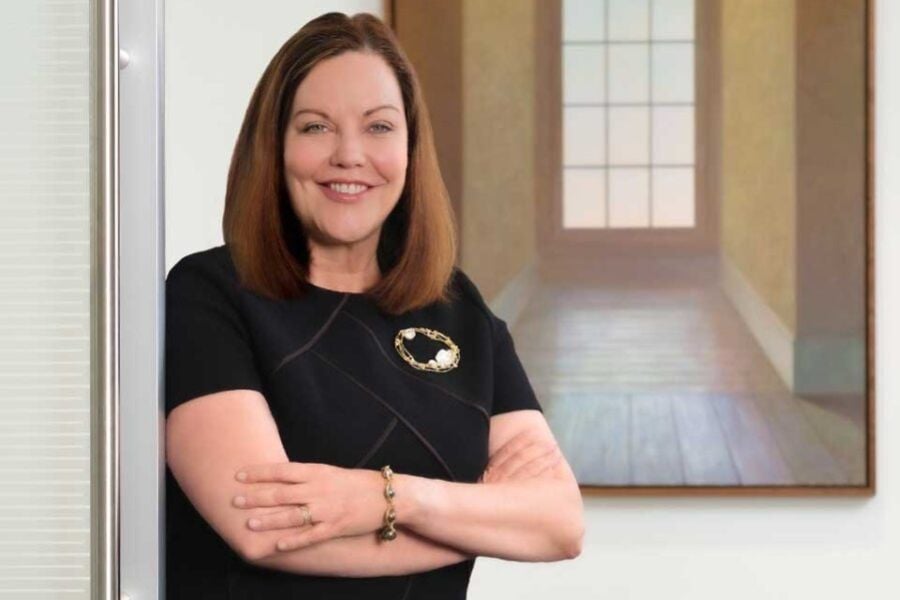
Cheryl Holland’s journey into the world of wealth management was ignited by a chance encounter at a conference of the International Association of Financial Planners.
There, she met a gentleman who made a profound statement that ultimately changed the course of her career.
“The future of everyone in this room is to charge a fee for your advice rather than sell a product,” Holland recalls him saying. “And literally the light bulb went off in my head — I said, ‘That’s exactly what I want to do.’”
With newfound clarity and determination, Holland embarked on a path of self-reflection. She left Merrill Lynch, pursued her certified financial planner designation, and started offering financial advice at a rate of $25 per hour.
“I didn’t know what I was doing or talking about, though,” she said. “So it might not have been worth it.”
Holland’s journey, like that of many of her peers, was a self-taught one. However, she’s thrilled to see just how far the industry has evolved into a true profession, complete with methodologies and young professionals eager to enter the field.
Twenty-five years ago, Holland founded Abacus Planning Group — and, from its inception, the firm has operated as a well-balanced three-legged stool.
“We have a team dedicated strictly to portfolio management,” Holland said. “Their day-to-day work revolves around the markets, individual portfolio management and tailoring execution and communication to clients.”
Complementing this team, Abacus employs a group of certified financial planners whose primary role is financial planning. They tackle a wide range of financial aspects, from tax planning and insurance review to estate planning and aligning client goals with long-term strategies.
Interestingly, over time, Abacus’s operations team has grown to become the largest within the organization — something Holland attributes to good old-fashioned teamwork. “If you have excellent data on your team and your clients, you can do a much better job.”
Holland acknowledges that Abacus’s location, in Columbia, South Carolina — not a terribly wealthy state — has shaped its approach to talent acquisition.
“We have always had to compete differently for talent,” she says. Approximately 20% of the team has been virtual, and an additional 10% works on a more sporadic basis. The firm’s experience with remote work was not new, but the challenge lay in adapting to an environment devoid of face-to-face interaction and mentoring opportunities.
“We had to think about how we behave together as an organization when we don’t see each other,” Holland said. “How do you keep morale high when things feel low? Not just for your clients, but for your team? All in all, we came out of all of this with a better sense of how to mentor and how to develop.”

New Allspring research finds 401(k) participants want guidance on income and rollovers, not just portfolio automation.

Aging homeowners hold record housing wealth - but most advisors still aren't bringing it into retirement plans

$1.7M invested from an inheritance. Then the phone went dead.

The pre-IPO platform sold $430M in units while allegedly rigging prices behind the scenes.

A Nationwide survey finds 47% of GLP-1 users have never discussed the drugs’ financial impact with an advisor, even as many dip into savings.
Knighthead Life entered the market with a competitive MYGA. A strong launch earned advisor confidence and paved the way for FIAs.
As AI makes financial information more accessible than ever, Lana Hock explains why human judgment, trust, and empathy remain the qualities clients value most in a financial advisor

