
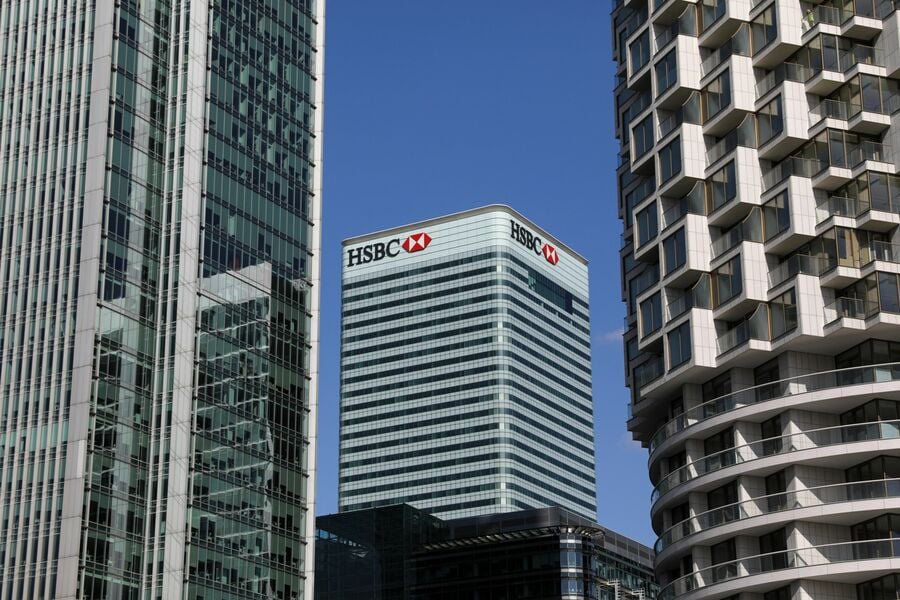
HSBC Holdings Plc has become one of the first banks to set targets for limiting the carbon footprint of its capital markets business.
The bank’s so-called facilitated emissions targets will apply to its underwriting of deals for the oil and gas, as well as power and utilities sectors, according to its annual report published on Wednesday.
The calculation is new, and follows a recent industrywide agreement to disclose the emissions associated with banks’ capital markets operations. HSBC said it will include debt and equity capital markets as well as syndicated loans in the disclosure.
“We recognize that data, methodologies and standards for measuring emissions and for target setting will continue to evolve,” the London-based bank said on Wednesday in connection with the publication of its annual results.
Disclosure guidelines around facilitated emissions were introduced by the Partnership for Carbon Accounting Financials at the end of 2023. The PCAF accord asks banks to disclose 33% of greenhouse gas emissions associated with bond and equity underwriting. That’s in line with a proposal put forward by an eight-member working group chaired by Barclays Plc and Morgan Stanley, and of which HSBC was also a member.
HSBC’s facilitated emissions:
Though banks have long been expected to publish the carbon footprint associated with their loans books, known as financed emissions, coming up with estimates for facilitated emissions has remained a divisive subject. That’s because corporate bond sales rarely remain on a bank’s balance sheet once they’re issued.
“As we are at the beginning of our journey to track and measure progress, we believe it would be premature to infer future trends from the 2019 to 2022 progress at this stage,” HSBC said.
Jeanne Martin, head of banking program at London-based climate nonprofit ShareAction, said a 100% target — instead of the 33% agreed by PCAF — would be better for the environment.
“This is a missed opportunity for the bank to show it is serious about its green credentials and meeting its own net zero goal,” Martin said in a statement. “The bank needs to set ambitious targets and stick to them to prevent catastrophic global warming that puts people and planet at risk.”

Elsewhere, Wells Fargo Advisors adds a $400 million Morgan Stanley veteran in Naples as an ex-Cetera advisor goes independent with LPL

According to a federal charges Bradley Heppner, 60, received more than $150 million in payments through funneling money from GWG Holdings to a shell company.

A $1B fund allegedly skimmed 30% off the top, then swapped cash for locked-up stock.

Insiders allegedly rewrote projections three times in four days.

TCI Wealth Advisors also has also tapped JIFFYAI to unify onboarding and servicing, while TradePMR adds ICE market data to its Fusion advisor platform
Knighthead Life entered the market with a competitive MYGA. A strong launch earned advisor confidence and paved the way for FIAs.
As AI makes financial information more accessible than ever, Lana Hock explains why human judgment, trust, and empathy remain the qualities clients value most in a financial advisor

