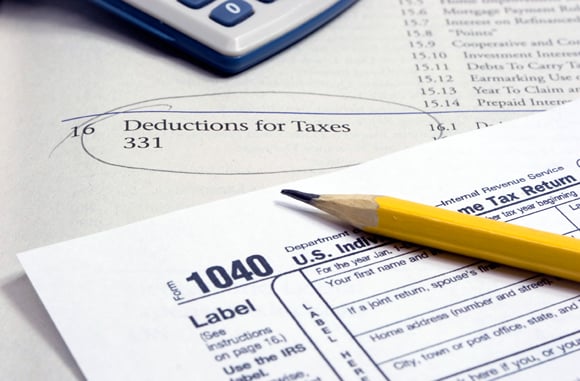
Taxpayers who claim deductions for home-mortgage interest, gifts to charity and state and local taxes will have to wait until middle to late February to file their 2010 returns.
The
Internal Revenue Service attributed the late start of the filing season to changes in tax law for 2010 that were finished last week. The agency needs extra time to put processing systems in place, the IRS said today.
“The majority of taxpayers will be able to fill out their tax returns and file them as they normally do,” IRS Commissioner Douglas Shulman said in a statement. “We will do everything we can to minimize the impact of recent tax law changes on other taxpayers. The IRS will work through the holidays and into the new year to get our systems reprogrammed and ensure taxpayers have a smooth tax season.”
The delay also applies to filers preparing to take advantage of a deduction for college tuition and fees of up to $4,000, and a separate $250 deduction for teachers' out-of- pocket classroom expenses.
The late start to the filing season will affect an estimated one third of U.S. taxpayers who itemize their deductions rather than claim the standard deduction, which for 2010 is $11,400 for a married couple filing jointly and $5,700 for individuals. According to IRS data for 2008, 33.8 percent of individual returns, or 48.2 million, included itemized deductions.
The changes don't affect the April 15 deadline for filing tax returns. Many taxpayers don't file until close to that deadline, in part because it can take time to gather necessary documents.
More than half of married couples filing jointly itemize their deductions, and taxpayers who itemize tend to have higher incomes. They received 69.4 percent of adjusted gross income in 2008, according to IRS data, more than double their share of the U.S. population.
Alan Straus, a New York-based certified public accountant, said the delay would affect taxpayers who are anticipating refund checks from the IRS. “For most of my clients, they're upper income and they won't file until much later anyway because their info isn't complete,” said Straus, former chairman of the New York State Society of CPA's relations with the IRS committee. “This is only a big deal to those expecting refunds and counting on them quickly. For those people it will be unfortunate.”
The change is unlikely to affect taxpayers who wait until close to the April 15 filing deadline to complete their returns. In 2010, more than 40 percent of taxpayers filed their returns after March 26.
Lou Crandall, chief economist at Wrightson ICAP LLC in Jersey City, New Jersey, said the IRS move could delay between $10 billion and $20 billion in tax refunds that would have gone out in late January and early February.
That won't be enough of a cushion to prevent the Treasury Department from hitting the $14.294 trillion federal debt ceiling by April, Crandall said, after which it can't sell additional bonds to finance the budget deficit.
“This should not affect the timing of the debt ceiling. My projections suggest that the Treasury will not get close until early April, and there is a chance that it might not have to employ accounting tools until May,” Crandall said. “The backlog from this should be worked off before it is relevant.”
--Bloomberg News--