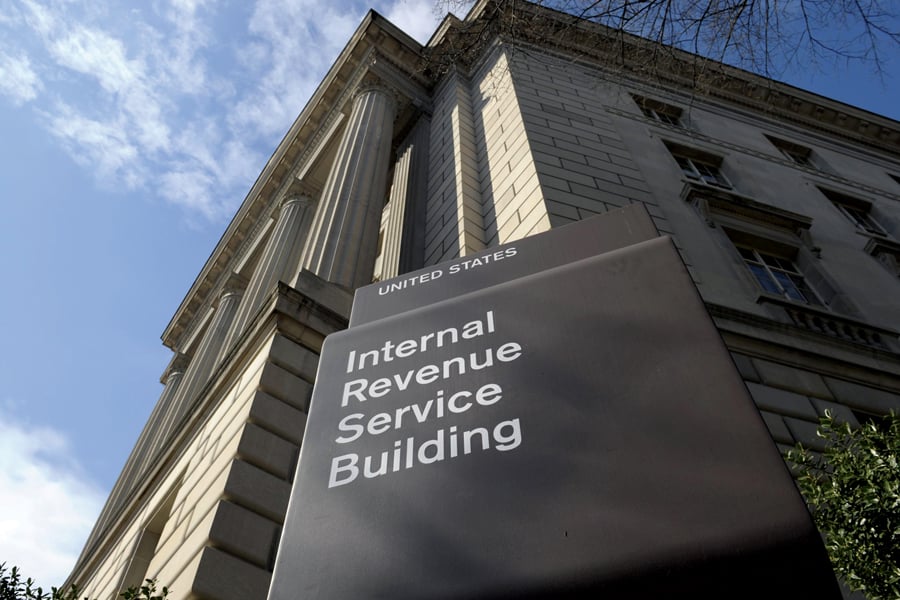
The
Internal Revenue Service unveiled proposed regulations Friday for what Treasury Secretary Steven Mnuchin says could be a $100 billion investment opportunity for real estate and businesses in distressed areas.
The rules provide investors with guidelines about how they can qualify for special tax breaks in so-called opportunity zones — underdeveloped areas where the U.S. government is trying to promote investment. They specify that only capital gains can qualify for the benefit and provide details on what types of entities can invest in Opportunity Zone funds, along with which projects qualify, a Treasury official said during a call with reporters.
Several prominent investors, such as
Goldman Sachs Group Inc.,
hedge fund EJF Capital and New York-focused RXR Realty, have already begun making investments in opportunity zones or started raising funds to do so. Enterprise Community Partners, one of the largest affordable-housing groups in the U.S., said in September that it was partnering on an opportunity fund to revive Main Streets in small towns.
The rules are likely to spur even more activity from investors and funds who were awaiting guidance and hoping to close deals before the end of the year. The Treasury Department will issue another set of regulations later this year addressing questions about the ongoing operations of a fund, including whether a fund can buy and sell assets over its lifetime, the Treasury official said.
Under President Donald J. Trump's tax law, investors can take proceeds that would be subject to capital gains taxes — such as those from the sale of a business or stock — and put them into Opportunity Zone funds to defer and potentially reduce their capital gains taxes. They can also avoid taxes on the funds' gains completely.
"This is something for people like those who were one of the first few hundred employees at Google or Twitter, and don't want a boatload of money all tied up in the company's stock," said Victor Jaramillo, of counsel at law firm Caplin & Drysdale.
The idea is also popular among people already investing in real estate as a way to boost returns on low-income housing and commercial real estate projects by investing in riskier neighborhoods. There are roughly 8,700 opportunity zones throughout the U.S. spanning aging Rust Belt towns, low-income areas of major cities and rural swaths of the West.
Funds have already been established and raising money even before Friday's rules, said Michael Novogradac, a specialist in tax breaks for low-income housing, community development and renewable energy. Because of the uncertainty about what the regulations would say, the projects they've identified generally include real estate where the land is a very small fraction of the cost, he said.
The IRS rules specify that funds don't have to include the value of the land when calculating how much the law requires them to spend renovating or refurbishing property, according to the Treasury official. For example, if a fund were to pay $1 million for a warehouse and land, with the building valued at $400,000, the fund has to spend at least what the building is valued — not the total purchase price — in renovations.
That's a boon to investors in urban areas where land can be a significant portion of a project's cost. Developers can spend less to meet the rules for what constitutes "substantially improving" a building under the law. For some projects, such as affordable housing, investors could have been forced to pay more to improve the building than they would have been able to recoup in rental income, said Mary Burke Baker, a government affairs counselor at law firm K&L Gates.
"There is some concern that the good projects — those in the more desirable areas — will be competitive," Baker said. "In the urban areas it will be easier to attract investment than in rural areas."
Investors have 180 days from the sale of their stock or business to put the proceeds in an opportunity fund to qualify for the tax breaks. The capital gains taxes on those proceeds are deferred until 2026 and could be reduced by as much as 15%. Investors can avoid capital gains taxes altogether on any appreciation of the fund if they hold the investments for at least 10 years.
The IRS rules also say that funds have 30 months from when they get investors' money to do the renovations, the official said.
Despite the potential for billions of dollars to flow to communities that haven't seen much investment, some researchers and non-profits have criticized the tax law's opportunity zone provision because it could allow savvy real estate developers to exploit the break for projects they may have done anyway. The targeted development could also displace lower-income residents.
Learn more about the
challenges and critiques of opportunity zone.
"There are clearly people who like the returns and the tax benefits," said Michael Shulman, a partner at law firm Shearman & Sterling. "But the social impact investing side is also really attractive to people."