
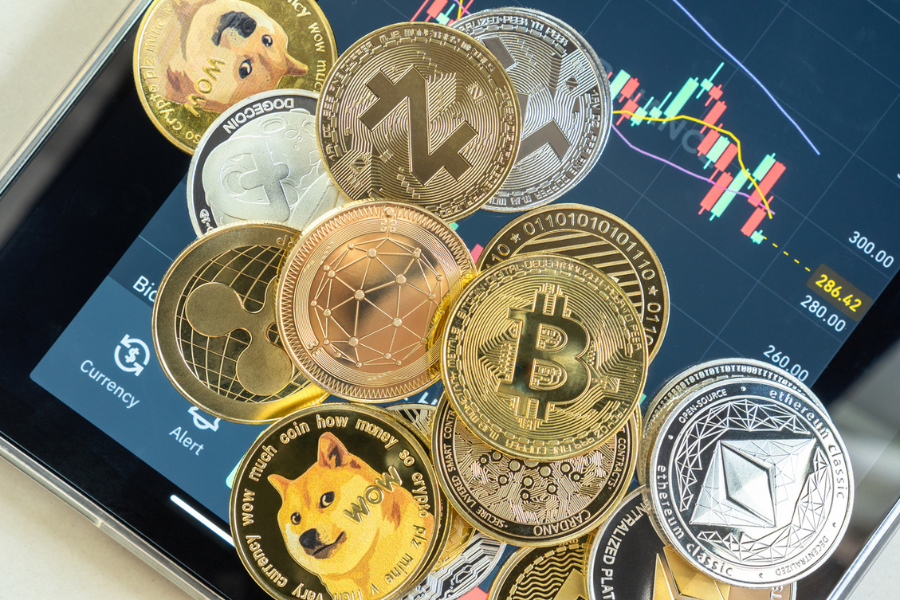
Stocks and bonds have delivered better returns than Bitcoin this quarter, raising the possibility that a crypto boom is running out of steam.
Gauges of global equities, fixed income and commodities are all ahead of the largest digital asset, which shed about 5% from the start of April through 1:15 p.m. Friday in Singapore. Gold also showed the token a clean pair of heels.
Bitcoin retreated after setting a record of $73,798 in March and rallies back toward the peak have repeatedly fizzled. Developments that earlier excited animal spirits now struggle to do so, such as inflows into US Bitcoin exchange-traded funds or optimism over eventual Federal Reserve interest-rate cuts.
For Noelle Acheson, author of the Crypto Is Macro Now newsletter, a chunk of the subscriptions for the five-month-old US ETFs may be from existing Bitcoin holders. “In other words, not all the ETF inflows represent new money coming into the market, and only new money will move the price,” she wrote.
JPMorgan Chase & Co. strategists led by Nikolaos Panigirtzoglou also explored the nature of the demand for the products, which have attracted about $15 billion of net inflows to date, according to data compiled by Bloomberg.
They said “there has likely been a significant rotation away from digital wallets on exchanges to the new spot-Bitcoin ETFs.” Stripping that out, they estimate this year’s net flow to crypto — including ETFs, fundraising by venture capital portfolios and the “impulse” implied by CME Group futures — at $12 billion.
That’s lower than about $45 billion in 2021 and roughly $40 billion in 2022, the strategists wrote in a note, adding they are “skeptical” the the current 2024 pace of inflows will continue for the rest of the year.
Bitcoin changed hands at $66,750 as of 1:15 p.m. Friday in Singapore. It has quadrupled since the start of last year in a comeback from a deep bear market in 2022. The token’s biggest backers argue prices of $100,000 or more will materialize in time, while critics say crypto is devoid of intrinsic value.
Bitcoin rose 67% in the three months through March, far ahead of indexes of traditional assets. This quarter, Bloomberg gauges of global bonds, equities and raw materials range from broadly flat to up over 5%, enough to outdo Bitcoin.
Sales by Bitcoin miners to cope with more difficult circumstances may be another factor behind the token’s recent torpor, Acheson said. Miners receive the token as a reward for operating powerful computers that underpin the digital ledger. The rewards are halved every four years and the latest reduction in April created a more challenging backdrop for mining businesses.

When advisors have tech to handle meeting prep and organization, it frees up time they can reinvest more thoughtfully into helping clients.

LPL Financial and Raymond James also add independent advisors from Osaic and Edward Jones in Michigan and Arizona.

The SEC-registered RIA advises on more than $1 billion in client assets, with no advisory fee through 2027 and no human financial advisors.

95.8% of house trades were winners. For clients? The SEC says just 14.9%.

The complaint says Duolingo added friction on purpose, then lied about it.
Knighthead Life entered the market with a competitive MYGA. A strong launch earned advisor confidence and paved the way for FIAs.
As AI makes financial information more accessible than ever, Lana Hock explains why human judgment, trust, and empathy remain the qualities clients value most in a financial advisor

