
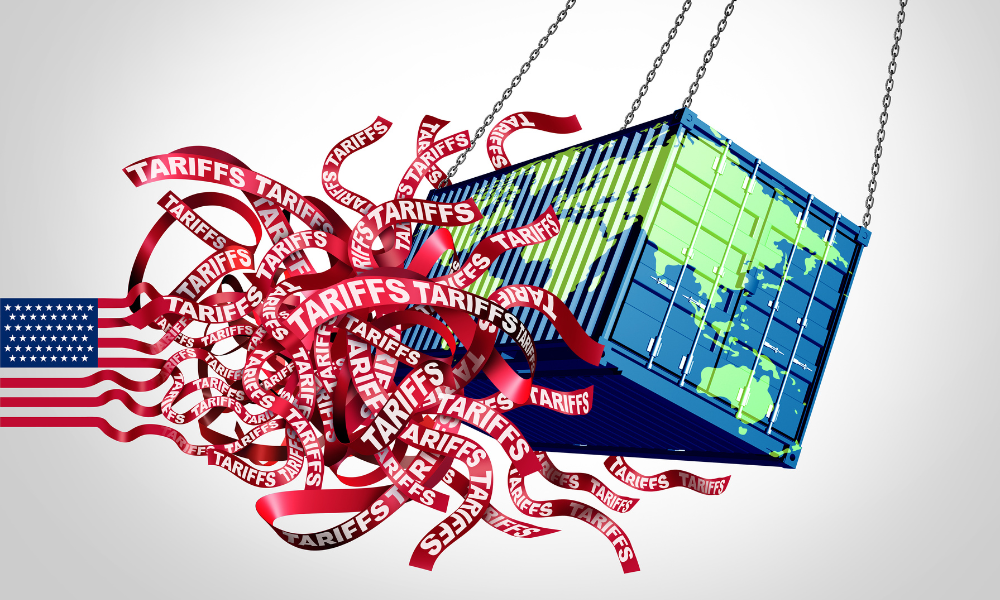
Any hopes of a last minute reprieve for countries facing tough US tariffs ended at midnight in Washington as Trump’s reciprocal levies kicked in, with the 104% on Chinese goods the highest.
Whether it’s viewed as rebalancing trading relationships to make it fairer for the US, or the highest tax rise on US citizens for decades, for global economies and American businesses the impact is real, and investors are taking it badly.
Tariffs are the driver of a 12% drop in the Dow Jones Industrial Average over four days, that’s 4,500 points lost, closing 0.9% lower Tuesday while the S&P 500 ended its session down 1.6% having been up 4% earlier in the day.
US futures indicate a flat start to the new day, but global equities are down with Europe off by around 3% and Asian markets mixed, with China notably higher despite the eyewatering tariffs amid fighting talk from Beijing, while also showing willingness to negotiate with the US.
But while the markets navigate the muddied waters of global trade, there may yet be further industry-specific tariffs to come.
President Trump said Tuesday that “We are going to be announcing very shortly a major tariff on pharmaceuticals.” The industry was one of those highlighted previously with the president annoyed that many US pharma firms have established themselves in the Republic of Ireland where corporate taxes are low.
While no details have been provided regarding potential rates of tariffs on pharmaceutical imports, those for auto, steel, and aluminium have been set at 25% which could be repeated for the drugmakers.
“Once we do that, they’re going to come rushing back into our country, because we’re the big market,” Trump told a Republican fundraiser. “The advantage we have over everybody is that we’re the big market.”

The SEC's restructuring plan would bring the CAT under direct federal oversight, eliminating a decentralized governance model.

The new Portfolio Model Management capability lets advisors scale investment implementation while retaining client-level flexibility.

Demand for formal youth investing education is surging, but advisors may be the missing piece in filling the classroom gap.

Raymond James lures a $125M Merrill Lynch advisor in Charlotte while a Stifel pair breaks away to go independent in Southern Oregon.

Pave Finance, DPL Financial Partners and Gottfried & Somberg also add senior leaders as RIAs and wealthtech firms deepen their benches.
Advisors are broadening the conversation beyond savings to help clients prepare for the realities of longer lives
Growing wealth, evolving priorities, and untapped opportunities are reshaping how women approach long-term investing.

