
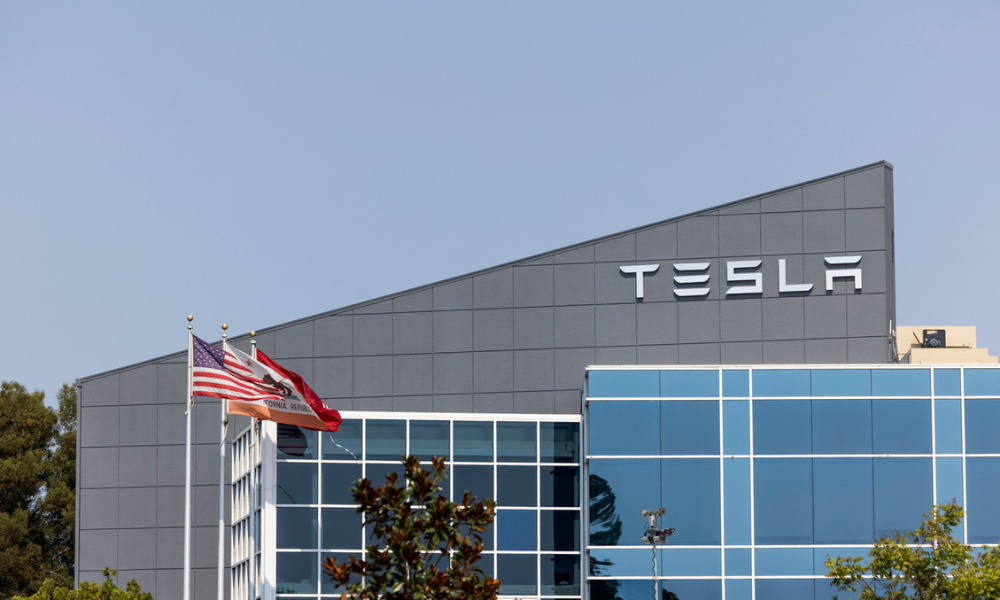
Tesla Inc. shares plunged after Elon Musk’s pitch to look past slower sales growth fell flat with investors.
The stock fell 8% in early trading Thursday, after Tesla narrowly missed earnings estimates and warned its rate of expansion will be “notably lower” this year. The company spent all of 2023 cutting prices to boost sales, which ate into profits.
The effectiveness of that strategy is waning, and executives cautioned they’re approaching the limits of efforts to cut costs on the current vehicle lineup.
“Tesla is signaling that the days of 50% or even 30% to 40% growth year-over-year is not going to happen in 2024,” Seth Goldstein, a Morningstar Research analyst, said in an interview. “At a certain point, you can’t cut prices anymore.”
In a departure from past practice, Tesla avoided offering specific targets for the year ahead. The company fell well short of the 50% annual growth that management guided to in the past, despite slashing prices throughout 2023. Vehicle deliveries rose 38%, and analysts are predicting a 20% increase this year.
Tesla reported earnings of 71 cents a share for the fourth quarter, missing the 73-cents-a-share average estimate. The company generated $25.2 billion in revenue, less than the $25.9 billion predicted by Wall Street.
Musk suggested this will all be temporary. Tesla is going to build its cheaper, next-generation vehicle as soon as the second half of next year at its factory in Austin, and then in Mexico. The company will also make the model at another site in North America. That could help the company appeal to more mass-market buyers who can’t afford the company’s existing EVs, which start at about $39,000 in the US.
“That will be a challenging production ramp,” Musk said of the next-generation vehicle. “Once it’s going, it will be head and shoulders above any other manufacturing technology that exists anywhere in the world. It’s next-level.”
Until then, Tesla will try to reach new consumers with its existing lineup. Its newest vehicle, the Cybertruck, is rolling out gradually after launching in November. The company said that the ramp up of the stainless steel-clad pickup will be slower than other cars and hasn’t given an annual sales forecast.
New products are of particular importance for Tesla because it has a fairly limited vehicle lineup. While sales of the Model Y sport utility vehicle and Model 3 sedan have soared, they still have relatively high sticker prices compared to China’s BYD Co., the new EV leader. As high interest rates and inflation hit consumers’ wallets last year, Tesla marked down its vehicles in dramatic fashion.
That put a damper on profitability. Tesla’s automotive gross margin, excluding revenue from regulatory credits, came in at 17.2% for the quarter, a slight improvement from the lowest in over four years. Tesla has blamed the lower profitability on price cuts, higher spending on research and development and other expenses, including ramping up the Cybertruck.
Tesla faces stiff competition in the form of Chinese EV makers, which Musk said are “the most competitive car companies in the world.” Chinese brands probably will succeed exporting abroad, he said, unless tariffs or other trade barriers are implemented to halt their advance. The CEO has witnessed the threat firsthand, with BYD overtaking Tesla as the world’s top seller of EVs in the quarter.
“Frankly, I think if there are not trade barriers established, they will pretty much demolish most other car companies in the world,” Musk said of China’s automakers.
Musk also elaborated on his plea for a 25% stake in Tesla to solidify his influence. The EV maker’s board is unlikely to propose a new compensation plan for the CEO until a Delaware judge rules on a shareholder lawsuit regarding Musk’s massive stock award approved in 2018.

Cornerstone Advisors study reveals compliance bottlenecks stall campaigns weeks after customer opportunities close.

A father-daughter trio managing approximately $700 million joins the Atlanta-based fee-only RIA, establishing its Austin foothold.

CFP, CFA and CPA holders could gain accredited investor status as regulators weigh wider private market access for advisory clients

DeepVest, Vanilla and Libretto roll out tools to help financial advisors launch firms, close estate plans and sharpen planning skills

“People aren't effectively using their wealth in retirement,” said David Blanchett of Prudential.
As AI makes financial information more accessible than ever, Lana Hock explains why human judgment, trust, and empathy remain the qualities clients value most in a financial advisor
Northern Trust’s Ken Lassner shows advisors how to convert volatility into after-tax portfolio gains

