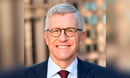
State Investment Officer Gary Bland has resigned amid a federal investigation into state investment deals and pressure to remove him by several members of the State Investment Council.
Bland resigned on Wednesday in a letter to Gov. Bill Richardson, saying he was "saddened and disappointed" to leave the job.
The state investment officer oversees the management of New Mexico's permanent funds valued at more than $11 billion.
Richardson accepted Bland's resignation and will start looking for a successor, said Gilbert Gallegos, a spokesman for the governor.
Bland did not explain his resignation. A spokesman for the State Investment Council said Bland did not plan to make a statement on his departure.
However, his resignation came a day before the Investment Council was to consider a resolution signed by four of its nine members expressing "no confidence" in Bland continuing in his job and restricting him from making investment decisions.
The four members, which include three appointed by Richardson, also planned to ask the governor to consider removing Bland.
In the resolution, the members said they were pushing for the actions against Bland after reviewing information related to the federal investigation.
Earlier this month, a former investment adviser to the state pleaded guilty to securities fraud in New York in connection with a pension fund scandal there. However, the plea by Saul Meyer, co-founder of Dallas-based Aldus Equity Partners, also involved fraud in securities transactions in New Mexico.
Meyer, in his plea statement to a New York court, said he recommended investments in New Mexico because of political pressures. Aldus served as an adviser to the Investment Council and the Educational Retirement Board, which administers a pension program for educators. The firm was fired earlier this year after it was implicated in the New York pension scandal. Bland also serves on the educational pension fund's governing board.
Meyer said "contrary to my fiduciary duty, I ensured that Aldus recommended certain proposed investments that were pushed on me by politically connected individuals in New Mexico. I did this knowing that these politically connected individuals or their associates stood to benefit financially or politically from the investments and that the investments were not necessarily in the best economic interest of New Mexico."
The names of those individuals have not been disclosed.
However, a politically connected Santa Fe broker, Marc Correra, got a share of nearly $22 million in fees for helping money management firms win investments with the council and the educational pension fund. Correra's lawyer has said there was no wrongdoing by his client.
Correra's father is a close friend of Bland and served on a Richardson-appointed committee that recommended Bland for the investment officer position after Richardson's election in 2002.
No charges have been announced by federal prosecutors in New Mexico as part of their probe. Federal agents have interviewed staff at the State Investment Council and the Educational Retirement Board and a grand jury has subpoenaed documents related to placement agent fees on New Mexico investments.
The four council members signing the resolution were state Land Commissioner Pat Lyons; Peter Frank, a retired corporate officer; and investment executives Andrew Davis and Stephen Feinberg. Lyons' office released a copy of the resolution.
David Harris, a University of New Mexico official who serves on the Investment Council, said Bland did a "credible job of growing the value" of the state's endowment funds. He said some members of the council, particularly those who had worked in private industry and served on corporate boards, "believed it was time to move in a different direction" and wanted council members to play a stronger role in governing operations of the state investment office.
Traditionally, the nine-member council sets broad investment policies and approves some — but not all — investment deals. It's up to the state investment officer and his staff to make day-to-day decisions.
The governor, administration officials and gubernatorial appointees represent seven of the council's nine members. The state treasurer and state land commissioner are the other members.
Before taking the state job, Bland worked 28 years at The Boeing Company, including 16 of those years as vice president of
trust investments.
In his resignation letter, Bland pointed out that investment earnings of nearly $4.5 billion have been added to the state's permanent funds during his tenure, which included periods of strong growth in the financial markets as well as the recent meltdown in global markets.