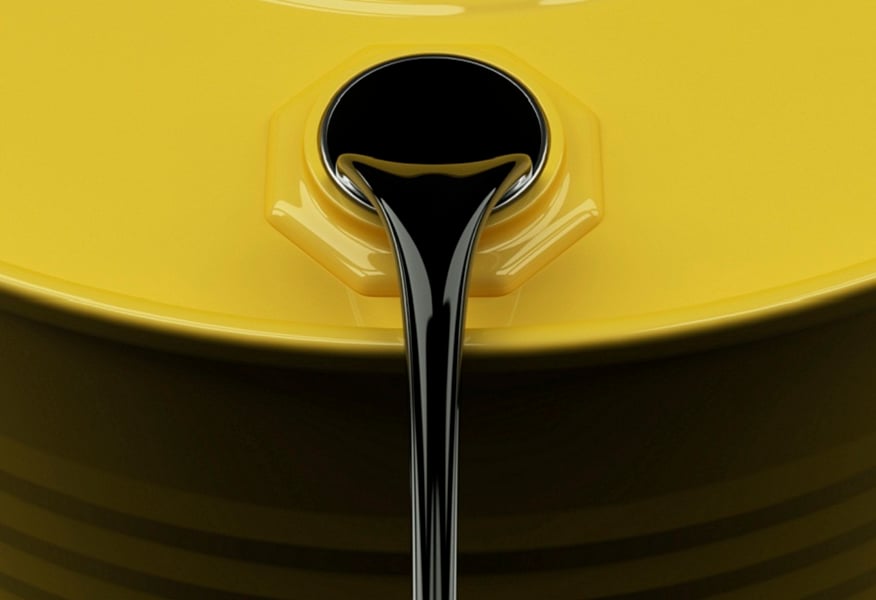
Oil surged the most on record after a devastating attack on Saudi Arabia heightened concerns about growing instability in the world's most important crude-producing region.
In an extraordinary start to the week's trading, Brent futures in London leaped almost $12 in the seconds after the open, the most in dollar terms since their advent in 1988.
Prices have since pulled back some of that initial gain, but with Saudi officials downplaying the prospects for a rapid recovery, crude is heading for the biggest advance in almost three years.
[Recommended video: Keep this top of mind when you approach a prospect]
Saudi Aramco faces weeks or months before most output from its giant Abqaiq crude-processing complex is restored, according to people familiar with matter. Meanwhile, tensions soared as the U.S. pointed the finger of blame at Iran for the aerial attacks on the Saudi kingdom.
For oil markets, it's the worst sudden disruption ever. The attacks that damaged a key processing complex and one of the Saudi's marquee fields highlight the vulnerability of the world's biggest exporter.
The crisis also means a "new geopolitical premium" of about $5 a barrel, Mizuho Securities USA's Paul Sankey wrote in a note.
"We have never seen a supply disruption and price response like this in the oil market," said Saul Kavonic, an energy analyst at
Credit Suisse Group. "Political-risk premiums are now back on the oil-market agenda."
Meanwhile, Rick Perry, the U.S. energy secretary, told CNBC that a "coalition effort" will be needed to counter Iran, which the Trump administration said was behind the attacks.
Haven assets including gold and U.S. government debt surged as investors fled riskier instruments. Currencies of commodity-linked nations including the Norwegian krone and the Canadian dollar also advanced. U.S. gasoline futures jumped more than 13%.
[More: Trade-war threat presents opportunities for energy investments]
State-run producer Saudi Aramco lost about 5.7 million barrels a day of output on Saturday after 10 unmanned aerial vehicles struck the Abqaiq facility and the kingdom's second-largest oil field in Khurais. A Saudi military official earlier said preliminary findings showed that Iranian weapons were used in the attacks but stopped short from directly blaming the Islamic Republic for the strikes.
The disruption surpasses the loss of Kuwaiti and Iraqi petroleum output in August 1990, when Saddam Hussein invaded his neighbor. It also exceeds the loss of Iranian oil production in 1979 during the Islamic Revolution, according to the International Energy Agency.
"The vulnerability of Saudi infrastructure to attacks, historically seen as a stable source of crude to the market, is a new paradigm the market will need to deal with," said Virendra Chauhan, a Singapore-based analyst at industry consultant Energy Aspects. "At present, it is not known how long crude will be offline for."
Aramco officials are growing less optimistic that there will be a rapid recovery in production, a person with knowledge of the matter said. The kingdom — or its customers — may use stockpiles to keep supplies flowing in the short term.
Aramco could consider declaring itself unable to fulfill contracts on some international shipments — known as force majeure — if the resumption of full capacity at Abqaiq takes weeks.
That would rattle oil markets further and cast a shadow on Aramco's preparations for what could be the world's biggest initial public offering. It's also set to escalate a showdown pitting Saudi Arabia and the U.S. against Iran, which backs proxy groups in Yemen, Syria and Lebanon.
[More: Surging demand turns solar panels into the hottest summer investment]
Iran-backed Houthi rebels in Yemen claimed credit for the attack, but President Donald J. Trump and Secretary of State Mike Pompeo have already blamed Iran.
Mr. Trump, who said the U.S. is "locked and loaded depending on verification" that Iran staged the attack, earlier authorized the release of oil from the nation's emergency reserves. The IEA, which helps coordinate industrialized countries' emergency fuel stockpiles, said it was monitoring the situation.
"No matter whether it takes Saudi Arabia five days or a lot longer to get oil back into production, there is but one rational takeaway from this weekend's drone attacks on the kingdom's infrastructure — that infrastructure is highly vulnerable to attack, and the market has been persistently mispricing oil," Ed Morse,
Citigroup's global head of commodities research, wrote in a note.
Brent jumped more than 19% to $71.95 a barrel on ICE Futures Europe, its biggest gain in percentage terms since 1991. The futures were trading up 14% at $68.76 as of 6:05 p.m. in London.
The global benchmark could rise above $75 a barrel if the outage at Abqaiq lasts more than six weeks,
Goldman Sachs said.
On the New York Mercantile Exchange, West Texas Intermediate futures were frozen for about two minutes after the scale of the move delayed the market open. When it finally started trading, WTI jumped more than 15% to $63.34, the most since 2008. It was up 14% at $62.65 as of 1:06 p.m. in New York.
Crude futures surge after a drone strike on a Saudi Aramco oil facility
The drama wasn't limited to flat prices. The spread between Brent and WTI widened as much as 37%, showing that the oil spike will affect global prices more than those in the U.S., where shale output and ample supplies provide more of a buffer.
Brent's six-month backwardation jumped to the highest level since September 2013 as the outage raised concerns about obtaining near-term supplies. And the call-put skew flipped into positive territory for the first time since 2018, indicating that options traders are willing to pay more to place a bet on prices rising rather than falling.
[More: Commodities funds may offer inflation hedge, but many overweight energy]