
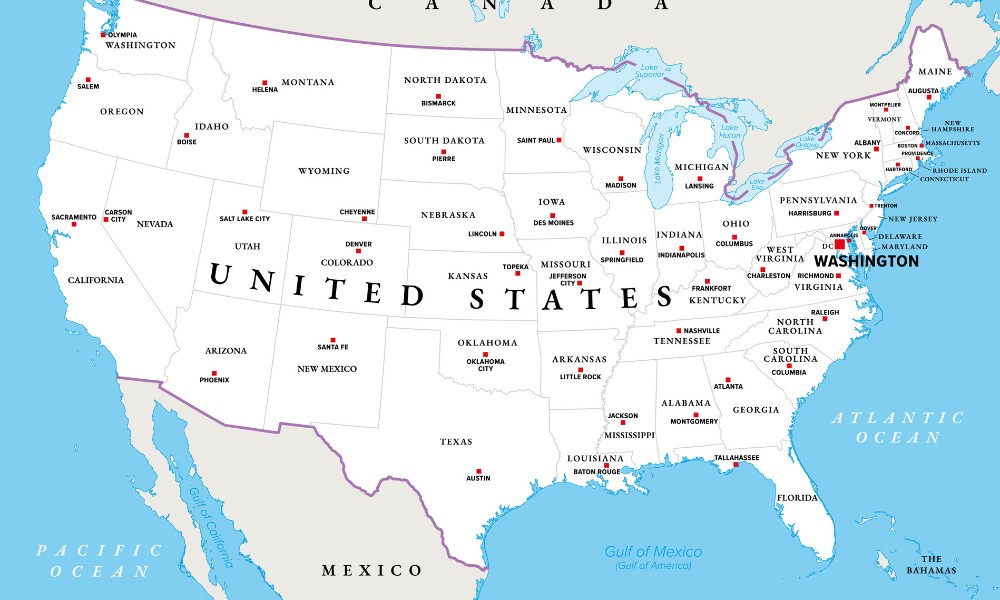
New York tops the latest data on personal financial advisor pay, with an average salary of $155,000.
Drawing on the Wealth Management Industry Annual Salaries dashboard, the state-by-state spread illustrates salaries across the board job category by U.S. state.
WHERE AVERAGE PAY IS HIGHEST, AND MEASURING THE SPREAD
Personal financial advisors are those classified by the Bureau of Labor Statistics as helping individuals manage their money and plan for their financial future, whose numerous roles include financial planners, estate planning specialists, and private wealth advisors.
Their top 10 average salaries by state rank as: New York ($155,000), Connecticut ($144,117.6), Massachusetts ($142,647.1), New Jersey ($137,058.8), North Dakota ($134,411.8), California ($125,588.2), Washington ($120,588.2), Illinois ($119,705.9), Maryland ($119,705.9) and Hawaii ($117,647.1).

The U.S. average is $94,882.4, and the premiums at the top are not subtle. New York sits 63.4% above the US average, while Connecticut and Massachusetts are 51.9% and 50.3% above it, respectively.
The “top tier” also looks structurally different from the rest of the map. The Top 5 states average $142,647.1, versus $101,664.1 across the remaining states, a premium of 40.3%.
One outlier at the other end is Arkansas, with an average of $78,823.5, around 16.9% below the US average. The difference between New York and Arkansas is $76,176.5, meaning New York is 96.6% higher on this measure.
WHAT LIFTS NEW YORK: THE SENIOR ROLES THAT PULL THE AVERAGE UPWARDS
Within New York, the lead advisor role pays $200,000, which is $45,000 above the state’s broader personal financial advisor average of $155,000, and $105,117.6 above the role’s U.S. average (a 110.8% premium). Senior financial advisor or senior wealth advisor is also $200,000, matching the same $45,000 lift versus the state average and the same $105,117.6 gap versus the U.S. benchmark (110.8%).
Two other roles also stand out. Private wealth advisor is $190,000, or $35,000 above New York’s average and $95,117.6 above the U.S. figure (100.2%). Financial consultant comes in at $175,000, $20,000 above the New York average and $80,117.6 above the U.S. benchmark (84.4%).
HOW TO USE THIS DATA
ABOUT THE WEALTH MANAGEMENT INDUSTRY ANNUAL SALARIES DASHBOARD

Siddharth Jawahar was sentenced 11 years in prison and $31M in restitution for running Swiftarc Capital fraud scheme

Wall Street banks expand wealth services as ultra-high-net-worth client demands extend further above and beyond investment management.

The acquisition of $2 billion Gilbert & Cook extends a buying spree for the ultra-high-net-worth firm that has already touched six states this year.

After years of encouraging sacrifice and delayed gratification, advisors have to do the next emotional lift: helping clients let go of a potentially harmful scarcity mindset.

A new JPMorganChase Institute report reveals how deeply stock market wealth now drives everyday American spending, especially for retirees.
Northern Trust’s Ken Lassner shows advisors how to convert volatility into after-tax portfolio gains
Dan Biagini of American Equity says the steady decline of pensions, longer lifespans and a reset in interest rates are rewriting how advisors build retirement income

