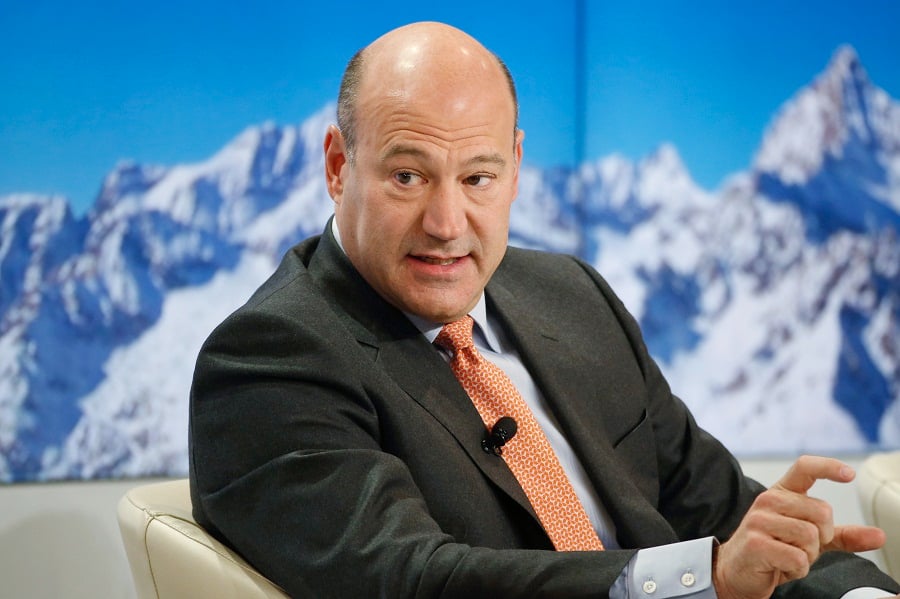
Pacific Investment Management Co. considered recruiting Gary Cohn, president of
Goldman Sachs Group Inc., as a top executive in 2013, people with knowledge of the matter said.
Mr. Cohn was on a short list of potential candidates to succeed Mohamed El-Erian as chief executive officer, according to the people, who asked not to be identified because the talks were private. At the time, Pimco and Bill Gross were working on a succession plan that included a smaller role for Mr. Gross, who co-founded the firm in 1971, the people said.
A move by Mr. Cohn would have deprived Lloyd C. Blankfein of his top deputy and one of his most likely successors. Mr. Cohn, 54, the only bank employee other than Mr. Blankfein on the board of directors, is considered among a group of executives who could replace the 60-year-old CEO when he retires. In an October 2013 Bloomberg Television interview, Mr. Cohn said he was happy in his current job and wanted to remain in it.
While Pimco's idea of hiring Mr. Cohn never progressed beyond informal conversations, he stood to increase his compensation substantially.
Pimco paid Mr. El-Erian a bonus of about $230 million in 2013 as part of an executive profit-sharing plan as the firm's assets approached $2 trillion. Mr. Cohn was awarded $26.9 million for 2013, according to the Bloomberg Pay Index, which values an executive's compensation as of the company's fiscal year end. Since 2012, he's taken home about $61.7 million, which includes salary and cash bonuses, as well as vested stock and exercised options that were granted in previous years, the index shows.
DOUBLE DEPARTURES
Mark Porterfield, a spokesman for Newport Beach, Calif.-based Pimco, declined to comment. Mr. Cohn, who is based in New York, declined to comment through a spokesman.
Pimco's unofficial search for the next leader of the $1.6 trillion asset manager was marred by internal turmoil, ending in the departures of both Mr. El-Erian and Mr. Gross last year. The upheaval spurred record redemptions at the firm in 2014 and prompted a reshuffling of management amid declining returns in the bond market.
Mr. El-Erian, who also shared the role of co-chief investment officer with Mr. Gross, informed Pimco in late 2013 that he was going to leave, and Mr. Gross
offered to step back instead, Bloomberg News reported in December. Mr. El-Erian, a contributor to Bloomberg View, stuck with his decision and on Jan. 21, 2014, announced his resignation.
MANAGEMENT OVERHAUL
Pimco
overhauled its management after Mr. El-Erian left, naming Douglas Hodge CEO and creating
six deputy CIOs who reported to Mr. Gross. Still, tensions within the firm worsened. By September, Mr. Gross's clashes with management created a divide that eventually
forced him to leave rather than suffer the indignity of being fired.
Mr. Cohn, as president and chief operating officer at Goldman Sachs, has experience in both bond trading and asset management. He meets weekly with the two co-heads of the firm's investment management unit, which surpassed $1.1 trillion in assets last year. Mr. Cohn previously oversaw the fixed-income trading division, which counts Pimco among its biggest clients.