
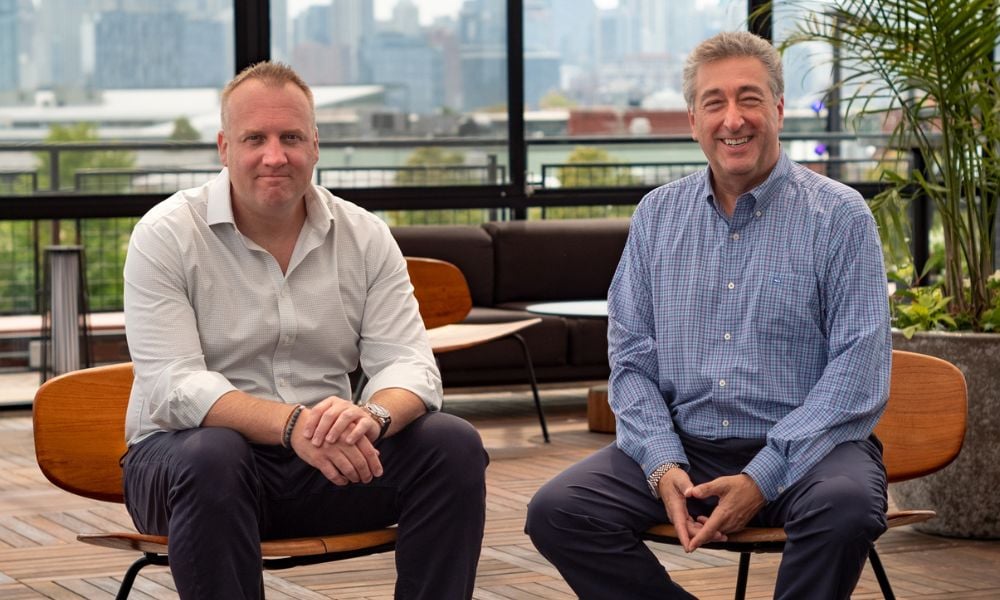
Barry Ritholtz and Josh Brown, famed RIA industry advisors who frequently appear across Bloomberg and CNBC channels, have announced a succession plan for their $7.6 billion RIA Ritholtz Wealth Management that sees its equity structure expand to 29 employees.
The firm’s namesake co-founder, Barry Ritholtz, is selling a portion of his shares to support new equity for employees. Fellow co-founder Brown will continue running day-to-day leadership of the firm, alongside managing partners Michael Batnick and Kris Venne and president Jay Tini. Ritholtz was founded in 2013 and has 85 employees, standing out as one of the industry's biggest RIAs to resist private equity dollars to instead be fully owned by employees.
“As we started to add key employees, we had this realization that we were amassing a lot of talent, and if we didn't make them owners and part of the business, we would be at risk of other firms scooping them up,” Brown told InvestmentNews. “We didn't want to be in a situation where Barry and I own all the equity, and then the equity value gets so big that there's nobody else who can afford to buy us, other than a giant PE firm.”
A form ADV dated Jan. 29, 2026, broadly lists the 29-employee equity structure at Ritholtz, with Brown as the largest shareholder holding at least 25% but less than 50%. Co-founders Venne and Batnick each own at least 10% but less than 25%. Barry Ritholtz and Tini each own at least 5% but less than 10%. Another 24 employees own less than 5%.
“Everyone who's on the cap table is a buyer. Nobody was handed free stock or stock options, or anything like that, everyone invested,” said Brown. “Barry [Ritholtz] will be a shareholder forever, but he's made shares available internally to facilitate the transaction. Barry's percentage ownership has gone down by a lot.”
Ritholtz Wealth Management is headquartered in New York City with 15 offices across the U.S.
“I turn 65 this year, and I wanted all of our clients, employees and partners to understand that we have a plan to continue forever, without private equity dollars, regardless of my age. This structure is a key part of that plan,” added Barry Ritholtz, who remains chief investment officer at the firm.
“I don't think that we really have any peers for our size and degree of independence. I think a lot of the five to $10 billion firms have already sold 5%, 20%, 100% [to private equity],” said Brown.
In addition to Ritholtz Wealth Management’s active media presence, Barry and Josh Brown are investors in the popular Future Proof industry conference organizer. As the RIA industry continues to set records in terms of M&A deal flow, the pool of buyers is shrinking thanks to the dominance of consolidator firms backed by private equity.
“There's a lot of advisors who need to figure out a situation where they could have a home and now have to worry if things are going to change, or leadership's about to turn over. Or if I bring my whole business over to this firm and then they tell me they sold it,” says Brown. “So we have a really clean story that I think is maybe the best story in the industry for an enterprising investment advisor representative who's tired of being in a musical chairs world.”

Retiring RIA seller David Laidlaw alleges the Carnegie valued his stake on $11.7 million EBITA while pitching potential buyers on $21.3 million.

New tool gives RIAs and family offices AI help vetting private market deals, with some users reportedly halving review time.

Investors got projected returns dressed up as real ones, SEC says

Parents must still act to get the $1,000 federal seed and employer contributions, giving financial advisors a role in the rollout.

FINRA booted Rudy Anguiano from the industry for “conversion - the intentional and unauthorized taking of another person’s property.”
As AI makes financial information more accessible than ever, Lana Hock explains why human judgment, trust, and empathy remain the qualities clients value most in a financial advisor
Northern Trust’s Ken Lassner shows advisors how to convert volatility into after-tax portfolio gains

