
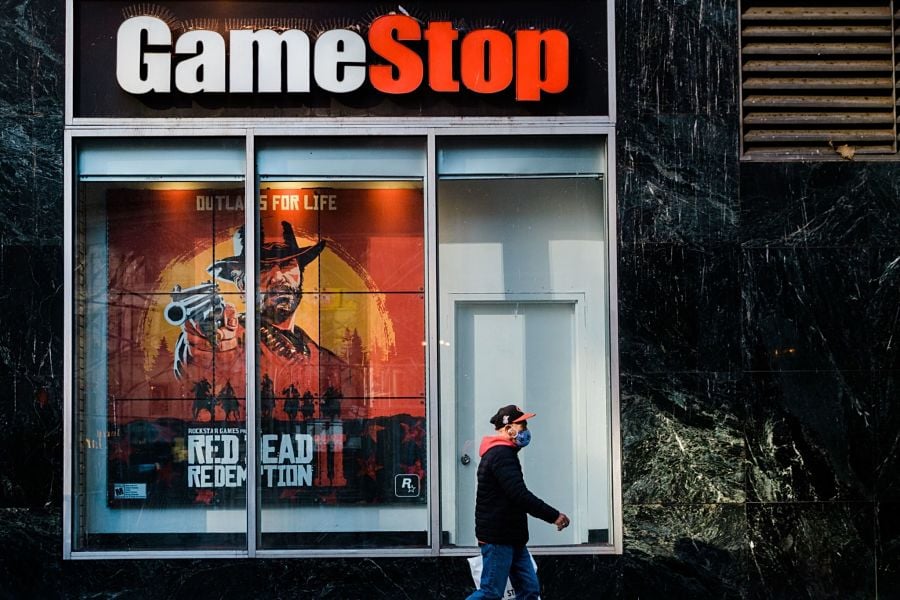
Popular stocks influencer Keith Gill, better known as “Roaring Kitty,” was sued for allegedly orchestrating a “pump and dump” scheme involving GameStop Corp. shares.
Gill, who rose to fame promoting GameStop during the 2021 meme-stock craze, reemerged in May and again began posting about the games retailer on X, the social media platform formerly known as Twitter.
In a proposed class action filed Friday in Brooklyn, New York, federal court, GameStop shareholder Martin Radev claims Gill was seeking to manipulate the stock for his own gain.
Gill didn’t immediately respond to an email seeking comment.
The suit alleges that Gill acquired 120,000 call options in GameStop before he began posting about the company in May. The stock, which had been trading around $17 just before Gill began to post, soared to $48.75 on May 14.
On June 2, he revealed that he owned 5 million shares of GameStop and 120,000 call options that were set to expire on June 21. By June 13, Gill’s holdings had risen to more than 9 million shares of GameStop with no outstanding call options.
Gill “quietly sold and/or exercised (i.e., dumped) all 120,000 of his GameStop call options for a large profit, seemingly to increase his own stake in GameStop stock by over 4 million shares,” Radev said in the suit.
GameStop shares have since fallen, though they’re still higher than they were before Gill’s posts. They were trading around $23 early Monday afternoon.
Gill became one of the public faces of the meme-stock frenzy, amassing more than a million followers across his “Roaring Kitty” YouTube channel and “DeepF***ingValue” Reddit page.
GameStop surged more than 1,700% during one stretch in January 2021, and the stock’s stratospheric rise appeared to pit scrappy individual investors against sophisticated hedge funds that were heavily shorting the troubled mall retailer.
On Monday, Chewy Inc. shares spiked as much as 10% after Gill disclosed a 6.6% passive stake in the online pet food and product retailer.
The filing with the U.S. Securities and Exchange Commission came days after the investor posted a photo with a puppy without any comment on X. The post briefly sent the pet food retailer to a one-year high on Thursday.
The case is Radev v. Gill, 24-cv-04608, US District Court, Eastern District of New York.

Elsewhere, Wells Fargo Advisors adds a $400 million Morgan Stanley veteran in Naples as an ex-Cetera advisor goes independent with LPL

According to a federal charges Bradley Heppner, 60, received more than $150 million in payments through funneling money from GWG Holdings to a shell company.

A $1B fund allegedly skimmed 30% off the top, then swapped cash for locked-up stock.

Insiders allegedly rewrote projections three times in four days.

TCI Wealth Advisors also has also tapped JIFFYAI to unify onboarding and servicing, while TradePMR adds ICE market data to its Fusion advisor platform
Knighthead Life entered the market with a competitive MYGA. A strong launch earned advisor confidence and paved the way for FIAs.
As AI makes financial information more accessible than ever, Lana Hock explains why human judgment, trust, and empathy remain the qualities clients value most in a financial advisor

