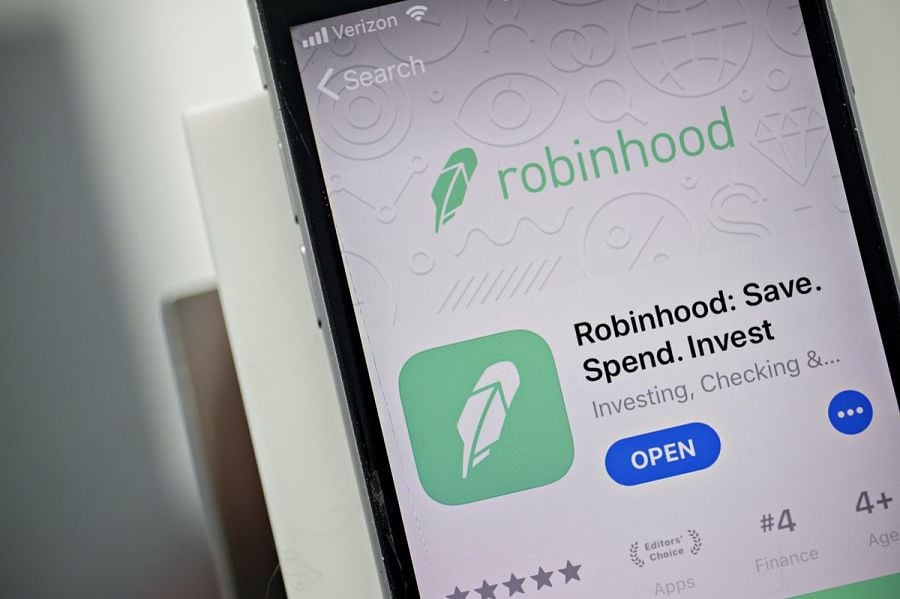
A glitch in the
Robinhood Markets Inc. system is allowing users to trade stocks with excess borrowed funds, giving them access to what amounts to free money.
Dubbed the "infinite money cheat code" by users of Reddit Inc.'s
WallStreetBets forum, the bug is being exploited, according to users on the forum. One trader bragged about a $1 million position funded by a $4,000 deposit.
Robinhood is "aware of the isolated situations and communicating directly with customers," spokesperson Lavinia Chirico said in an email response to questions.
The
Menlo Park, Calif.-based money management software designer touts trading "free from commission fees."
Robinhood Gold customers are invited to "supercharge" their investing by paying $5 a month to trade on margin, or money borrowed from the company.
[Recommended video: Next generation clients want advisers to help them live better lives]
Here's how the trade works. Users of Robinhood Gold are selling covered calls using money borrowed from Robinhood. Nothing wrong with that. The problem arises when Robinhood incorrectly adds the value of those calls to the user's own capital. And that means that the more money a user borrows, the more money Robinhood will lend them for future trading.
One trader managed to turn his $2,000 deposit into $50,000 worth of purchasing power, which he used to buy Apple Inc. puts. He subsequently lost that money and posted a video of the wipe-out on YouTube.
In a covered call, stock owners generate profit or loss by agreeing to sell an option to buy the stock at a predetermined price by a certain time and date in the future.
[More: Robinhood gives banking another shot]
The traders using what they called infinite leverage to supercharge their wagers could be held liable for the money and guilty of securities fraud, according to Donald Langevoort, a law professor at Georgetown University.
"If there's an element of deceit, that you got this by exploiting a loophole in a system, I can see how that could become a securities fraud case," Mr. Langevoort said. "The other possibility is just the basic common law of restitution. If you take advantage of someone's mistake to line your own pockets, you need to pay them back."