
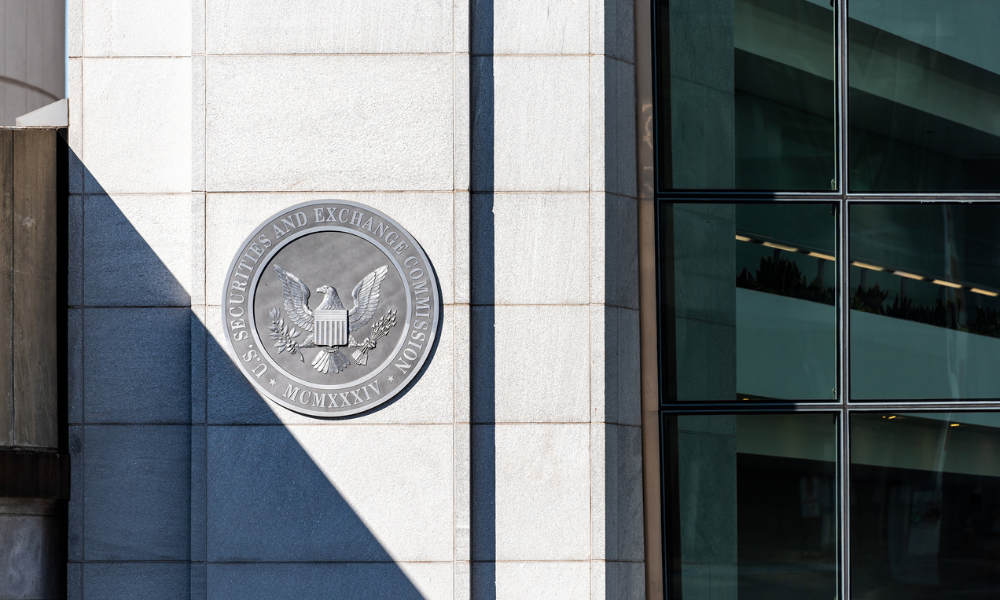
A Democrat on the US Securities and Exchange Commission is warning that syndicated loans sold widely to investors are stoking risks to the broader financial system.
Regulators should consider whether additional investor protections are needed for the fast-growing market, Caroline Crenshaw, an SEC commissioner, said in a speech Wednesday. She flagged a lack of transparency, and questions about whether the products should be covered by securities rules.
The level of risk may be reaching “a scale that could affect the financial system more broadly,” she said in remarks to be delivered at the Center for American Progress, a liberal-leaning think tank in Washington.
In March, a federal court asked the SEC to weigh in on the issue, but the agency ultimately declined to do so. In August, the court ruled that leveraged loans don’t qualify as securities, handing a win to JPMorgan Chase & Co., the defendant in the case.
Investors in syndicated loans, which can involve a significant amount of risk if they’re extended to lower-rated companies, have typically been hedge funds, insurance companies, pension funds and other sophisticated players.
However, retail investors also have significant exposure, Crenshaw said. She said syndicated loans are increasingly marketed to the broader public as investments to hedge against rising interest rates. The SEC and banking watchdogs should review the dynamic, Crenshaw added.
Some have argued that the current syndication process makes loans akin to a security and requires greater disclosure and investor protection than is generally available.
“While some loan syndication may make sense to reduce the risk taken by individual banks, I am concerned that we are now in a world where banks lend, but nearly all the risk is transferred to investors who have no relationship with the borrower, and that investors — including retail investors — frequently have a great deal of exposure to these assets,” she said.
Crenshaw suggested that loans might not always remain outside US securities laws, and that regulators should be examining the issue.
“In the face of uncertainty about the future development of the BSL market, it could be that regulators have work to do to prepare for a future ruling that BSLs are securities for purposes of the Securities Act,” she said, referring to broadly-syndicated loans.

According to a federal charges Bradley Heppner, 60, received more than $150 million in payments through funneling money from GWG Holdings to a shell company.

A $1B fund allegedly skimmed 30% off the top, then swapped cash for locked-up stock.

Insiders allegedly rewrote projections three times in four days.

TCI Wealth Advisors also has also tapped JIFFYAI to unify onboarding and servicing, while TradePMR adds ICE market data to its Fusion advisor platform

Also, CAPTRUST adds a $300 million planning team from Sanctuary in its home market of Raleigh, and Sequoia Financial Group buys a Boulder family office.
Knighthead Life entered the market with a competitive MYGA. A strong launch earned advisor confidence and paved the way for FIAs.
As AI makes financial information more accessible than ever, Lana Hock explains why human judgment, trust, and empathy remain the qualities clients value most in a financial advisor

