
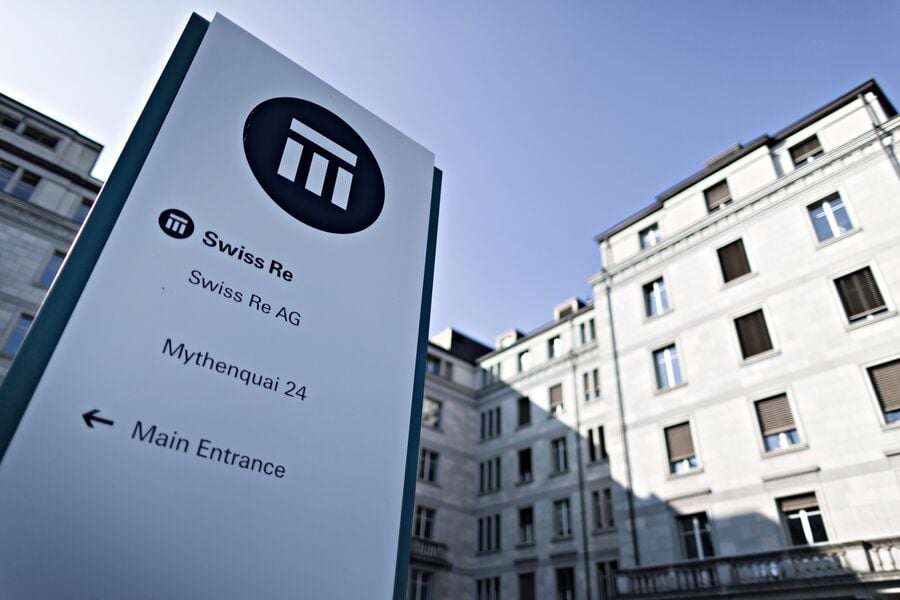
Swiss Re is quitting the world’s main climate alliance for insurers, joining a growing exodus from the coalition of some of the industry’s biggest companies.
The world’s second-largest reinsurer is now the fourth major company to walk away from the Net Zero Insurance Alliance, a subunit of the Glasgow Financial Alliance for Net Zero that was formed in 2021.
Swiss Re said its withdrawal doesn’t reflect a lesser commitment to climate policies, and said its sustainability strategy “remains unchanged,” according to an emailed statement sent Monday.
The departure follows that of fellow Swiss firm Zurich Insurance Group AG, as well as Germany’s Munich Re and Hannover Re.
NZIA has no U.S. members, and with the departure of the reinsurer, it has roughly 27 left, including Allianz SE, Aviva Plc and Axa SA, according to the group’s website. The climate alliance said in a statement released last month that it’s taken steps to “advance the net zero insurance agenda globally and to provide its members with a framework they can use to make independent decisions to establish their own individual net zero pathways.”
Officials from NZIA declined to comment Monday after the reinsurer announced its decision.
Swiss Re remains part of the Net Zero Asset Owner Alliance, which is another sub-unit of GFANZ.

Elsewhere, Wells Fargo Advisors adds a $400 million Morgan Stanley veteran in Naples as an ex-Cetera advisor goes independent with LPL

According to a federal charges Bradley Heppner, 60, received more than $150 million in payments through funneling money from GWG Holdings to a shell company.

A $1B fund allegedly skimmed 30% off the top, then swapped cash for locked-up stock.

Insiders allegedly rewrote projections three times in four days.

TCI Wealth Advisors also has also tapped JIFFYAI to unify onboarding and servicing, while TradePMR adds ICE market data to its Fusion advisor platform
Knighthead Life entered the market with a competitive MYGA. A strong launch earned advisor confidence and paved the way for FIAs.
As AI makes financial information more accessible than ever, Lana Hock explains why human judgment, trust, and empathy remain the qualities clients value most in a financial advisor

