Commodities beat stocks, bonds and the dollar for a fifth straight month, the longest stretch in at least 14 years, as demand for raw materials increases with expanding economies and
Federal Reserve promises to boost growth.
The Standard & Poor's GSCI Total Return Index of 24 commodities climbed 4.4 percent in April, after reaching the highest level since October 2008. The MSCI All-Country World Index of equities advanced 3.9 percent, the most since December, and the U.S. Dollar Index, a gauge against six counterparts, fell 3.9 percent, touching a 33-month low. Bonds of all types returned 0.9 percent on average, based on
Bank of America Merrill Lynch's Global Broad Market Index.
Fed Chairman Ben S. Bernanke signaled last week that he will keep pumping record amounts of money into the world's largest economy and reiterated a pledge first made two years ago to keep interest rates “exceptionally low.” The U.S., the biggest oil consumer, will expand 3.2 percent this quarter, from 1.8 percent in the previous three months, and accelerate through the end of the year, according to the median of 73 economists' estimates compiled by Bloomberg.
“We're in a risk-on mode being helped by Bernanke,” said Arjuna Mahendran, the Singapore-based head of investment strategy for Asia at
HSBC Private Bank, part of Europe's largest bank by market value. The stimulus means “big walls of money going into commodities, stocks and emerging markets,” he said.
The S&P GSCI Total Return Index rallied for an eighth month, the longest winning streak since 2004 when growth in the U.S. economy drove demand for raw materials. Silver, coffee, cocoa and gasoline led the gains in percentage terms in April.
Oil, Gold
Crude oil, which represents more than half the index, gained 6.8 percent on last Monday in New York trading and 7.3 percent in London, amid concern that riots and conflict across northern Africa and the Middle East would disrupt supplies. Libyan output sank to 390,000 barrels a day in March, from 1.39 million in February, according to Bloomberg estimates.
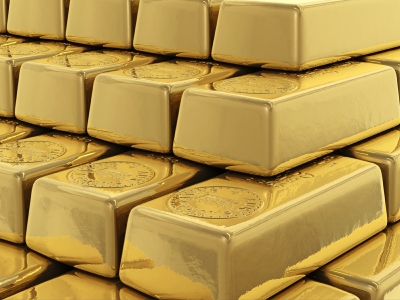
Gold and silver reached records in April as investors sought to hedge financial assets against a weakening dollar and accelerating inflation. Gold advanced 32 percent in the past year and is set for its 11th annual gain, while silver more than doubled as investors increased their holdings in exchange-traded products to a record 15,518 metric tons on April 26.
Consumer prices in China, the biggest user of everything from copper to iron ore, gained 5.4 percent in March, the most since 2008, while the cost of living in the U.S. rose at its fastest pace since December 2009 in the 12 months ended in March.
Bin Laden, Silver
Crude dropped as much as 1.5 percent today, the most in two weeks, after President Barack Obama said al-Qaeda leader Osama bin Laden had been killed, boosting expectations that risks of supply disruptions in the Middle East will ease. Silver had its biggest intraday drop since October 2008 after CME Group Inc. increased futures margins. Cotton futures plunged 21 percent in April, also the most since October 2008.
“The key reason commodities outperformed stocks and bonds is the weak dollar,” said Evan Smith in San Antonio, who helps manage $1 billion at U.S. Global Investors Inc. “Commodities will continue to outperform stocks and bonds. Over the next three to six months, we don't see a backstop for the dollar.”
The Dollar Index had its worst month since September and the currency weakened against all 16 of its major peers, according to data compiled by Bloomberg. The New Zealand dollar appreciated 6.3 percent, the euro 4.6 percent and the Japanese yen 2.3 percent, the data show.
‘Dovish' Bernanke
Bernanke said April 27 that the end of the Fed's $600 billion bond-buying program in June probably won't have a “significant” effect on financial markets or the economy, and the central bank will likely continue reinvesting proceeds from maturing debt after June.
“He's remarkably dovish, dismissing inflation,” said Anthony Valeri, a San Diego-based market strategist at
LPL Financial Corp., which manages $293 billion. “It does keep pressure on the dollar.”
The Fed's program to bolster the economy, which has been in place since the 2008 financial crisis, contrasts with China, which raised borrowing costs four times since October and increased reserve requirements 10 times since the start of 2010 to tame the fastest inflation since 2008.
Bonds worldwide returned the most since August, according to Bank of America Merrill Lynch indexes. Within that market, corporate bonds handed investors 1.3 percent and government debt returned 0.8 percent, the gauges show.
Goldman, Dow Chemical
The MSCI All-Country World Index reached 356.9 points on April 29, extending this year's gain to 7.9 percent. The S&P 500 Index advanced 2.9 percent in April, the Stoxx Europe 600 Index 2.9 percent and the MSCI Asia Pacific Index 2.7 percent. Stocks worldwide added $2 trillion of market capitalization in the month, the most since December, data compiled by Bloomberg show.
Companies from
Goldman Sachs Group Inc. to Dow Chemical Co. to Ford Motor Co. beat estimates in the earnings season that began April 11, when Alcoa Inc. reported a return to profit. Of the 298 members of the S&P 500 Index that reported since then, 76 percent exceeded expectations.
Profit growth “bolstered investors' appetite for taking on additional risk,” said Chad Morganlander, a Florham Park, New Jersey-based money manager at
Stifel Nicolaus & Co., which oversees $110 billion of assets. “In this current environment over the next several months the economic numbers as well as the credit markets will continue to show a favorable trend, which will entice investors.”
The Thomson Reuters/University of Michigan index of U.S. consumer confidence rose to 69.8 in April from the lowest level in more than a year. Payrolls expanded for six consecutive months and the unemployment rate dropped for four months, U.S. government data show. European services and manufacturing growth accelerated last month, with a Markit Economics index based on a survey of purchasing managers rising to 57.8 from 57.6.
--Bloomberg News--