
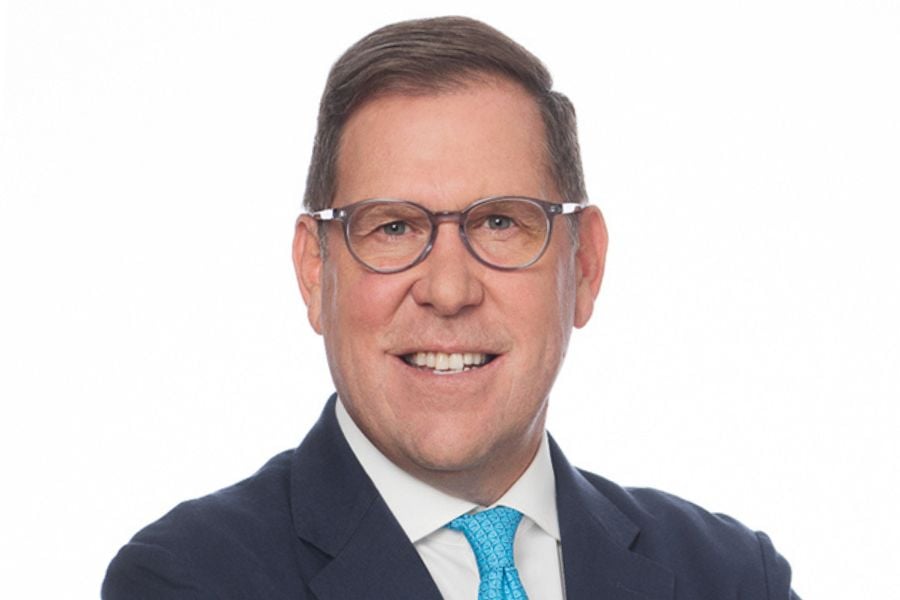
The next US president will have some sway over sustainable investing, but not as much as some might think, Impax Asset Management’s Ed Farrington says.
While Democrats have generally led policies that help further it – especially on the environmental and social sides – one of the most critical pieces of legislation in recent years has had broader support. And even considering that, policy is only one factor among several main ones that affect sustainable investing, said Farrington, president of the North America at Impax.
The Inflation Reduction Act, one of President Joe Biden’s signature policy accomplishments, is unlikely to be repealed, due to its effects on job growth and potential in both blue and red states, Farrington said.
“We all know that politics in the end is local,” he said. “We feel that the evidence on the ground is very supportive of the IRA.”
Since mid-2022, US companies have announced more than $361 billion in investments related to a total of at least 585 clean-energy projects, resulting in an estimated 313,000 jobs, according to figures from communications group Climate Power. More than half of the projects include battery manufacturing site or electric vehicle facilities, with most in Michigan, Texas, Georgia, California, and South Carolina, the group stated.
At the same time, new rules from regulators like the Department of Labor that stand to benefit sustainable investing have been challenged, and a recent ruling from the US Supreme Court has further threatened them. Numerous states have pursued anti-ESG policies, although one in Missouri recently saw a defeat in court.
It’s worth noting that sales of sustainable US mutual funds and ETFs were net positive – and reached record levels – through the Trump administration and into Biden’s term. Amid some performance disadvantages, investors have been pulling assets from those funds for two years, data from Morningstar Direct show.
During the second quarter of 2024, investors redeemed a total of $4.7 billion from US sustainable funds, a level half that seen during the first three months of the year but still marking the seventh consecutive quarter of net outflows. Total assets in the category have grown slowly, reaching $336 billion due to market appreciation, according to Morningstar data.
Recently, it hasn’t helped that the S&P 500 Index has become increasingly concentrated in several big tech companies that have benefited from rising demand for artificial intelligence, Farrington said. That isn’t an area where sustainable funds often focus, and investors who want more exposure to AI stocks may have redeemed shares as a result, he said.
However, the overweighting in a few tech companies leaves index-tracking funds with less exposure to some of the industries and companies that stand to benefit from the energy transition, he said.
“Our view of the world is that we’re in a transition from a depletive economic model to a more sustainable economic model. We’re looking for businesses that we think will have tailwinds,” he said.
That is affected by public policy, but also by new developments in technology and demand from consumers for more sustainable products and services, he said.
“We think this is a moment in time for the financial advisor, for the investment professional … to really consider what they own and [whether] there is some value to be unlocked in parts of the economy that have not grown at that same rate in the past three to five years,” he said.
Farrington took over as president of Impax North America this year, following the retirement of former president Joe Keefe. Previously, Farrington was head of distribution for North America, a role he held at the firm since the end of September 2021. Prior to that he led the institutional and retirement business development and consultant relations at Natixis Investment Managers.
“I’ve never enjoyed it more than I do now,” he said, of working for a sustainable investment firm. “We’re investing because we believe in this transition to a more sustainable economy.”

Just over 10% of advisors' wealth clients come from defined contribution plans, as capacity, data and technology gaps block the bridge to wealth

Deal creates a $20B-plus custody platform for private market investing in IRAs, months after Schwab closed its Forge Global purchase

Despite the good times, advisors should tread carefully, said one veteran industry executive.

Gallagher data reveals a huge gap in financial confidence between employees who work with an advisor and those who don't.

PEP assets hit $34bn at year-end 2025 as advisors navigate mandate deadlines and a 48% employer interest rate.
Knighthead Life entered the market with a competitive MYGA. A strong launch earned advisor confidence and paved the way for FIAs.
As AI makes financial information more accessible than ever, Lana Hock explains why human judgment, trust, and empathy remain the qualities clients value most in a financial advisor

