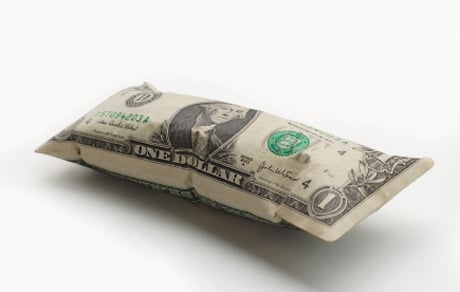
Gas isn't the only thing that is getting more expensive.
In yet another indication that inflation is accelerating, the majority of corporate executives canvassed in a recent survey said they're likely to increase prices on their products by the end of the year.
Two-thirds of U.S. manufacturers will raise their prices within the next six months, according to the 318 chief financial officers and senior comptrollers surveyed in April by Grant Thornton LLC.
The percentage that plan to raise prices is nearly double what it was in October, the last time Grant Thornton conducted its semi-annual survey.
Executives in other industries also are likely to jack up costs or fees for the products and services they sell. About half of all the executives polled — who represent the health care, financial services and technology industries — said they will raise prices, while only 6% said they expected to lower them
One major company, fast-food purveyor McDonald's Corp., said Friday that it plans to raise its menu prices further this year, on top of a 1% increase in March. The company said that it expected commodities prices to rise in the 2% to 3% range this year.
Opinions are mixed on where the U.S. economy is headed, with 48% of respondents saying they expect improvement, compared with 42% who expect it to remain the same over the next six months. That's an improvement over October's results, which showed that only 30% expected to see improvement. A slim majority, at 54%, expect to see their own company's financial prospects to improve.
But improved prospects or not, businesses remain hesitant to hire, with only 39% saying they expect to add head count and 19% saying they expect to cut, and 42% expecting to hold head counts steady. Their hesitance could be linked to concerns about a double-dip
recession, which are shared by 57% of the finance execs, only a slight decrease from October, when 59% were worried.
The executives overwhelmingly believe that the crisis in Japan will affect the U.S. economy, with 11% saying the U.S. will be greatly affected and 83% expecting the U.S. to be somewhat affected. Sixty percent expect the Japanese economy to need at least three years to recover fully.