Ever go to the supermarket, then look at your bank account and wonder if you'll have enough money to afford food when you retire 20 years from now? If you're worried about inflation eating into your purchasing power, the solution generally offered by financial planners is Treasury Inflation Protected Securities, or TIPS bonds. These bonds adjust their principal semiannually to match changes in the Consumer Price Index.
Though useful to investors, TIPS are an imperfect solution as a personal inflation hedge because the CPI tracks a broad basket of goods, many of which you may not consume, or not in the same quantities as the average American does. The consumption patterns of retirees differ dramatically from those of the rest of society -- especially, for instance, in the area of health care. What's more, TIPS are sensitive to interest rates, just like regular bonds. Right now, because conventional Treasury bond yields are so low, TIPS yields are, too. In fact, newly issued TIPS with maturities of less than 10 years offer negative “real” yields, which is a bond's yield adjusted for inflation. Earning less than the CPI doesn't afford much protection.
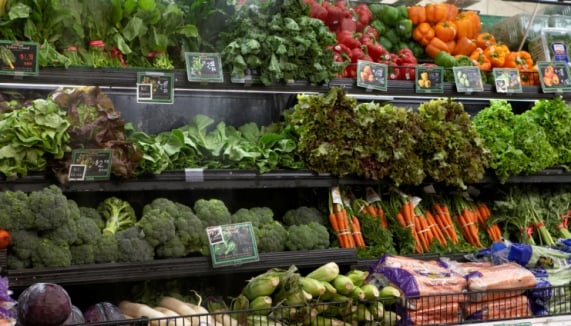
But what if there were a way of buying all the groceries you'll need in retirement today? In theory, there is. Exchange traded funds, such as the PowerShares DB Agriculture Fund, track the futures market prices of basic food commodities such as corn, wheat and cattle. You could figure out how much you spend in the supermarket in a year, multiply that by the number of years you expect to live in retirement and then try to invest that much in a food ETF. It's not a perfect hedge because carrying costs -- insurance, storage costs -- detract from commodity futures returns, and the risk of sudden price plunges is ever present. But some exposure to commodities at least keeps you in the game.
The idea of wringing the inflation risk out of your life doesn't fit neatly into modern investing theory. Each product that offers some protection has imperfections -- and critics. Among the futures naysayers is Don Martin, a financial planner at Mayflower Capital in Los Altos, California. The problem, Martin says, is that the raw materials cost is a small fraction of what a consumer pays at a retail store. “An increase in the grocery store's costs of rent, insurance, lawsuits, regulatory requirements, labor, fuel, delivery, leasehold improvement and utilities may be different from [the changing price of] agricultural futures contracts,” he notes.
Louis Stanasolovich, a Pittsburgh-based financial planner and editor of an alternative investment newsletter called Risk-Controlled Investing, believes futures contracts capture more of the rising grocery-store costs than meets the eye. He points out that the price of most products in the supermarket aisle is based on many commodities, such as fuel to heat the store, metals to make the farm equipment and gas to power the delivery trucks. Collectively, commodities are an essential part of the equation, he says. To gain protection against that more holistic take on grocery store prices, you would need a more broadly diversified commodities fund.
The bigger inflation threat Stanasolovich sees is not food costs but health care, which gets pricier in good times and bad ones. “Today you probably need $250,000 to fund a married couple's costs for medical care in retirement,” he says. “And you need to invest that money in something that appreciates 8 to 12 percent a year to match the rising costs of health care.” Stanasolovich plans to set up a dedicated separate account to help clients address such concerns. It would include mutual funds such as Vanguard Health Care and Delaware Healthcare, he says.
RELATED ITEM The most livable cities in North America »
Individuals who choose to buy commodity futures, or ETFs that provide exposure to futures, can potentially lower their inflation risk by focusing on out-of-favor sectors. Right now, for instance, natural gas looks broadly unloved. At $3.06 per million British thermal units, gas spot prices have fallen 77 percent from their June 2008 peak of $13.31. Prices could recover if the economy improves or if new production techniques, notably hydraulic fracturing, are severely restricted.
Still, investment advisers tend to regard betting on any individual commodities as too risky. “Our recommendation is that investors look to a broad-basket commodity exposure,” says Abraham Bailin, an exchange traded fund analyst who covers the commodity sector at Morningstar. “That's where we've seen the inflationary hedging benefits,” he says. Above all, cautions Bailin, don't confuse hedging with the high-risk speculation that some commodity traders employ. “People are paid lots of money to predict price movements of a particular commodity,” he says. “As an individual investor, it's not even realistic to expect success with that, even if you put in all of your off time.”
--Bloomberg News--