
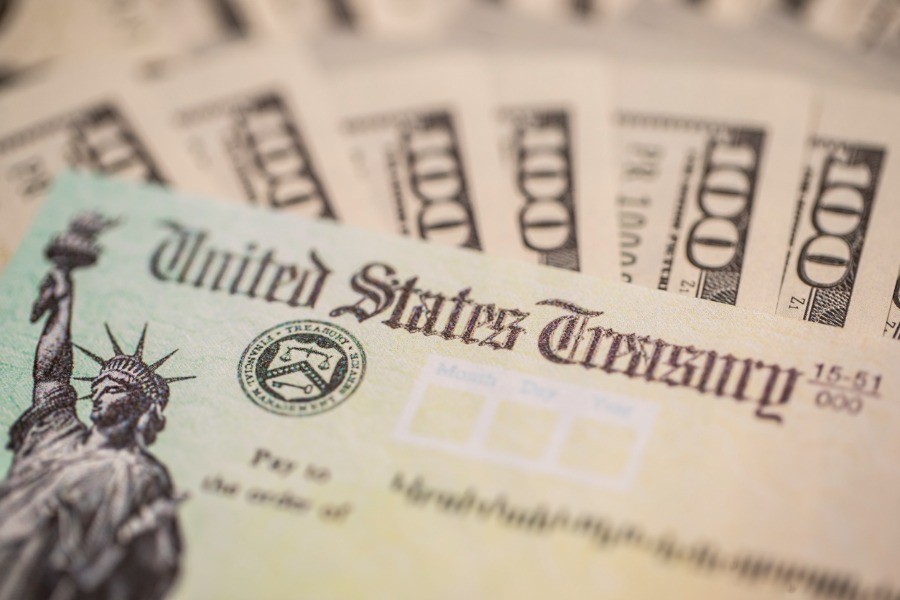
US Treasuries are on the brink of breaking even during a roller coaster first half of the year.
A Bloomberg gauge of returns in the world’s biggest bond market is now down just 0.1% for 2024, after having lost as much as 3.4% for the year in April. At the heart of the rebound are investor bets that cooling US prices will convince the Federal Reserve to cut interest rates sooner and by more than officials have signaled, effectively putting a lid on how high Treasury yields can climb.
“We’ve seen the peak in yields,” said Stephen Miller, four-decade market veteran and investment strategist at GSFM in Sydney. “Bonds are now back as having a deserved place in a multi-asset portfolio.”
Treasuries have been whipsawed this year, with policy-sensitive two-year yields surging above 5% in April as fears over higher-for-longer US rates spurred investors to dump bonds. They have since dropped back to around 4.70% as inflation-to-retail-sales data suggested the world’s biggest economy may finally be cooling enough to warrant lower borrowing costs.
Traders are positioning for the Fed to push through about two-quarter point cuts this year, with the first move fully priced in for November, based on swaps. That’s despite the fact a number of Fed officials on Tuesday said they needed more evidence that prices were easing before cutting rates.
Fed Governor Adriana Kugler said it will likely be appropriate for the central bank to reduce rates “sometime later this year” if economic conditions unfold as anticipated. St. Louis Fed President Alberto Musalem said in his first major policy speech that it could take “quarters” for the data to support a cut.
Rachana Mehta sees the Treasury 10-year yield in a broad range of about 4.2% to 4.5% with movements toward the top of that a good window to buy.
“The volatility we saw in the past, hopefully it has died down given the recent US data,” said Mehta, co-head of regional fixed income at Maybank Asset Management, speaking in an interview with Bloomberg Television. “You can continue to be long duration at about 4.4% to 4.5% in 10-year Treasuries.”
Volatility in the $27 trillion Treasury market has fallen from its recent highs as the views of the Fed and investors over the number of rate cuts expected this year have begun to coalesce. The ICE BofA MOVE Index — a gauge of bond volatility that tracks anticipated swings in US yields based on options — is hovering at about 98, down from an April high of 121.
“The key thing here is that that spread between market expectations and what the Fed is pricing has narrowed,” said Desmond Fu, a portfolio manager at Western Asset Management in Singapore. “That reduces volatility.”
Not everyone sees upside for Treasuries. Strategists at Barclays Plc earlier this month recommended switching back to shorting the 10-year note as they wager on a rebound in US economic activity following back-to-back weaker-than-expected data prints.
Swaps traders meanwhile see a more than 60% chance the Fed may cut rates as early as September.
The market is now keenly focused on the June 28 release of the central bank’s preferred inflation gauge, predicted to show a “very subdued” pace of price pressures in May, according to Padhraic Garvey, head of global debt and rates strategy at ING Financial Markets.
The personal consumption expenditure core price index will fall to an annualized pace of 2.6% in May, according to the median estimate of economists surveyed by Bloomberg. That would be the lowest since 2021.
“That will harden the build of a rate-cut discount for September,” New York-based Garvey wrote in a note with his colleagues. “We continue to eye 4% as a viable target” for the 10-year Treasury yield, he said.
Credit Outperforms
So far this year, corporate bonds have been a better place to be than Treasuries. They’ve generated an excess return over their government peers of 1.32%.
But that’s down from a high of 1.74% at the end of May, according to a Bloomberg index.
Company bond spreads have widened in June as the same signs of economic weakness that have boosted Treasuries keep credit risks alive — particularly among weaker borrowers.

Investors got projected returns dressed up as real ones, SEC says

Parents must still act to get the $1,000 federal seed and employer contributions, giving financial advisors a role in the rollout.

FINRA booted Rudy Anguiano from the industry for “conversion - the intentional and unauthorized taking of another person’s property.”
Notice 2026-62 also flags box spread ETFs and tax-aware fund trades as Treasury opens month-long consultation period.

The firm's former general counsel walked away clean
As AI makes financial information more accessible than ever, Lana Hock explains why human judgment, trust, and empathy remain the qualities clients value most in a financial advisor
Northern Trust’s Ken Lassner shows advisors how to convert volatility into after-tax portfolio gains

