
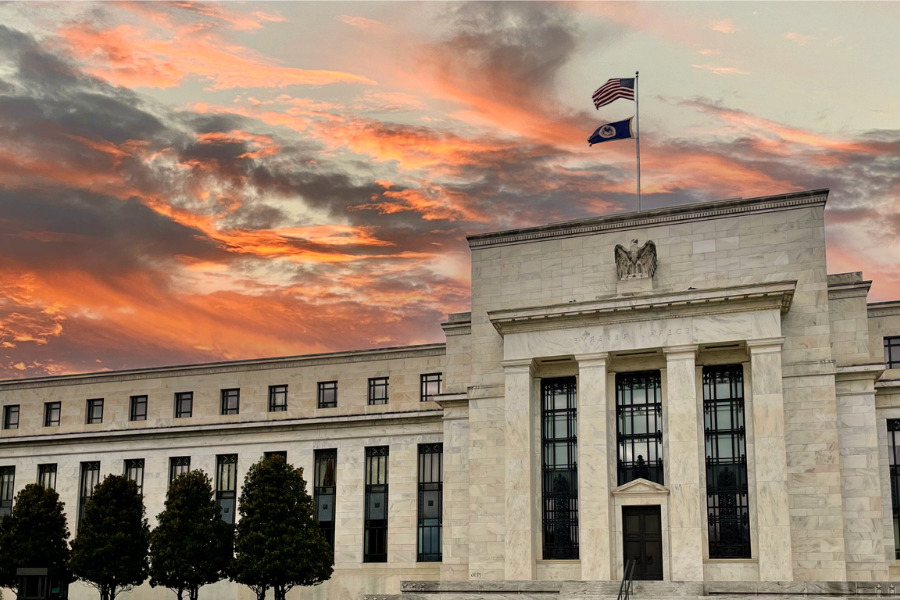
Treasury options traders are protecting against everything from multiple interest-rate cuts this year to a hike ahead of the US Federal Reserve meeting this week.
Recent inflation data has remained stronger than had been expected, dimming expectations that the central bank will cut rates any time soon. While short positions in Treasury futures extended last week as yields pushed through fresh yearly highs, options flow has suggested growing uncertainty around the path of the Fed’s monetary policy for this year, with a number of deep out-the-money tail-risk hedges appearing across a number of tenors.
The positioning covers most extreme dovish and hawkish scenarios being priced into this year, including hedges targeting a policy rate as low as 3% by the December FOMC versus around 5% currently priced into the swaps market.
On the flip side, option plays have also targeted rates higher-for-longer over the year and even positioning for one more hike has also been popular over the past week. On Friday, a trader bought March 2025 put spreads targeting the Fed to hold rates steady into 2025.
“It makes sense that the options market should reflect some probability that the next Fed move will be a hike given cuts have been pushed out, but the bar is high for that outcome,” Tanvir Sandhu, Bloomberg Intelligence’s Chief Global Derivatives Strategist, said in an email. “The markets (and the Fed) really needs the data to do the talking on disinflation being back on track.”
Tactical positioning in Treasuries has been aggressively short over the past couple of days, with open interest building in futures as yields have stretched to fresh yearly highs, with the 2-year breaching 5% and 10-year pushing above 4.7% before paring the jumps slightly.
New money is coming into the higher-rate trade, with short positions building as futures sell off. This has been most apparent in the front- and belly of the curve where open interest in 2-year note futures has now risen in 21 of the past 22 trading sessions. US 2-year yields peaked at 5.025% Thursday, the cheapest levels since November as traders pared pricing of rate cuts for this year and beyond.
Currency markets are watching both the Fed and the Bank of Japan. Appetite for options that pay out on a sizable move in the Japanese currency in either direction is near its the highest level since October 2022. Risk reversals show this is mostly down to hedging against a sharp rally.
The yen dropped as much as 1.8% on Friday to 158.44 per dollar, a fresh 34-year low, after US data showed inflation pressures remain, supporting recent messaging from Fed Chair Jerome Powell on keeping rates higher for longer.
The yen is down almost 11% since January and a steep acceleration of the move could lead Japanese authorities to step in as the currency nears its 1990 low of 160.20 versus the greenback. Masato Kanda, Japan’s top currency official, said in February that a 10-yen move over one month against the dollar is considered rapid.
One-week volatility in dollar-yen headed Friday for its strongest close in four months, even as the BOJ-meeting risk was priced out, showing that intervention risk is keeping demand for long-volatility exposure intact. And yen overnights ended the week at 11.5%, highest reading for a Monday expiry since January 2023.
“The options skew in G10 FX can reprice further in favour of USD if inflation proves to remain sticky and the timing of cuts gets pushed out even further,” said Sandhu.
This story was produced with the assistance of Bloomberg Automation

LPL Financial and Raymond James also add independent advisors from Osaic and Edward Jones in Michigan and Arizona.

The SEC-registered RIA advises on more than $1 billion in client assets, with no advisory fee through 2027 and no human financial advisors.

The four wirehouse firms lost 1,449 experienced advisors and recruited 932 in the first six months of the year, according to Diamond Consultants.

Merit's 10th Commonwealth addition deepens its Western New York reach, while another Hightower partner joins its Signature Wealth platform in Michigan.

Report on Climate Action 100+ signals risk for passive managers' 13G status heading into the 2027 proxy season.
Knighthead Life entered the market with a competitive MYGA. A strong launch earned advisor confidence and paved the way for FIAs.
As AI makes financial information more accessible than ever, Lana Hock explains why human judgment, trust, and empathy remain the qualities clients value most in a financial advisor

