
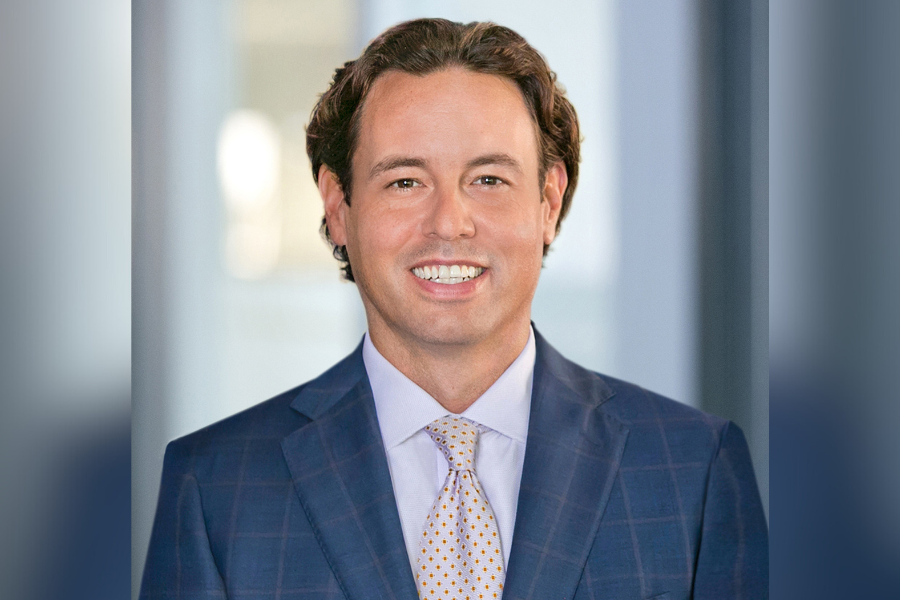
For Kevin Grimes, CEO and chief investment officer at Grimes & Company, the primary goal has always been to provide peace of mind for investors, mainly by focusing on risk-adjusted returns.
“One main goal in life is to forge a path of financial peace of mind for our investors, and we want to make their financial lives easier,” he explains. “A big part of that is making the investment experience as easy as possible.
“We invest across traditional strategies within individual bonds and stocks. And those processes are always being refined. However, the biggest innovation is in our tactical approach to risk management. These strategies use a systematic approach to manage market exposure and reduce risk during difficult times to smooth the ride and experience of the client's overall portfolio.”
This approach is particularly beneficial during market downturns as well as economic uncertainty, as it promotes confidence and helps manage investor behavior when panic sets in.
"When markets are getting crushed, nothing promotes peace of mind like a pile of cash in an account," adds Grimes.
Highlighting the advantages of tax-deferred accounts within retirement income, Grimes says that "you have the luxury of not having to pay taxes or having a tax-deferred nature, which is conducive to tactical risk management that would otherwise incur capital gains and high levels of income.”
While looking at risk-managed income solutions (RMIs), Grimes says that their strategies are once again tailored and designed to meet the individual retirement income needs of clients.
“RMI consists of two versions: a go-anywhere approach to the bond market and a municipal bond version,” he says. “They were created with three goals: deliver high levels of income, manage downside risk, and provide daily liquidity.”
And by focusing on price trends and volatility measures across the bond spectrum, they aim to deliver as much yield as possible while minimizing risk.
“During times when the bond market is not behaving well, we will shift to short-term instruments and money markets, which isn’t such a bad thing with money markets yielding over five percent,” adds Grimes.
This RMI strategy was built in 2011, during a period of historically low interest rates, to address the challenge of generating sufficient income for retirees. And it’s the performance, resilience, and adaptability of these RMIs that Grimes is particularly proud of.
“Originally, RMI was created for a low-interest-rate environment, but it has performed remarkably well in a rapidly rising interest-rate environment,” he explains.
The strategy's success in managing through periods of declining yields has been notable, particularly as Wall Street attempted to anticipate Federal Reserve rate cuts.
“It's been nearly 12 years, and to deliver those returns with a consistent three to four percent volatility year in and year out is something we're really proud of,” he adds. “It's helped our retiree clients reach their goals.”
Looking ahead, Grimes anticipates more volatility in the fixed-income space over the next five to 10 years.
“Providing income could be challenging, but the higher risk-free rates since the global financial crisis offer a better starting point,” he says. “In a world where inflation could stick around, dividend growth is a solid strategy. Each year, your invested capital returns more, which is crucial in maintaining purchasing power.”
Grimes also sees opportunities in the credit markets, noting that substantial yields are available but require careful risk management.
“There's some attractive yield to be had in the credit space, whether in private credit instruments or publicly traded credit markets. It's just a matter of accessing that yield with some level of risk management because credit gets hit hard when bad things happen in equity market.”
Overall, Grimes’s strategic vision for the future of retirement income involves a mix of traditional and innovative approaches, ensuring clients can navigate the complexities of the financial landscape.
“Our clients have worked hard to build their wealth, and it's our responsibility to help them preserve and grow it,” he emphasized. “That’s a responsibility we take very seriously.”

LPL Financial and Raymond James also add independent advisors from Osaic and Edward Jones in Michigan and Arizona.

The SEC-registered RIA advises on more than $1 billion in client assets, with no advisory fee through 2027 and no human financial advisors.

95.8% of house trades were winners. For clients? The SEC says just 14.9%.

The complaint says Duolingo added friction on purpose, then lied about it.

The four wirehouse firms lost 1,449 experienced advisors and recruited 932 in the first six months of the year, according to Diamond Consultants.
Knighthead Life entered the market with a competitive MYGA. A strong launch earned advisor confidence and paved the way for FIAs.
As AI makes financial information more accessible than ever, Lana Hock explains why human judgment, trust, and empathy remain the qualities clients value most in a financial advisor

