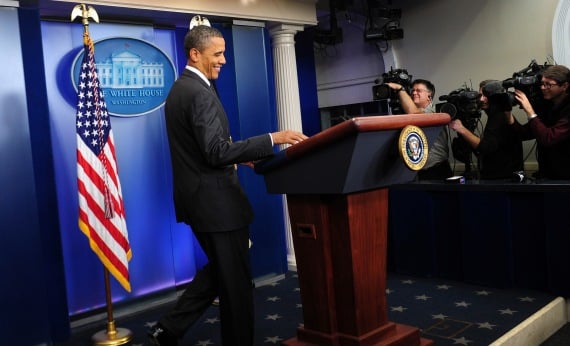
The White House has underscored its push to extend the Bush administration tax cuts for households making less than $250,000 annually by reiterating its intention to block legislation that would continue the breaks for high-income earners.
On Monday, President Barack Obama drew a bright line between himself and Republicans, who are likely to pass a one-year extension of the Bush tax cuts for all income levels in the House later this month.
In a blog post Tuesday, a White House official promised that Mr. Obama would scuttle such a bill.
“The president also believes that the top 2% should return to Clinton-era income tax rates – when the United States created 23 million jobs and ran the biggest budget surplus in history – and will veto any legislation that extends the unaffordable Bush tax cuts for the wealthiest in our country,” Obama senior adviser David Plouffe wrote.
Republicans criticized Mr. Obama for seeking to raise taxes on small businesses, many of which, they say, are run by entrepreneurs who make more than $250,000 a year but pay taxes on the business through their personal returns.
“No one should see an income tax hike next year — not families, not small businesses and other job creators,” Senate Minority Leader Mitch McConnell, R-Ky., said in a statement Monday.
“We should extend all the tax rates while we make progress on fundamental tax reform. And we should be focused on the pro-growth jobs legislation that the House has passed, while ensuring that Washington does no additional harm to an all-too-fragile economy.”
By staking out their positions, the parties have set the election-year debate. What is not clear is whether all the Bush tax cuts will expire as scheduled Jan. 1. That will be determined by whether Mr. Obama follows through on his veto threat — if congressional negotiators send him a bill that maintains the Bush tax cuts for everyone.
“It is a really tough question,” said Andrew Friedman, principal at
The Washington Update, which provides legislative and regulatory analysis for investors. “It depends on where the economy is and what Obama thinks is the right thing to do. I believe he would probably allow the tax cuts to expire.”
In a political season, it's difficult to sort out stances that are designed to appeal to voters and those that truly foreshadow future action.
Phillips Hinch, assistant director of government relations at the Financial Planning Association, said the White House veto threat “is definitely playing to the [Democratic] base” and may not become a reality in the tax-policy negotiations during the lame-duck session of Congress later this year — even if Mr. Obama loses the November election.
“I'm not sure if, when push comes to shove after the election, that [veto] would hold,” Mr. Hinch said. “The president really owns the economy. He's still worried about his legacy as president. He doesn't want another
recession on his watch.”
The next few months will be filled with political positioning on tax cuts but few signals about the direction of the lame-duck talks.
“There will be no hint as to how this will resolve,” Mr. Friedman said.