
A week after the election, much remains unclear about how president-elect Donald Trump's return to the oval office will affect markets.
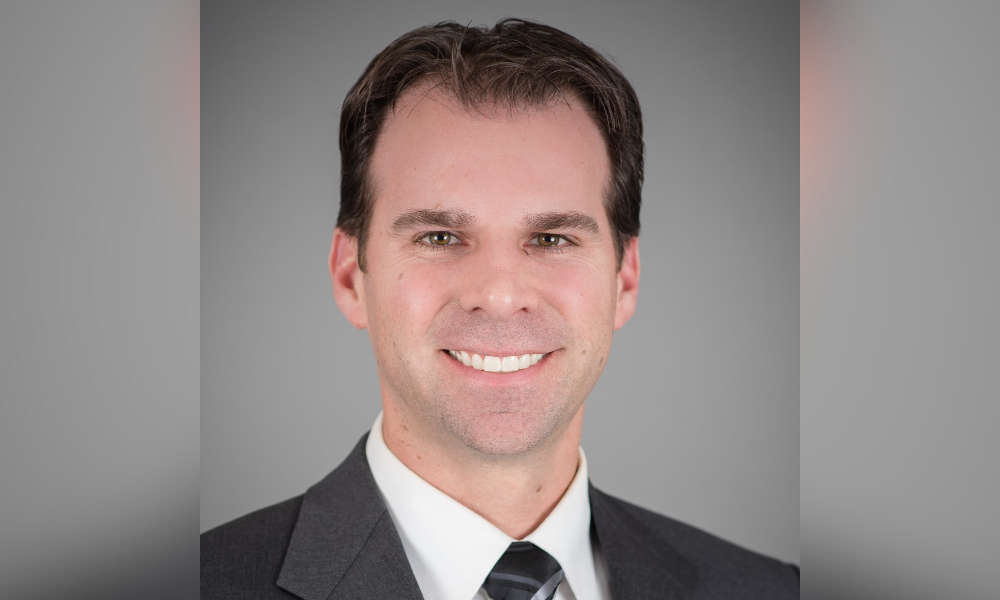
That said, Ryan Dykmans, chief investment officer at Dunham & Associates Counsel, in a fireside chat with Chuck Failla, CEO of Sovereign Financial, advised firms at the RIA Activate California event this past Tuesday to stay proactive and adaptable.
“Watch out where we’re at,” he said. “It’s going to be choppy.”
The uncertainty surrounding the new administration's policies has already had a significant impact, with markets surging in the aftermath of the election results. However, Dykmans cautioned that this may be short-lived.
While there hasn’t been any seismic shift in market conditions, the elections and the Federal Reserve's actions have injected new complexities.
“Markets were already top-heavy, and then we saw another 8 to 10 percent run-up. It’s been amazing, but it changes a lot for portfolios,” Dykmans said.
The Fed’s latest meeting reinforced its cautious stance, which Dykmans said sets the tone for 2025 and beyond. However, he pointed out that interest rate volatility is a key factor to watch, as it significantly impacts portfolio strategy.
After all, clients have grown accustomed to the high cash rates, with some money market accounts yielding close to 5 percent. But with high cash rates creating hesitation among clients to shift to riskier assets, he underscored the delicate balancing act advisors face.
“When cash and money markets are yielding close to 5 percent, how do you justify moving into risk assets? Now that we've seen 75 basis points come off the table, again, it's a question mark,” he said.
Dykmans believes this will also cause bonds to rise as well. While higher-yielding fixed-income assets may benefit, he cautions against rushing into long-duration positions. The trick, he said, is knowing when and how much to go into longer-duration bonds, while also cautioning against diving into high-duration portfolios too soon.
“Volatility is high. We don't know the path. And knowing that path of the Fed is huge for interest rate volatility,” he said.
He emphasized the importance of closely monitoring metrics like the Merrill Lynch Option Volatility Estimate, the MOVE index, to gauge the appropriate level of interest rate risk.
“Volatility in interest rates is being priced extremely low right now, meaning you’re not getting compensated for that interest at risk.”
Inflation also remains a significant concern, with any unexpected rise likely to disrupt both equity and bond portfolios. Dykmans noted that any inflationary pressures are compounded by wage growth disparities and the residual effects of a 25 percent price increase in goods over the past five years.
“Since it's only marginally, maybe 1 percent higher in the same five-year period, I see that as problematic for our consumers,” he said. “That’s an issue where they can't sustain these bigger pickups and that could actually, in turn, throw us into a recession.”
To help navigate and offset inflation issues, he emphasized the importance of diversification, cautioning against over-concentration in any single asset class.
For example, he pointed to exploring underutilized asset classes like private credit and non-traditional REITs, particularly those tied to self-storage, medical facilities, and data centers.
“Private credit offers a lower correlation to traditional bonds and equities, making it a nice sleeve for portfolios,” Ryan said.
Similarly, he also emphasized the importance of looking at international opportunities, particularly in emerging markets. With around 20 percent of his own core equity allocation dedicated to emerging markets, he sees this as a potential area for growth, especially if the US dollar weakens.
"Keep that diversification,” he said. “If you can find asset classes that you haven't touched yet and that your investors aren't excited about, look at those. Because if they're excited about it, you're probably also on top of it."

New Allspring research finds 401(k) participants want guidance on income and rollovers, not just portfolio automation.

Aging homeowners hold record housing wealth - but most advisors still aren't bringing it into retirement plans

$1.7M invested from an inheritance. Then the phone went dead.

The pre-IPO platform sold $430M in units while allegedly rigging prices behind the scenes.

A Nationwide survey finds 47% of GLP-1 users have never discussed the drugs’ financial impact with an advisor, even as many dip into savings.
Knighthead Life entered the market with a competitive MYGA. A strong launch earned advisor confidence and paved the way for FIAs.
As AI makes financial information more accessible than ever, Lana Hock explains why human judgment, trust, and empathy remain the qualities clients value most in a financial advisor

