
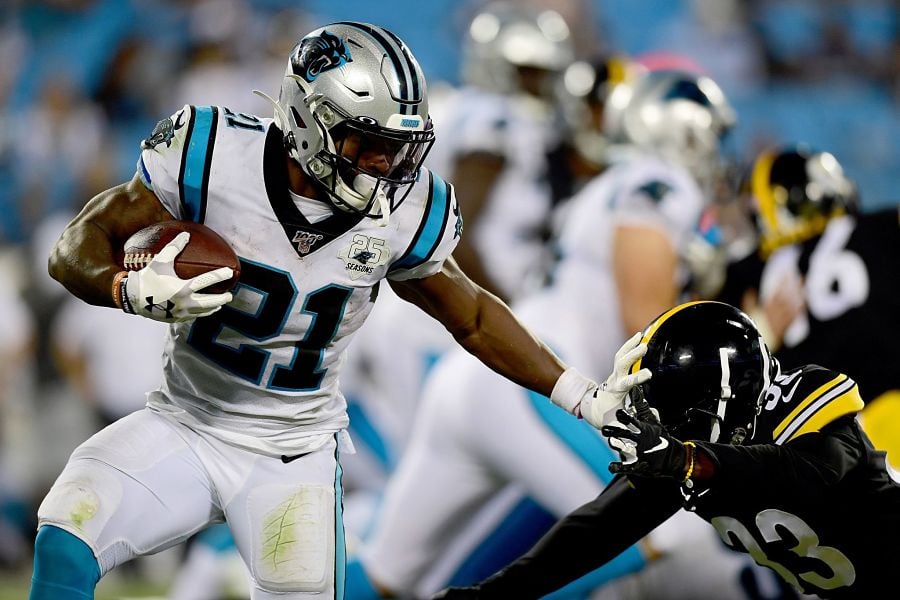
"When you throw the ball, three things happen and two of them are bad." — Attributed to Woody Hayes (maybe); could also be Darrell Royal, Bernie Moore, or even Gen. Robert Neyland, no one really knows "When you do a rollover, three things happen and they're ALL bad!" — Ed Slott (for sure!) Welcome to football season. In case you're wondering, the three things that can happen when you throw the football are: 1. Completed pass (good) 2. Incomplete pass (bad) 3. Interception (really bad!) The bad things might cost a team the game. But doing rollovers is much more serious; a mistake on a rollover can cost a client their life savings. The three bad things that can happen when a client does a rollover are: 1. Missing the 60-day rollover deadline 2. Incurring 20% mandatory withholding (on distributions from company plans) 3. Breaking the once-per-year IRA rollover rule (really bad!) The solution to all of these rollover blunders is simply to do only direct, trustee-to-trustee transfers, also known as direct rollovers, in which the funds go directly from one plan to another without anyone touching the money in between, as opposed to indirect rollovers, where a check is made out personally to the IRA owner or employee. If the check is made out to a person, that person can cash that check — this is constructive receipt — and the rollover attempt can trigger all three tax traps above. [Recommended video: Ed Slott: IRA rollover decision is a high value opportunity for advisers]
An indirect rollover must be completed within 60 days of receipt of the funds. If the 60 days is missed, the distribution will be taxable unless there is a good reason for missing the deadline. There are several avenues of relief available, though, if the 60-day deadline is missed. There is an automatic hardship waiver of the 60-day rule if the delay was due to an error on the part of the financial institution. Then there is self-certification, which is permitted under Revenue Procedure 2016-47. There is no cost for self-certification, but it can only provide more time to complete the rollover if the reason for missing the 60-day deadline is one of 11 provided by IRS in this ruling. The IRS can also question this later on audit. If self-certification doesn't work, then a private letter ruling can be requested but this is an expensive and time-consuming route, and there is no guarantee of a favorable ruling. This 60-day-rule annoyance can be completely eliminated by doing a direct rollover or transfer. [More: 401(k) dilemma: Advisers weather a fog of uncertainty surrounding IRA rollovers]
This rule only applies to indirect rollovers from company plans, which are subject to mandatory 20% withholding. Employees are often caught by surprise when they receive only 80% of the funds. They will then need to make up that 20% (the amount withheld for federal taxes) to complete the rollover within the 60 days. If they cannot complete 100% of the rollover, the shortfall will be a taxable distribution and could also be subject to a 10% early distribution penalty, if no exception applies. The better option is to request a direct rollover, say from the 401(k) to the IRA. The 20% withholding does not apply to direct rollovers. [More: Reg BI: How rollovers are changing under the new SEC rules]
This rule can result in the worst-case scenario in which the entire distribution is subject to tax (and a possible 10% early distribution penalty) with no relief available. This is a fatal error. It cannot be corrected. Only one indirect rollover can be done per year — that's 365 days, not a calendar year. This rollover rule only applies to IRA to IRA or Roth IRA to Roth IRA rollovers. It does not apply to rollovers from company plans to IRAs, or vice versa. Nor does it apply to Roth conversions. A direct rollover is strongly advised here as well. An unlimited number of IRA to IRA direct transfers can be done. If for some reason a direct rollover is requested and the company plan or IRA custodian insists on issuing a check, then have that check made out to the receiving institution and not to the client personally. Checks made out to the receiving institution cannot be cashed. They qualify as direct rollovers. Problem solved. Enjoy football season and don't drop the ball on rollovers! [More: The perils of do-it-yourself IRA transactions] For more information on Ed Slott, Ed Slott's 2-Day IRA Workshop and Ed Slott's Elite IRA Advisor Group, please visit www.IRAhelp.com.

The financial advice industry has been facing inquiries into its cash sweep programs for years now.

Investor money allegedly went to strip clubs, exotic cars, and landscaping

Procyon adds $415 million in assets under management in New Jersey while Savant picks up a $213 million Southern California planning firm

With a growing number of real estate-rich Baby Boomers aging into retirement, some advisors may be failing to consider all the options available for those clients' assets.

Cornerstone Advisors study reveals compliance bottlenecks stall campaigns weeks after customer opportunities close.
As AI makes financial information more accessible than ever, Lana Hock explains why human judgment, trust, and empathy remain the qualities clients value most in a financial advisor
Northern Trust’s Ken Lassner shows advisors how to convert volatility into after-tax portfolio gains

