
A nominee for the Securities and Exchange Commission told lawmakers Tuesday she would work to ensure that financial firms are living up to the new broker investment advice standard.
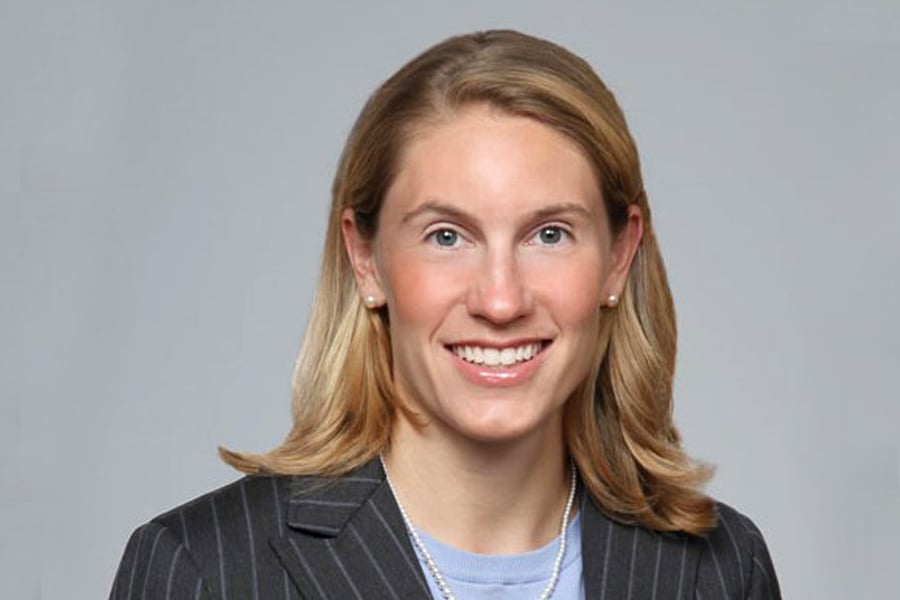
Caroline Crenshaw, an SEC counsel who has been tapped by the Trump administration to fill a Democratic seat on the commission, said the agency should help financial firms comply with requirements to increase disclosure and curb conflicts of interest under the advice reform package that centers on Regulation Best Interest.
But when firms fall short on compliance, the SEC must respond, Crenshaw said at a hearing of the Senate Banking Committee.
“We have to hold those firms accountable when they are not appropriately mitigating conflicts of interest,” Crenshaw said.
She was responding to a question from Sen. Sherrod Brown, D-Ohio and ranking member of the banking committee. Last month, Brown, a Reg BI skeptic, sent a letter to the SEC urging the agency to put teeth into the measure through enforcement.
Brown, who is seeking separate SEC enforcement data related to Reg BI compliance, asked Crenshaw whether there are “ways to get the most out of the rule.”
Crenshaw said Reg BI must deliver on its promise of investor protection. Under the regulation, brokers are prohibited from putting their financial interests ahead of those of their customers.
“We need to make sure over time that rules are actually changing the status quo for investors,” she said.
Crenshaw, who has worked at the SEC for seven years and has served as counsel to two recent Democratic members, Kara Stein and Robert Jackson Jr., was one of two SEC nominees appearing before the Senate committee.
The other was Hester Peirce, a current Republican member who has been re-nominated for a full term. Kyle Hauptman, a nominee for the National Credit Union Administration Board, also testified.
Crenshaw would replace Jackson on the five-person SEC. She told committee Chairman Mike Crapo, R-Idaho, that one of her priorities would be to ensure “retail investors are getting the high-quality investment advice they deserve.”
In her response to Crapo, Peirce, who has served on the commission for two years, said she wanted to address unfinished business if she is confirmed, including helping the agency shape policy toward digital currencies.
“Crypto is clearly going to be here to stay,” Peirce said. “I would like us to set up a regulatory framework that works well for crypto. We have some of the structure in place to do that but we have a lot more work to do.”
The pairing of a Republican and Democrat increases the chances that both Peirce and Crenshaw will be comfortably approved by the committee and then confirmed by the full Senate.
But it became clear at the hearing that at least one senator will vote against Peirce.
Sen. Elizabeth Warren, D-Mass., criticized Peirce for being too soft on the regulation of private equity, which she asserted dismantles companies and puts workers out of jobs.
Warren pressed Peirce on whether she supports more disclosure for private equity firms. Peirce told her that private equity investors have more leverage to make those firms turn over information. The agency should concentrate on disclosures for retail investors, Peirce said.
“Nothing in your record suggests you’re willing to take on powerful interests to protect either investors or workers,” Warren said. “That’s why I think it would be a mistake to confirm you for another term.”
Crenshaw and Peirce would join SEC Chairman Jay Clayton, a political independent, Republican member Elad Roisman and Democratic member Allison Herren Lee on the panel.

Two wealthtech providers are handing advisors the controls, letting firms design their own workflows and AI agents in plain language.

Edwin Lickiss earlier admitted that he defrauded at least 93 victims of over $9.5 million from 1998 through 2024.

New research shows Americans want control over their money but lack the confidence to take action – and advisors are the bridge.

Retire Through Ownership Act lets ESOP fiduciaries rely on independent appraisals, closing a decades-old valuation gap for private company stock.

The breakaway-focused platform's senior hires from Wells Fargo, Bluespring and Hightower deepen its bench for growth and succession planning.
Northern Trust’s Ken Lassner shows advisors how to convert volatility into after-tax portfolio gains
Dan Biagini of American Equity says the steady decline of pensions, longer lifespans and a reset in interest rates are rewriting how advisors build retirement income

