
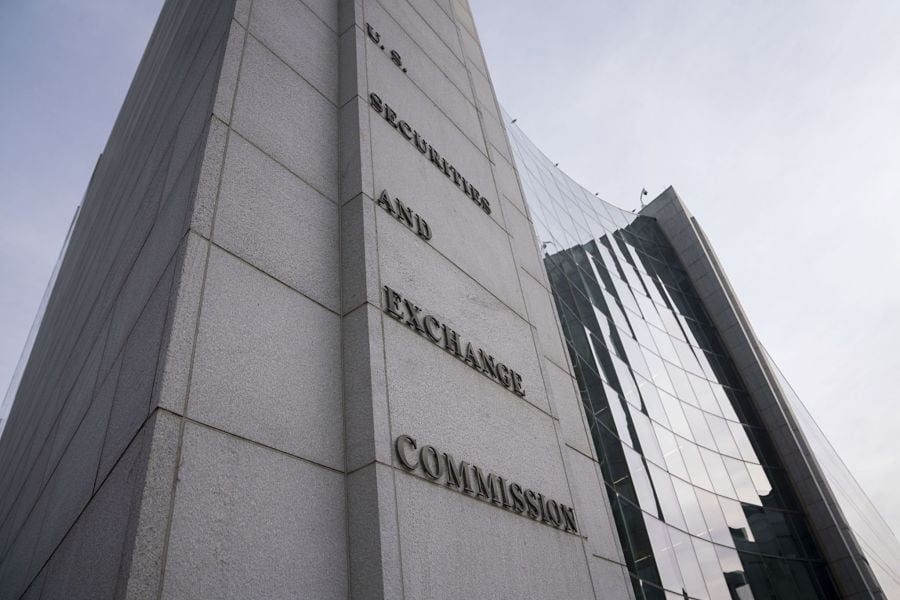
The SEC ordered a Delaware investment advisory firm to pay $1.3 million to settle charges that it placed clients in expensive mutual fund share classes without disclosing related conflicts of interest.
In an order posted Tuesday, the Securities and Exchange Commission said Wilmington Trust Investment Management offered a wrap program between February 2020 and August 2020. The firm paid trading costs for clients in the program, including transaction fees on mutual fund investments, as part of the overall management fee, according to the SEC.
During the six months in 2020 covered in the case, Wilmington Trust did not incur transaction fees because it invested some client assets in higher-cost mutual fund share classes offered by its clearing firm that didn't charge transaction fees. But lower-cost share classes of the same funds were available to clients for a transaction fee, the SEC said.
Wilmington Trust violated its fiduciary duty by failing to provide to clients “full and fair disclosure” about the conflicts of interest related to using transaction-fee-free mutual funds in its wrap accounts while continuing to include transaction costs in the wrap fee, the SEC said. The firm also failed to obtain the best mutual fund prices for its clients by investing in the high-cost funds when less expensive shares in the same funds “presented a more favorable value for these clients.”
As part of the settlement, Wilmington Trust agreed to pay $999,559 in disgorgement, a $250,000 fine and $77,588 in interest for a total of $1,327,147. The SEC said the firm, which did not admit nor deny the SEC’s findings, took remedial efforts to address the share-class problem and cooperated with the agency on the investigation.
The action against Wilmington Trust continues a share-class crackdown the SEC launched with an initiative in 2018 that concluded in 2020. Since then, the agency has pursued enforcement against individual firms.
“If you’re an investment advisor and you’re not putting your clients in the lowest-cost share class, then you’re running the risk of a fiduciary failure,” said Niels Holch, a partner at the law firm Holch & Erickson.
Wilmington Trust said it ended its Portfolio Architect wrap-fee program in 2021 and that clients have been reimbursed for financial harm associated with the offering.
“We do not anticipate that the settlement will impact the services we provide to our clients or on the business’ financial health,” Wilmington Trust spokesperson Pat Fitzgibbons wrote in an email. “We are pleased that this matter has been resolved.”
The SEC has made no secret of its concerns regarding share-class selection. In addition to taking enforcement actions, it has made the topic an examination priority for the past couple years.
“This is a pretty obvious violation, and I’m a little surprised it’s occurring given the SEC has brought a number of these administrative proceedings with similar fact patterns,” Holch said.

Also, Orion has added BlackRock, Fidelity, and Vanguard to its custom portfolios suite, and RedBlack has set up a new headquarters after crossing a trillion-dollar milestone.

Also, New York-based Legacy Edge Advisors names its first-ever CEO, while Novare Capital Management hires a Vanguard veteran with a multigenerational planning focus.

Asset managers are racing to bring private market products to retirement plans, but cost and liquidity concerns linger.

Treasury's latest tax-exemption crackdown on private schools lands in the wake of a separate push to restrict refundable credits for some immigrant filers.

Workforce trust measures predicted which companies came out ahead during COVID-19. The same dynamic may now be playing out across the AI transition — and the data suggests the spread could be just as wide.
Northern Trust’s Ken Lassner shows advisors how to convert volatility into after-tax portfolio gains
Dan Biagini of American Equity says the steady decline of pensions, longer lifespans and a reset in interest rates are rewriting how advisors build retirement income

