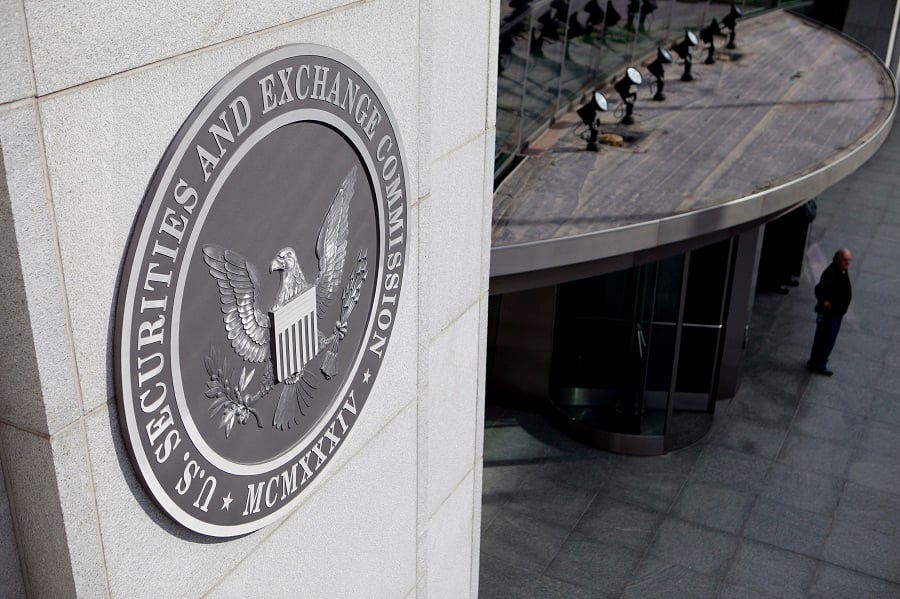
Rule limiting fund leverage represents one of the most aggressive responses by regulators to risks exposed during the 2008 financial crisis
Some mutual funds would have to curb their use of derivatives or build larger cash buffers under a U.S. regulator's plan to boost investor protections and restrict hazards in the $18 trillion industry.
The proposal approved by the Securities and Exchange Commission would cap the leverage a fund can derive from derivatives at 150% of its net assets. Many funds also would be required to hold more collateral against potential losses under the rules, which represent one of the most aggressive responses yet by regulators to fund risks exposed during the 2008 financial crisis.
“The commission's mandate to protect investors calls for a sharper focus on funds' use of derivatives and for putting in place prudent safeguards to ensure funds properly manage the associated risks,” SEC commissioner Luis Aguilar, a Democrat, said in remarks prepared for the meeting.
Under the proposal, funds would have to carry enough cash or cash-like investments to cover future possible losses realized under stressed market conditions. The SEC's current guidance allows funds to pledge any type of liquid security to cover just the daily gain or loss for many types of derivatives contracts.
That treatment creates the risk that a fund's collateral could decline in market value at the same time it realizes losses on derivatives.
“The current regulatory framework no longer effectively achieves the statutory objectives of the Investment Company Act, which seeks to protect investors from the risks of excessive leverage,” SEC chairwoman Mary Jo White said.
(Related read: Market volatility draws SEC scrutiny of ETFs)
Funds that use derivatives to reduce risk in the overall portfolio wouldn't be subject to the 150% cap. Those funds could instead hold derivatives with a notional value of 300% of net assets.
While many funds don't make extensive use of derivatives, about 4% of funds have exposure that exceeds 150% of net assets, according to the SEC. Some of those highly-leveraged funds could choose to deregister as mutual funds instead of paring back their use of derivatives or building larger cash buffers, SEC chief economist Mark Flannery said during his presentation on the proposal.
The SEC's plan could squeeze leveraged exchange-traded funds that use derivatives to seek returns of double or triple an index of stocks or other assets. Many managed futures funds also rely heavily on derivatives for their strategies.
“Today's proposal appropriately recognizes that a highly leveraged strategy is at odds with 40 Act funds, and the retail investors that own such funds,” Democratic SEC commissioner Kara Stein said, referring to the landmark law that governs.
(More: SEC warns brokerages: Improve monitoring of risky products)
The proposal, which will be open for public comment for 90 days, is the SEC's first attempt to write a comprehensive set of rules governing use of derivatives in the mutual-fund industry. It follows scrutiny of asset management companies by the Financial Stability Oversight Council, a panel of regulators that can subject firms to stricter oversight as part of its mandate to guard against threats to the broader economy.
Republican commissioner Michael Piwowar cast the lone vote of the four-member SEC against the proposal. He said there was no justification for a new, 150% cap on leverage because the SEC's collateral requirements already limit how much exposure a fund can have to derivatives.
“This proposal is complex and it will take the fund industry some time to fully assess its breadth and implications,” Investment Company Institute president and CEO Paul Schott Stevens said in a statement. “We look forward to working with our members to provide our views to the SEC.”