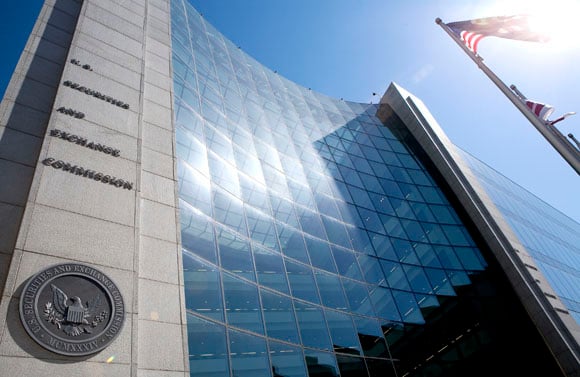
The U.S. Securities and Exchange Commission was sued by eight of indicted financier R. Allen Stanford’s investors, who claim regulators’ negligence and misconduct caused their losses.
The investors, in a lawsuit filed yesterday in federal court in Dallas, said regulators should have investigated Stanford earlier and detected what the agency later concluded was a “massive” Ponzi scheme.
The SEC’s inspector general, in a report issued last year, faulted the agency’s Fort Worth, Texas, office and some of its employees for failing to take action against Stanford sooner.
“But for the negligent acts and omissions, misconduct and breaches of duty by Spencer Barasch, a former SEC regional enforcement director, the negligent supervision of Barasch by his SEC supervisors, and other inexcusable acts of negligence by SEC employees, the plaintiffs would not have made, and lost, their investments,” according to the complaint filed by the investors’ lawyer, Edward Gonzales III in Baton Rouge, Louisiana.
U.S. securities regulators seized Stanford’s operations in February 2009 on suspicion of fraud. Investors who bought certificates of deposit at the financier’s Antigua-based Stanford International Bank Ltd. lost more than $7 billion, according to a lawsuit filed by the SEC.
Barasch, who left the SEC’s Fort Worth office in 2005 and is now a lawyer in private practice, didn’t immediately return a call to his Dallas law firm today.
Kevin Callahan, an SEC spokesman, declined comment on the lawsuit.
Stanford, 61, who is in jail awaiting trial on criminal charges, has denied any wrongdoing.
Investor Losses
Most of the eight investors who filed the lawsuit live in southern Louisiana, where Stanford had a large
trust operation. They claim combined losses of more than $18.7 million, according to their complaint.
The SEC failed to conduct a meaningful probe of Stanford until 2005 even though examiners suspected him of operating a Ponzi scheme eight years earlier, SEC Inspector General H. David Kotz wrote in an internal report in April.
The agency’s Forth Worth office conducted four reviews of Houston-based Stanford Financial Group Co. starting in 1997 and determined after each one that Stanford’s purported returns on certificates of deposit were highly unlikely, Kotz said in the report.
Ethics Office
Kotz also said in the report that Barasch, after he left the SEC, tried to represent Stanford on three separate occasions, until the agency’s ethics office blocked it.
Barasch told Kotz’s investigators that he felt it wasn’t necessary for his office to act against Stanford because he had informed other regulatory agencies about the potential fraud, according to the report. Kotz said he found no evidence of such referrals in his investigation.
Kotz’s report singled out Barasch as having “played a significant role in multiple decisions over the years to quash investigations of Stanford,” Gonzales said in the complaint.
“Through its negligent actions and inactions, the SEC caused Stanford’s scheme to continue and expand, eventually resulting in billions in losses by investors,” Gonzales said.
--Bloomberg News--