
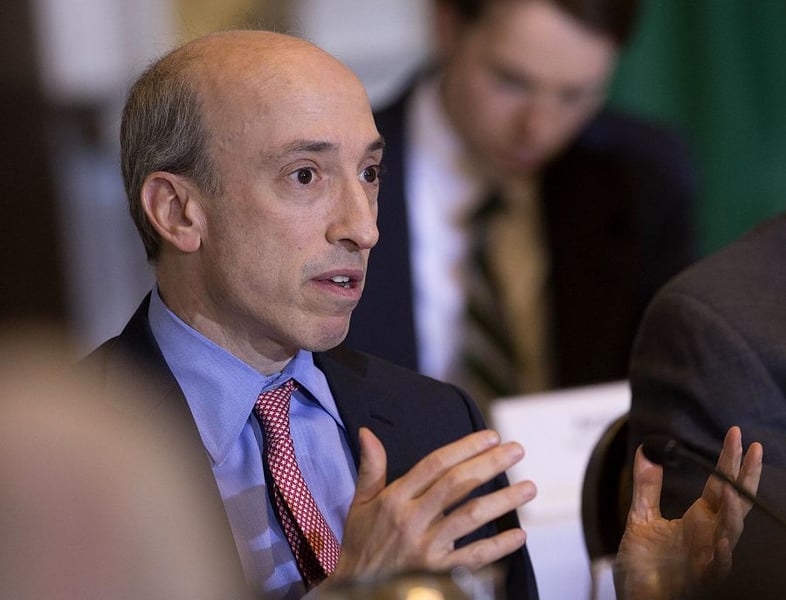
Securities and Exchange Commission Chair Gary Gensler is going back on the offensive against those in the crypto industry that he says are purposefully shirking regulations.
On Thursday, Gensler repeated his demands that crypto exchanges, brokers and attorneys in the digital coin industry comply with securities rules. It’s the latest salvo by the SEC chief in his push to clamp down on an asset class that he says often operates in legal gray areas.
The SEC has been at odds with much of the crypto industry over whether the agency's regulations should apply to projects that are more decentralized than stocks or bonds since long before Gensler took over the agency in April 2021. Tensions have increased during the past year, with the SEC chair repeatedly arguing that most tokens are covered by those rules.
“The public deserves the same protections from your clients that they get with other issuers of securities,” Gensler said in remarks prepared for Thursday’s Practising Law Institute’s SEC Speaks event in Washington. “Not liking the message isn’t the same thing as not receiving it.”
Crypto enthusiasts say forcing digital asset firms to comply with traditional registration and oversight requirements could effectively kill businesses. Furthermore, some argue the “decentralized” nature of digital asset trading also makes it difficult to obtain the types of information the SEC typically requires.
American lawmakers are now considering multiple proposals that would significantly boost the power of the Commodity Futures Trading Commission, the U.S. swaps and futures regulator, to oversee crypto assets. Some securities lawyers say that passage of those bills would diminish the SEC’s authority over the asset class.
On Thursday, Gensler said any legislation should be done in a way that maintains the SEC’s oversight of “crypto security tokens.” He added that those assets make up the bulk of digital assets that are currently traded.

What if one investment decision could create tax-saving opportunities across your entire portfolio? Chris Vizzi shares how the Stacking Strategy helps investors align tax planning, portfolio construction, and wealth preservation to maximize long-term outcomes while keeping more of what they earn.

Buyers spending on AI may treat less efficient sellers as overstaffed and price the cost of rightsizing into lower offers

Kenneth Leech pleaded guilty in June to one obstruction charge, and could face six to 12 months in prison.

Launch of Direct AI follows a model portfolio tie-up with Envestnet as advisors juggle AI adoption and private-market due diligence.

Meanwhile, Cetera's streak of Commonwealth recruitment continues in Washington, and an LPL advisor hops over to Raymond James in Maine.
Knighthead Life entered the market with a competitive MYGA. A strong launch earned advisor confidence and paved the way for FIAs.
As AI makes financial information more accessible than ever, Lana Hock explains why human judgment, trust, and empathy remain the qualities clients value most in a financial advisor

