
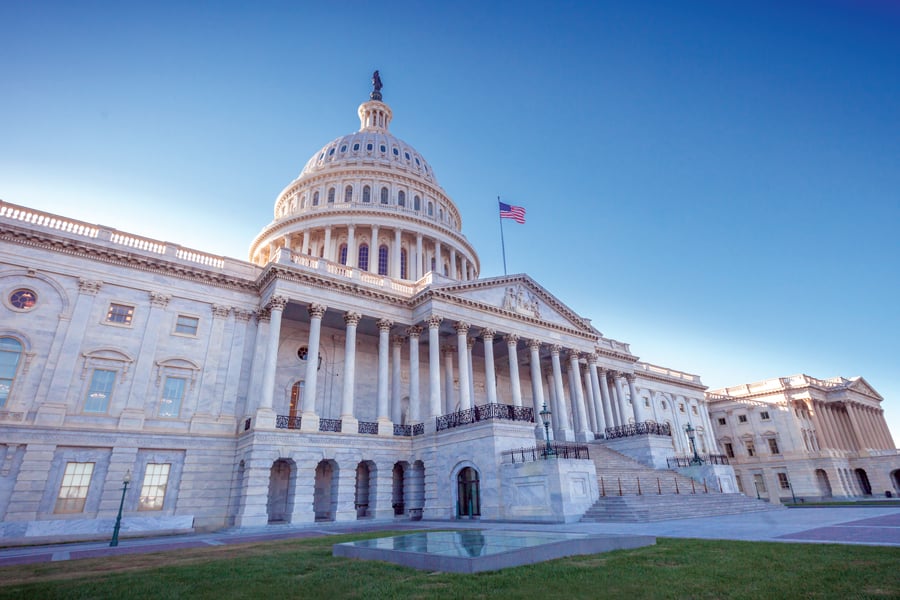
A Senate committee is expected to approve retirement savings legislation this week that will become part of the chamber’s answer to a comprehensive bill the House passed earlier this year.
On Tuesday, the Senate Health Education Labor and Pensions Committee will take up the Retirement Improvement and Savings Enhancement to Supplement Health Investments for the Nest Egg, also known as ther Rise & Shine Act.
The 79-page bill, which would amend federal retirement law to boost workers’ and retirees’ ability to accumulate assets for their post-work life, was introduced last week after the committee released a draft in late May.
The bill would expand retirement plan coverage for part-time workers, establish emergency savings accounts linked to workplace retirement plans, allow multiple-employer 403(b) plans, improve fee disclosures for 401(k) plans and increase the transparency of lump-sum buyout offers, according to a summary.
The committee collected public input on the discussion draft before introducing the formal bill.
In its comments, the Insured Retirement Institute praised the preliminary bill as a positive step in the efforts to boost retirement savings. It also suggested that lawmakers incorporate in the final version of the bill legislation that would allow annuities to serve as qualified default investment alternatives in defined-contribution plans.
During the committee’s deliberation on Tuesday, known as a mark-up, additional language may be added to the legislation. If the bill is approved, it's likely to be become part of a larger Senate bill that serves as the companion to a comprehensive retirement savings bill, known as SECURE 2.0, approved in the House earlier this year with overwhelming bipartisan support.
The Senate HELP committee will almost certainly pass the Rise & Shine Act because it's sponsored by the panel’s chairwoman, Sen. Patty Murray, D-Wash., and highest-ranking Republican, Sen. Richard Burr, R-N.C.
Congress must pass a retirement savings bill by Dec. 31, the end of the legislative session. Bills that are not approved by then die and have to be reintroduced in the next Congress, which begins in January.

Chicago-based Mesirow Fiduciary Solutions adds flexPATH's plan-level outsourced fiduciary book, boosting its retirement market reach to $164 billion.

Also, Raymond James's employee advisor channel adds breakaways from Wells Fargo and Stifel, while UBS welcomes an ex-Morgan Stanley duo in Indiana.

It promised guaranteed principal and 10% monthly returns. The SEC says it invested nothing.

Ten years after entering the fee-based annuity market, MassMutual Ascend says nearly half its lifetime sales came in the past two years alone – but barriers remain among fee-only advisors.

Amplify, WealthReach, Zeplyn and Zocks have unveiled partnerships aimed at automating portfolio management, content creation, account opening, and client communication.
Northern Trust’s Ken Lassner shows advisors how to convert volatility into after-tax portfolio gains
Dan Biagini of American Equity says the steady decline of pensions, longer lifespans and a reset in interest rates are rewriting how advisors build retirement income

