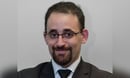
Star fund manager wasn't David Herro's first career choice. The 51-year-old Oakmark Funds portfolio manager had his sights set on becoming an economics professor, but he just couldn't shake the investing bug.
Now, more than 20 years after he began managing the Oakmark International Fund Ticker:(OAKIX), investors have a lot of reasons to be thankful that higher education didn't win out.
Since Mr. Herro began managing the fund in October 1992, it's had a total return of more than 525%. That's better than twice the return of its benchmark MSCI World ex U.S. index and the average large-cap international fund, according to Morningstar Inc.
The consistency of its performance is remarkable. Oakmark International ranks in the top fifth percentile of international funds over the 15-year, 10-year, five-year, three-year, one-year and year-to-date periods.
Given the results, some might think Mr. Herro is a skilled practitioner of the dark arts. In fact, he actually employs a relatively simple strategy when buying stocks. He sets five-year price targets for the companies he's watching. If the current price is below that, he buys. If it keeps falling, he keeps buying; doubling or sometimes even tripling down on bets.
The fund's largest holdings are those furthest away from his price targets. Of the 50 or so stocks Oakmark International typically holds, the top 10 make up about 30% of the assets. If the stock starts moving toward the target price, he'll begin to trim the position. Once the stock hits the target price, it's an automatic sell.
The strong conviction Mr. Herro has for the stocks he buys plays a big role in the fund's success, but it'd be all for nothing if the price target weren't right.
When Mr. Herro started managing the fund, that task was left to him and a single assistant. Today, as the fund's assets have grown to more than $10 billion, he's gotten some help. Robert Taylor was added as a co-portfolio manager in 2008, and the team of research analysts that works underneath the two has grown to nine.
The volatility in developed international markets over the past few years, thanks to the continuing sovereign-debt crisis, has helped make Mr. Herro's job a bit easier, even if it does lead to some short-term hiccups.
“Clients don't like volatility, but we love it,” Mr. Herro said. “It's difficult to buy stocks at a cheap price if there are no short-term fears. There's always going to be some short-term underperformance. It's the result of being a bottom fisher early. You have to do that to set up medium and long-term gains.”
Mr. Herro's strategy extends beyond just purchasing stocks. He also uses it to invest in his own fund. Whenever the fund drops, he starts buying.
“I've probably done better than the fund has,” jokes Mr. Herro, who has approximately 70% of his net worth in the mutual funds he manages, which include the $1.6 billion Oakmark International Small Cap Fund ticker:(OAKEX) and the $577 million Oakmark Global Select Fund ticker:(OAKWX).
Despite the fund's performance, it hasn't grown anywhere near the size of the other top funds in the category, such as the $99 billion
American Funds EuroPacific Growth Fund ticker:(AEPGX), the $38 billion Dodge & Cox International Fund ticker:(DODFX) and the $37 billion Harbor International Fund ticker:(HIINX).
It's a bit of a mystery, said Jeff Tjornehoj, senior research analyst at Lipper Inc.
“Seems like it's got everything going for it,” he said. “It's attracting money, just a little slower than you might think.”
Since 2009, Oakmark International has had just over $4 billion in inflows, according to Lipper. The international fund category, meanwhile, has had inflows of $117 billion.
One thing Mr. Herro does have going against him is the recent struggles of other star managers, such as Bill Gross and Bruce Berkowitz.
Both managers flickered badly in 2011, finishing near the bottom percentile of their respective fund categories, proving that even star managers with eye-popping track records aren't immune to the occasional misstep. To their credit, both have bounced back this year.
Mr. Herro knows that the odds may be against the fund in keeping up its performance, but in the end, he thinks his process will win out.
“I can't predict what we're going to do in the future," he said. "But I think we have a system that works."