
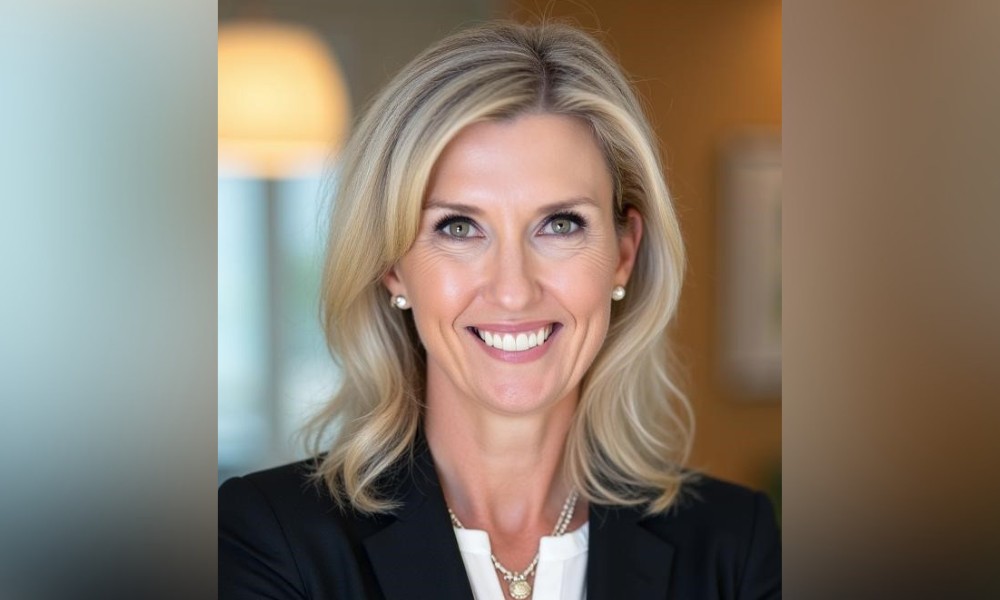
Osaic president Shannon Reid warns against giving personal bank account information to unregulated AI agents as Anthropic's Claude, OpenAI's ChatGPT, and Meta's Muse all make pushes into personal finance.
OpenAI launched Finances in ChatGPT earlier this year with the option to connect bank accounts through Plaid, saying that more than 200 million people use ChatGPT every month for financial guidance, including budgeting, questions about their investments, and financial planning. Anthropic followed with a similar Plaid integration for personal finance in November. Anthropic and OpenAI say their tools are read-only and thus can't move money in connected accounts. Meta's Muse can make credit card payments for online transactions, but asks for user approval before a purchase is made.
"It concerns me, ChatGPT, for example, obviously Meta's Muse, if you want to get too far to doing anything, it very quickly starts to ask you for credit card information and bank account information and a lot of personal PII. Private information you should not give it," Reid told InvestmentNews at Osaic's ConnectED conference in Atlanta earlier this month.
Fears over Meta's Muse sent shares of LPL Financial and Charles Schwab sliding in September. The personal finance products come as Anthropic, in particular, has targeted professional wealth management, launching Claude for Financial Advisors in partnership with Schwab and many others such as Addepar, Orion, Wealth.com and Wealthbox. Anthropic and Osaic are also expimenting with how Claude can be integrated into Osaic's workforce of over 10,000 advisors.
"ChatGPT sends me messages all the time, like you know, you can connect your bank accounts and we can help you identify where there's subscriptions you're overpaying for, which, hey, I would love to have that. There's no way I'm giving a totally unregulated AI tool that I know nothing about my bank account information," said Reid.
ChatGPT has also launched embedded Morningstar and Pitchbook apps to compete with existing AI investment research tools, while Robinhood began offering agentic trading and credit card spending in May to retail investors. New research from Bain & Company surveyed 150 CFOs and senior finance leaders at large companies across North America and Europe, finding that 77% have already encountered unexpected costs from agentic AI deployments. Schwab's CEO Rick Wurster said the firm is blocking rogue AI agents from accessing client accounts.
"AI is doing amazing, wonderful things, but we've also heard really scary things," added Reid. "So I think the need for a human in that loop becomes 100 times more important. And I think advisors will spend more time helping clients navigate AI, while giving them advice to make sure they help on the behavioral side because that's what's really important."
Reid, who said she frequently uses Copilot, Claude and ChatGPT in her personal life, said consumer AI finance tools will find an audience.
"There will be people that use it. Not everybody needs a financial advisor at every point in their life. It's when your life starts to get more complicated that you really need it, or you have an inheritance or something like that," she said.

It was part of a dispute over a client seeking access to his account.

Ethereum recovered fully - the leveraged token lost everything

Beyond business development, the strongest careers are built on relationships, trust, reputation, and purpose.

A continuity plan is one of the most important risk tools an advisor has, and the right successor is easier to find among peers

“Advisors should not sit on the sidelines,” said Advisor360’s Milind Mehere.
A continuity plan is one of the most important risk tools an advisor has, and the right successor is easier to find among peers
Advisors are broadening the conversation beyond savings to help clients prepare for the realities of longer lives

