
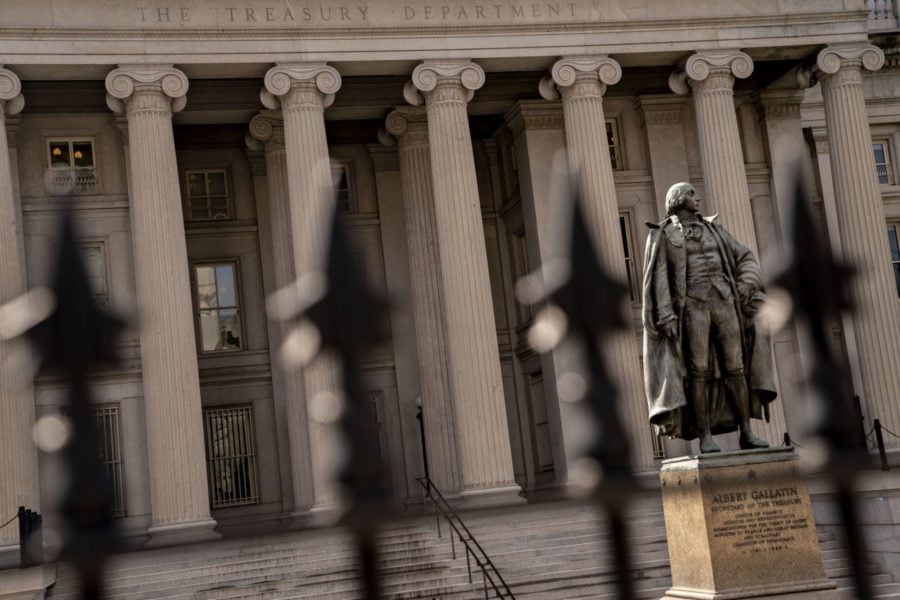
The Treasury Department proposed to temporarily guarantee money market mutual funds with taxpayer dollars as part of its coronavirus stimulus plan, according to a document obtained by Bloomberg News.
In a proposal to lawmakers sent early Wednesday, the department laid out plans to temporarily permit use of its exchange stabilization fund to guarantee money markets, according to the document.
Treasury proposed terminating the authority when President Donald Trump ends the national emergency declaration he announced Friday.
Money market mutual funds became a crucial weak spot during the finial crisis when losses from the collapse of investment bank Lehman Brothers caused the venerable Reserve Primary Fund to break the one dollar net asset value mark — known as breaking the buck — in September 2008. That contributed greatly to the sense of panic in financial markets, causing credit to seize up and the crisis to go global.
This time around, the Fed’s unleashing of massive liquidity to the money market has already helped ease the squeeze for funding that had reached levels not seen since that time. But Treasury backstopping money market mutual funds, that have trillions in assets, could be essential if conditions worsen.
That said, financial market reforms since the crisis have made money market funds much less volatile and smaller in size, possibly limiting the impact of any disruption in that sector.

Broker-dealers and RIAs can now offer clients crypto and tokenized securities through a single integrated platform.

New EBRI research shows how borrowers fall behind on retirement savings and what plan sponsors can do about it.

Nearly half of private firms forgo 401(k) plans even as new data ties them to higher stock option uptake among employees.

New research finds just 12% of wealth management firms have reached AI leader status, and it isn't spending that separates them

Affinity fraud refers to investment scams that prey upon members of identifiable groups, such as religious or ethnic communities.
Northern Trust’s Ken Lassner shows advisors how to convert volatility into after-tax portfolio gains
Dan Biagini of American Equity says the steady decline of pensions, longer lifespans and a reset in interest rates are rewriting how advisors build retirement income

