
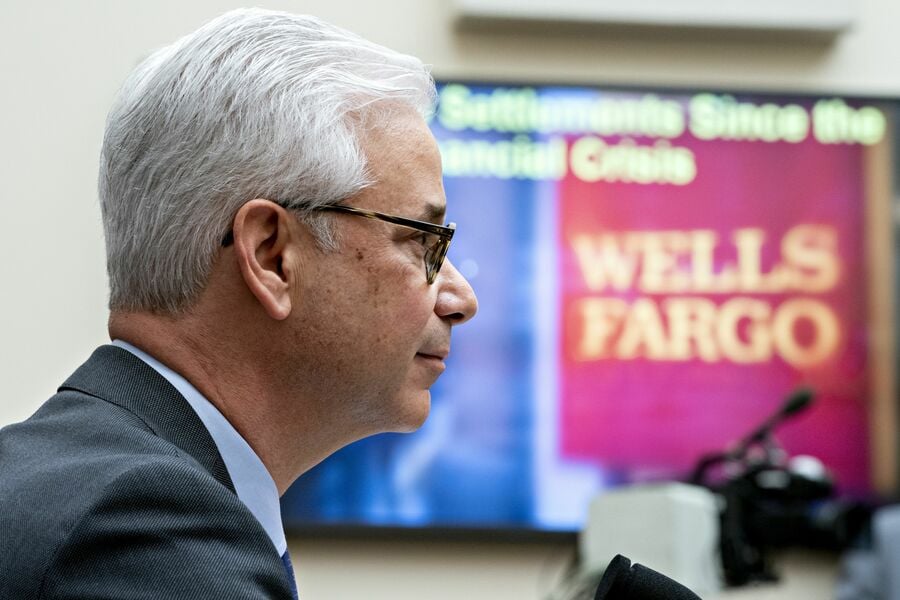
Wells Fargo & Co. remains committed to turning itself around following a series of scandals that have plagued the bank since the middle of the last decade, but it will take “several years of work” to satisfy U.S. regulators, Chief Executive Charlie Scharf said.
The San Francisco-based bank is “laser-focused on meeting our own expectations and those of our regulators,” Scharf said in prepared remarks for a hearing Wednesday before the House Committee on Financial Services. The CEO is set to testify during two days of congressional hearings alongside his counterparts from major lenders including JPMorgan Chase & Co., Bank of America Corp. and Citigroup Inc.
Wells Fargo has been dealing with a series of scandals and regulatory issues for years, and is operating under a growth cap imposed by the Federal Reserve. A year ago marked the expiration of a Consumer Financial Protection Bureau consent order issued in 2016 regarding the bank’s retail sales practices, and in December the Office of the Comptroller of the Currency terminated a 2015 consent order over add-on products Wells Fargo improperly sold to customers.
“Despite achieving these and other milestones, we know we still have much more work to do,” Scharf said. “We need to fully implement the many plans we have developed, many of which require several years of work, and also demonstrate their sustainability. We have multiple checkpoints along the way before we turn the completed work over to our regulators for their review. All of this takes time.”

Geopolitical shocks and market volatility pushed advisor deal decisions off course, denting third-quarter transaction volume by 19 percent.

Hendershott Wealth Management's Hilary Hendershott on turning a niche for women into an operating strategy, not a marketing pitch.

Iowa's Greenwood Wealth Partners exits D.M. Kelly as UBS and Ameriprise win Merrill Lynch recruits in California and Florida

Less than 1% of pool funds went to actual trading, CFTC says

Plus, SEIA builds a governed data foundation for its in-house AI and Snappy Kraken debuts a read-only marketing coworker for advisors.
As AI makes financial information more accessible than ever, Lana Hock explains why human judgment, trust, and empathy remain the qualities clients value most in a financial advisor
Northern Trust’s Ken Lassner shows advisors how to convert volatility into after-tax portfolio gains

