
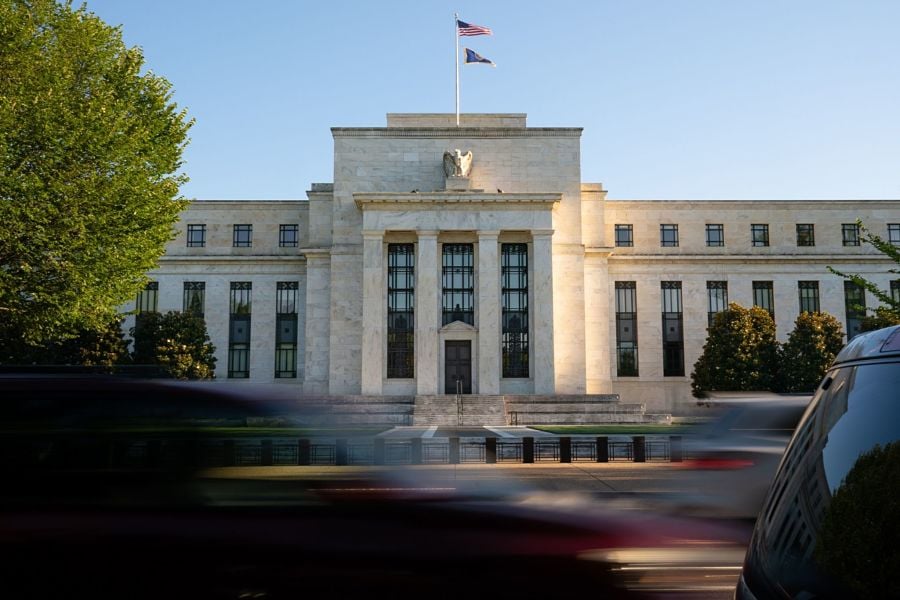
The combination of strong US growth and sticky inflation is raising the odds that the Federal Reserve hikes rather than cuts interest rates, bringing borrowing costs to as high as 6.5 percent next year, according to UBS Group strategists.
While the bank’s base case is for two rate cuts this year, UBS now sees a growing possibility that inflation fails to decline to the Fed’s target, spurring a pivot back to rate hikes and sparking a deep sell-off in bonds and stocks. Markets have already scaled back bets on policy easing as recent US data have shown surprising strength in the world’s biggest economy.
“If the expansion remains resilient and inflation gets stuck at 2.5 percent or higher, there would be real risk the FOMC resumes raising rates again by early next year, reaching 6.5 percent fed funds by mid-next year,” UBS strategists including Jonathan Pingle and Bhanu Baweja said in a note.
The call shows how major banks are coming to terms with the possibility that the most aggressive hiking cycle since the 1980s — which has boosted the Fed’s rate to 5.5 percent — might not be over just yet. UBS has already tempered an aggressive view for 275 basis points of US cuts this year, to now forecast just 50 basis points.
Its so-called “no landing scenario” of more rate hikes would prompt a sharp flattening of the US Treasury curve as benchmark yields move “meaningfully higher,” as well as a 10 percent to 15 percent slide in equities, the strategists projected.
The call followed stronger-than-expected US inflation data last week, and came ahead of US retail sales Monday that also topped estimates. That’s made for a string of hot data points, fanning concerns that inflation is becoming entrenched. Traders have drastically pared bets on Fed easing to price in 41 basis points by December, down from 150 basis points at the start of the year.
“Investors are in the early stages of worrying about an economy that may be running too hot,” the UBS strategists said. “In a high inflation scenario, we would expect both government bonds to sell off and credit spreads to widen, making for a big catch down in multiples.”
Kenneth Leech pleaded guilty in June to one obstruction charge, and could face six to 12 months in prison.

Launch of Direct AI follows a model portfolio tie-up with Envestnet as advisors juggle AI adoption and private-market due diligence.

Meanwhile, Cetera's streak of Commonwealth recruitment continues in Washington, and an LPL advisor hops over to Raymond James in Maine.

The Sussex County wealth firm, built around business-owner clients, extends the California-based aggregator's footprint in the East Coast.

The Kestra-owned RIA acquirer merges the planning firm into KDI Wealth Management, creating a majority woman-led advisor team
Knighthead Life entered the market with a competitive MYGA. A strong launch earned advisor confidence and paved the way for FIAs.
As AI makes financial information more accessible than ever, Lana Hock explains why human judgment, trust, and empathy remain the qualities clients value most in a financial advisor

