

First Republic Bank plunged in premarket trading Monday, missing out on a strong rebound by its regional bank peers, after S&P Global Inc. cut its credit rating for the second time in a week, warning that a $30 billion rescue deal had not resolved the lender’s challenges.
Shares of the struggling bank slumped as much as 37% in premarket, putting First Republic on track to extend its recent 80% rout. Meanwhile, other mid-sized U.S. lenders saw renewed interest from investors as New York Community Bancorp jumped 40% after taking over Signature Bank’s deposits and some of its loans. Western Alliance Bancorp rose 12%, while PacWest Bancorp gained 28% and the SPDR S&P Regional Banking ETF added 2.5%.
“While this is the most serious bank crisis since 2008, the selloff is overdone, in our view, creating a buying opportunity for our Smid-Cap names,” Maxim analyst Michael Diana wrote in a note. Diana cut his price target on multiple firms — including buy-rated First Republic.
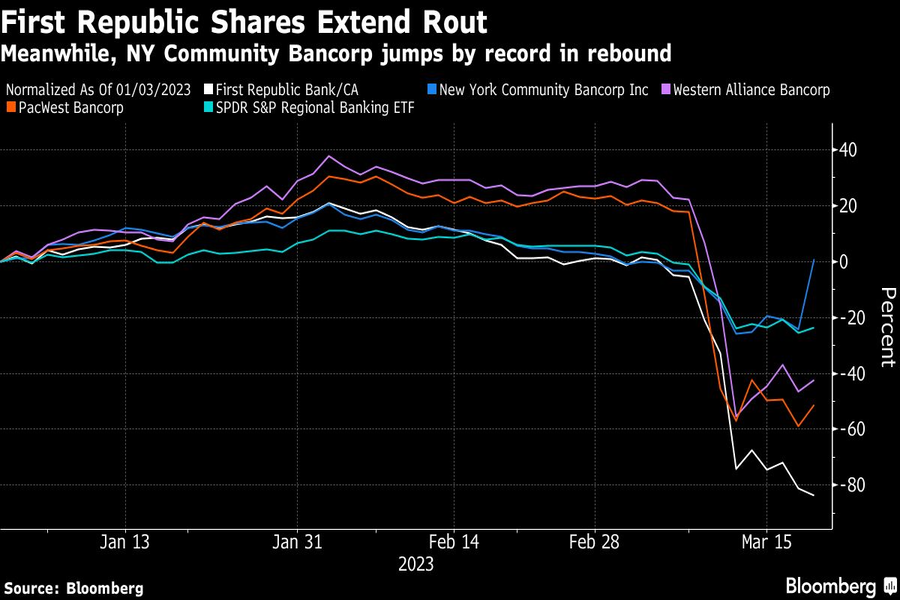
S&P lowered First Republic’s long-term issuer credit rating to B+ from BB+, having already downgraded the lender to sub-investment grade, or junk, territory last Wednesday. The ratings agency said a recent $30 billion infusion from some of Wall Street’s biggest lenders may not solve the “substantial” challenges the bank is now likely facing, even if it does ease near-term pressure on liquidity.
Investors worldwide are watching for signs of fresh troubles following the collapse of Silicon Valley Bank and the deposit aid for First Republic. The episodes have sparked worries of deposit flight from regional banks, harming liquidity and potentially sparking a credit crunch.
“We believe this is one of the best risk/reward trade-offs in this group that we have seen in our 23-year career,” said Baird analyst David George, noting the KBW Bank Index’s 15% drop last week. “The stocks are more inexpensive today than they were during the pandemic, and if you don’t buy banks here, we aren’t sure when you do.”
Wall Street’s bigger were mostly positive with Wells Fargo & Co., Goldman Sachs Group Inc., Bank of America Corp. and Citigroup Inc all climbing by 1% or more.
Shares of UBS Group AG briefly erased losses of as much as 16% in European trading following its emergency Sunday takeover of Swiss rival Credit Suisse Group AG.

The Pennsylvania-based recordkeeper is 'playing Switzerland' as data on 16 million savers will help plan advisors reach 401(k) participants at rollovers and retirement

A BCG report finds private credit and hedge funds driving CIB growth while AI reshapes bank operating economics through 2030.

Janney opens a Houston office with four advisors from Raymond James as Rockefeller deepens its Naples, Florida wealth management footprint.

Bernstein Private Wealth experts says childless adults hold significant wealth yet rarely have a plan.

Shorter waits for failed SIE and Series 7 candidates take effect Jan. 19, speeding the path to registration.
Knighthead Life entered the market with a competitive MYGA. A strong launch earned advisor confidence and paved the way for FIAs.
As AI makes financial information more accessible than ever, Lana Hock explains why human judgment, trust, and empathy remain the qualities clients value most in a financial advisor

