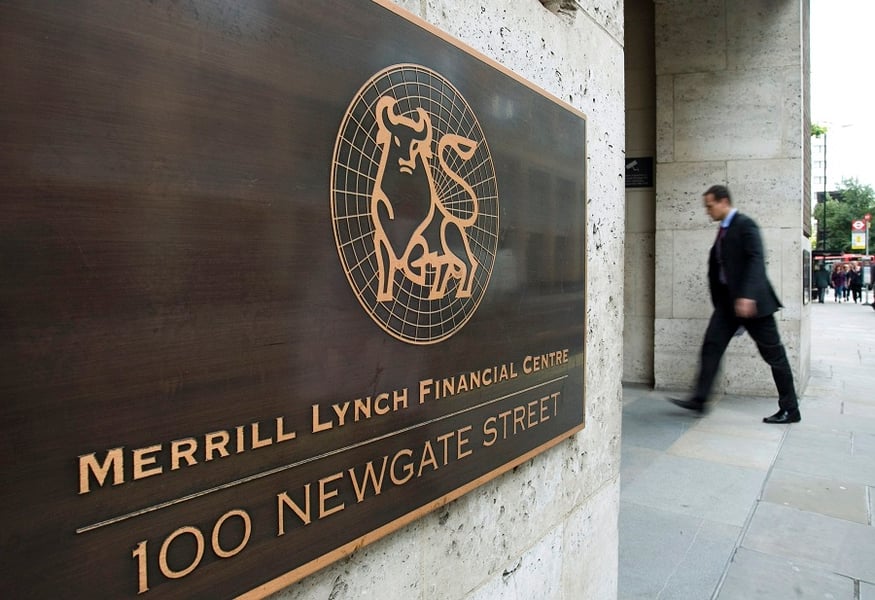
Merrill Lynch Pierce Fenner & Smith agreed Monday to pay an approximately $8.9 million settlement to the Securities and Exchange Commission for failing to disclose to investors a conflict of interest the brokerage had in offering products from the U.S. subsidiary of a foreign bank.
In December 2012, a unit of Merrill's Global Wealth & Retirement Solutions
recommended terminating from the Merrill platform certain products from the bank in which more than 1,500 Merrill retail advisory accounts had invested about $575 million.
Merrill put a hold on investments in the products while its governance committee determined whether to remove them from the platform. Staff of the bank found out about the recommendation and urged Merrill executives not to remove the products, citing other business ties between Merrill and the bank, which was not named in the SEC order.
The governance committee put new investment in the products on hold from January 2013 through December 2013, when it voted to reinstate the products on the platform. During that time, Merrill earned $4.03 million in fees from clients who were invested in the products. Merrill did not tell clients about its other business dealings with the bank.
Merrill agreed to pay disgorgement of $4.03 million, a civil penalty of $4.03 million and prejudgment interest of $806,981. The firm did not admit or deny wrongdoing.
"By failing to disclose its own business interests in deciding whether certain products should remain available to investment advisory clients, Merrill Lynch deprived its clients of unbiased financial advice," Marc P. Berger, director of the SEC's New York office,
said in a statement. "Retail clients must feel confident that their advisors are eliminating or disclosing such conflicts and fulfilling their fiduciary duties."
The SEC order said that the bank's products performed similar to or better than the replacement products recommended by the Merrill staff conducting the due diligence review.
A Merrill spokesman said that the firm had taken steps to address the problems cited in the SEC case.
"We promptly enhanced our policies and procedures to ensure the confidentiality of recommendations in the future," Merrill spokesman William Halldin said in a statement.
(More: Merrill Lynch: Compensation plan paying off in new business)