
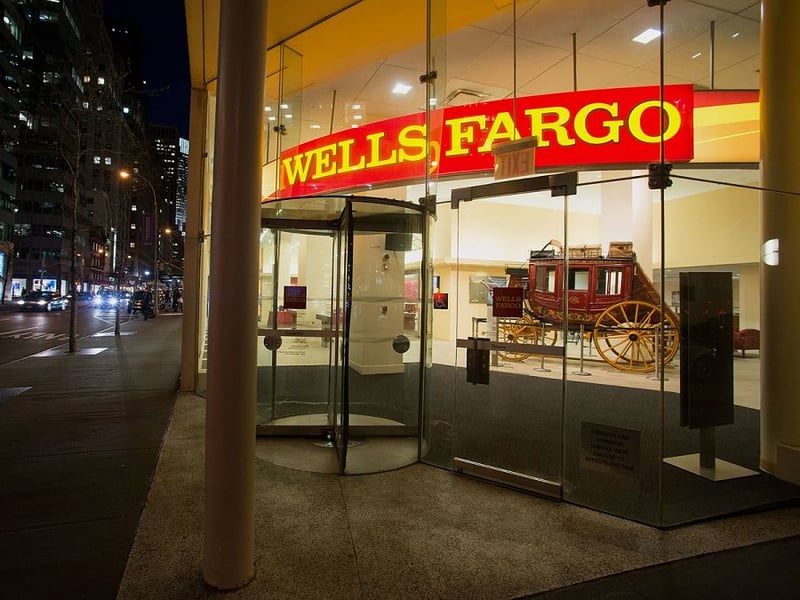
Of all the banks facing stricter oversight after the Federal Reserve’s stress tests, none is feeling the pressure more than Wells Fargo & Co.
New rules limiting dividends and stock buybacks in response to the COVID-19 pandemic leave Wells Fargo the most exposed to potential payout cuts. That’s because the restrictions base dividend calculations on recent earnings, and Wells Fargo’s slumped 89% in the first three months of the year after multiple quarters in which legal costs drove down profit.
“This only impacts WFC,” John Heagerty, an analyst at Atlantic Equities, wrote in a note, referring to the company by its stock symbol. A Wells Fargo dividend cut “would not be an unexpected development.”
The new Fed requirements follow almost four years of the bank struggling to emerge from a series of scandals, beginning with the 2016 revelation that employees opened millions of potentially fake accounts to meet sales targets. Problems multiplied across business lines, burning through the firm’s ranks and keeping the bank in Washington’s cross hairs. In 2018, the Fed limited Wells Fargo’s growth until it addressed its lapses to the regulator’s satisfaction.
A growing chorus of analysts and investors were already predicting Wells Fargo would have to reduce its payout this year. It has offered the highest dividend yield of the largest U.S. banks in the last 12 months, and paid out $2.1 billion in dividends in the first quarter even as profit tumbled to just $653 million.
Shares of Wells Fargo dropped 6.5% to $25.58 at 1:04 p.m. Friday in New York, compared with a 3.7% decline for the S&P 500 Financials Index. The shares are down 52% this year.
A company representative declined to comment on the stress tests. The Fed has asked banks not to make statements until Monday.
The central bank said Thursday that a bank’s dividend can’t exceed average quarterly earnings for the previous four quarters. Earnings power at Wells Fargo has declined with the economic meltdown. Unlike its biggest rivals, JPMorgan Chase & Co. and Bank of America Corp., Wells Fargo doesn’t have a sizable trading operation benefiting from market volatility to soften the blow of the pandemic.
Wells Fargo earmarked $4 billion -- the most in a decade -- for soured loans in the first quarter, and CFO John Shrewsberry said earlier this month that Wells Fargo will set more aside for bad loans in the second quarter than it did in the first three months of the year.
Still, there’s a chance the lender could keep paying its dividend. If second-quarter income matches the first quarter, its average for the past four quarters would be $2.2 billion, clearing it to continue paying out $2.1 billion in dividends.
Chief Executive Charlie Scharf said last month that the timing and pace of the economic recovery, as well as Wells Fargo’s ability to improve its results, will dictate the appropriate dividend level. He said that while the bank's capital base is strong, earnings were weak in the first quarter and will remain so in the second quarter.

The financial advice industry has been facing inquiries into its cash sweep programs for years now.

Investor money allegedly went to strip clubs, exotic cars, and landscaping

Procyon adds $415 million in assets under management in New Jersey while Savant picks up a $213 million Southern California planning firm

With a growing number of real estate-rich Baby Boomers aging into retirement, some advisors may be failing to consider all the options available for those clients' assets.

Cornerstone Advisors study reveals compliance bottlenecks stall campaigns weeks after customer opportunities close.
As AI makes financial information more accessible than ever, Lana Hock explains why human judgment, trust, and empathy remain the qualities clients value most in a financial advisor
Northern Trust’s Ken Lassner shows advisors how to convert volatility into after-tax portfolio gains

