

UBS Group is in talks about ending the stand-alone status of a key unit that deals with some of its richest clients because of internal wrangling about how profits are shared between the wealth management and investment banking businesses.
The Swiss wealth manager is weighing plans to replace a system that allocates varying shares of profit between the two businesses based on different products and services with a more fixed agreement that will govern transactions between them, according to people with knowledge of the matter. No decisions have been made, in part because the heads of the two businesses still aren’t in agreement on the split.
The global family office, which caters to the most complex wealth clients, is at the heart of the talks, the people said. The unit is run by Joe Stadler, who's seen as a big beneficiary of a restructuring of the private banking business more than three years ago, when he won more power and influence over billionaire clients.
Now, wealth heads Iqbal Khan and Tom Naratil are unhappy that the unit typically shares half of its profits with the investment bank, people familiar with their thinking said. UBS hasn’t yet decided whether the overarching agreement will also include the unit; but if it does, it would effectively fold the global family office into the broader business, the people added.
A spokesman for UBS declined to comment. The bank reported third-quarter earnings Tuesday.
The changes, if implemented, would mark one of the biggest changes within the bank yet under Chief Executive Ralph Hamers, who took over from Sergio Ermotti a year ago. He’s asked his staff to work in an “agile” manner and wants the bank to be better at working across divisions. But any change to the existing hodge-podge system of profit-sharing has the potential to reopen old rivalries between the investment bank and the wealth unit on how profits are allocated.
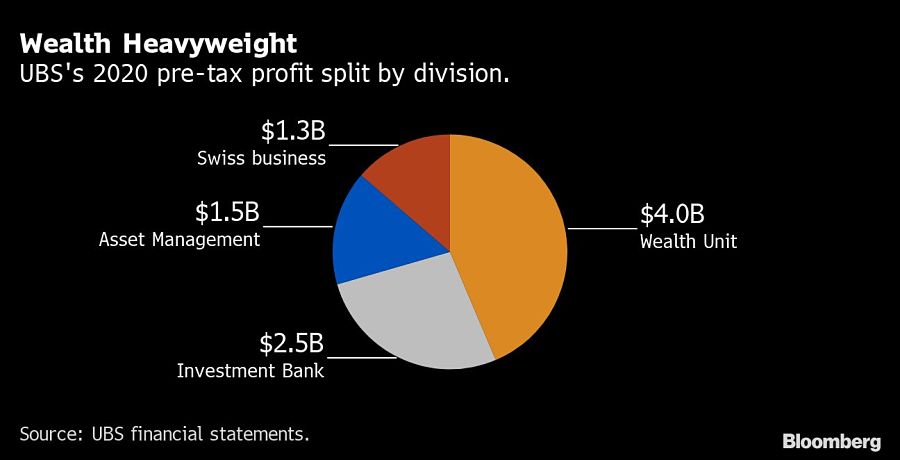
Speculation about potential changes to the global family office has grown over the last six months, after the unit’s future was a topic of debate in strategy meetings over the summer, according to the people.
The bank’s strategy has hinged in the past decade on its ability to cater to the needs of the super rich by also providing them access to sophisticated investment banking services. Driven by Hamers’s efforts to streamline operations, top executives are now discussing simpler alternatives. With a new agreement, the wealth division could recapture some of the profit that’s currently being handed to the investment bank, the people said.
The securities unit typically receives anywhere from 10% to 50% of the profit on individual transactions for wealth clients, such as loans, structured products or currencies, and typically 50% for any transactions that come from the specialized global family office, the people said.

The financial advice industry has been facing inquiries into its cash sweep programs for years now.

Investor money allegedly went to strip clubs, exotic cars, and landscaping

Procyon adds $415 million in assets under management in New Jersey while Savant picks up a $213 million Southern California planning firm

With a growing number of real estate-rich Baby Boomers aging into retirement, some advisors may be failing to consider all the options available for those clients' assets.

Cornerstone Advisors study reveals compliance bottlenecks stall campaigns weeks after customer opportunities close.
As AI makes financial information more accessible than ever, Lana Hock explains why human judgment, trust, and empathy remain the qualities clients value most in a financial advisor
Northern Trust’s Ken Lassner shows advisors how to convert volatility into after-tax portfolio gains

