
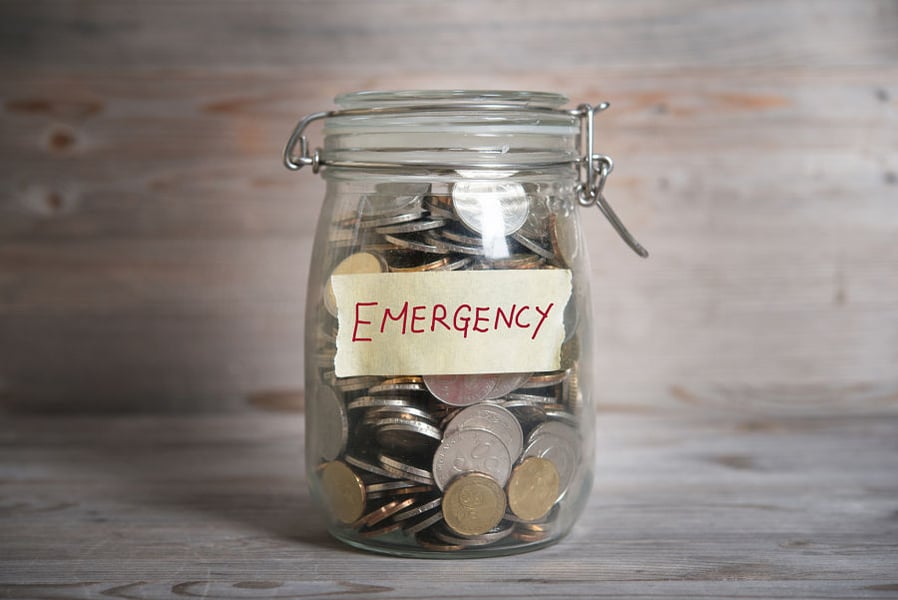
A big theme in the retirement savings world next year will be emergency savings accounts.
Starting in 2024, a provision of the Secure 2.0 Act kicks in that allows employers to add emergency accounts alongside their 401(k) plans. Those Roth-style accounts will be able to hold as much as $2,500 in employee contributions before they max out, with further contributions potentially directed into the 401(k) account.
Most retirement plan record keepers as well as other service providers are interested in the idea, and companies like Vestwell and Candidly are quickly building programs that would launch next year.
“We’ve already been engaged with one of our core partners in building this out. We’re planning to go to market in the first part of next year,” Vestwell CEO Aaron Schumm said. “We’re building it to sit alongside the 401(k), so [it is] not in the plan itself. It’s like a sidecar.”
The fintech firm plans to offer a variety of ways to structure emergency savings programs, so that employers could automatically enroll workers or leave it to them to sign up.
It’s a benefit that has gained interest not just as aspects of Secure 2.0 go into effect, but as employers have gravitated toward providing additional financial benefits for workers, such as student loan repayments, Schumm noted. Vestwell recently closed on its acquisition of student loan benefit company Gradifi Solutions, which was previously owned by Morgan Stanley.
“Most people who take a loan or a hardship [distribution] out of a 401(k) are at a financially stressed point in their life,” he said. For employers, an emergency account provides “one less thing to think about” as an alternative to offering loans in their 401(k) plans, “and for the employee, it’s better from a tax perspective.”
Vestwell is also in discussions with some state leaders about ways to add emergency savings accounts to their auto-IRAs or workplace retirement programs, he said.
Meanwhile, fintech Candidly, which has been active in working with 401(k) sponsors and record keepers on student loan-related programs, announced last week that it will bring an emergency savings program to market.
The program will lean on tactics from behavioral economics to encourage people to participate, the company said in its announcement. It will let workers “activate convenient automation features, such as setting up payroll deduction, auto-enroll and effortlessly rounding up spare change from everyday transactions to passively contribute to their emergency fund.”
Emergency savings are top of mind for workers. According to results of a survey earlier this year from Fidelity, a lack of emergency savings is a major source of stress, and it is the leading savings goal people have after saving for retirement.
There could be significant benefits to emergency savings programs, according to a paper published this week by researchers at The Brookings Institution.
“Freestanding emergency savings accounts have a major advantage: they can be made available to all employees regardless of whether their employers offer retirement plans. These programs can be structured in a wide variety of ways tailored to the specific needs of the target populations,” the authors wrote. “Such emergency funds are usually deposited in a bank or credit union, and they can be accessed immediately with a debit card.”
Along with other policy initiatives such as auto-IRAs, an enhanced Saver’s Credit and simplified account portability, emergency savings could be particularly helpful to lower- and moderate-income households, according to the paper. “Based on early data, it appears likely that having and using even modest amounts of emergency funds improves household balance sheets over time.”
A big reason why is that people are less likely to borrow from or cash out 401(k)s or other retirement plans amid financial emergencies.
Across income, age and education levels, as many as 60% of U.S. households experience a financial “shock” over a 12-month period, with a median level of $2,000 in expenses, according to data cited by the researchers. At least two-thirds of lower-income households subsequently have difficulty covering normal expenses, and it is common for people to turn to their 401(k) accounts as a cash reserve.
“For every dollar saved in a retirement account by individuals under the age of 55, approximately 30 to 40 cents are withdrawn before retirement,” the authors wrote, citing 2015 research. “Having emergency savings can reduce the need to use retirement assets.”
While emergency accounts, along with auto-IRAs and other retirement savings initiatives, could improve retirement security, they would “not solve the racial wealth gap,” as “additional reforms and wage equality will be needed for that,” the authors noted.

Wall Street banks expand wealth services as ultra-high-net-worth client demands extend further above and beyond investment management.

The acquisition of $2 billion Gilbert & Cook extends a buying spree for the ultra-high-net-worth firm that has already touched six states this year.

After years of encouraging sacrifice and delayed gratification, advisors have to do the next emotional lift: helping clients let go of a potentially harmful scarcity mindset.

A new JPMorganChase Institute report reveals how deeply stock market wealth now drives everyday American spending, especially for retirees.

A survey of 507 solo agers finds most lack confidence in their plans and that systems, not just individuals, need to change.
Northern Trust’s Ken Lassner shows advisors how to convert volatility into after-tax portfolio gains
Dan Biagini of American Equity says the steady decline of pensions, longer lifespans and a reset in interest rates are rewriting how advisors build retirement income

