
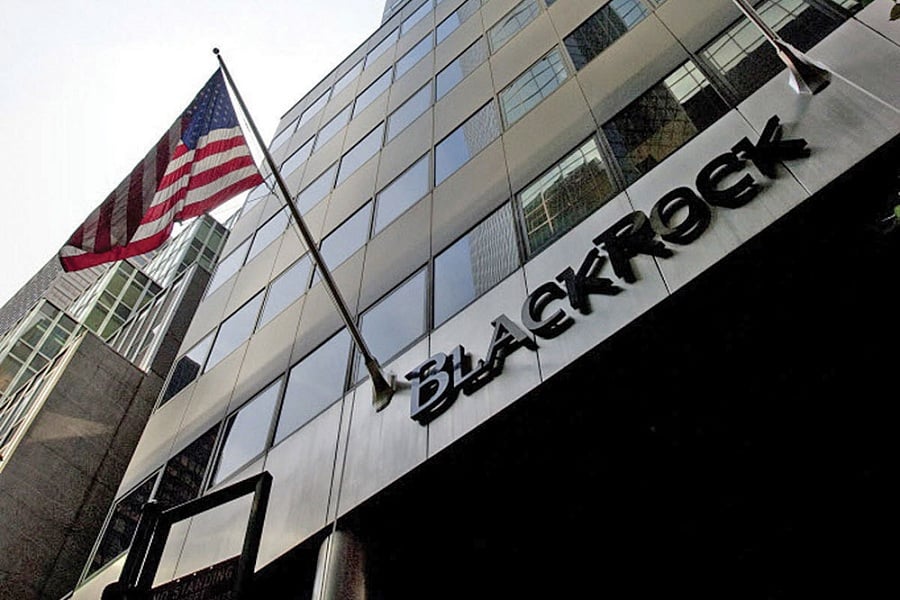
BlackRock reported record-high assets under management of $11.58 trillion for the first quarter of 2025, even as its net income slipped and broader markets faced volatility.
The New York-based asset manager’s net income for the quarter was $1.51 billion, a 4 percent decline from the same period last year, due in part to one-time costs related to key acquisitions it made last year.
Focusing on the core business, BlackRock saw a 20 percent year-over-year increase in its adjusted net income.
Earnings per share came in at $9.64, slightly below Wall Street estimates of $9.67, while adjusted earnings reached $11.30 per share, ahead of expectations. Quarterly revenue was $5.28 billion, missing consensus forecasts by a narrow margin.
Despite the earnings miss, long-term net inflows reached $83 billion in the first quarter, up from $76 billion a year earlier. Fixed income products accounted for $37.7 billion in inflows, while equity products brought in $19.3 billion. Retail flows in the US contributed $8 billion, lifting total retail assets to $1 trillion.
"Uncertainty and anxiety about the future of markets and the economy are dominating client conversations," BlackRock chairman and CEO Larry Fink said in the quarterly report.
"We’ve seen periods like this before when there were large, structural shifts in policy and markets – like the financial crisis, COVID, and surging inflation in 2022. We always stayed connected with clients, and some of BlackRock’s biggest leaps in growth followed," Fink said.
He did not explicitly flag the issue of tariffs or the unfolding game of trade policy chicken between the US and China. But BlackRock's Q1 report noted "global trade tensions [and] tariffs" among the external factors that could cause its results to materially diverge from forward-looking statements. Those factors were not mentioned in its previous quarterly reports in 2024.
The firm attributed its 6 percent organic base fee growth – its strongest first quarter performance since 2021 – to broad-based momentum across ETFs, private markets, and systematic active strategies. Total revenue rose 12 percent year over year, helped by market appreciation, growth in base fees, and higher contributions from the firm's technology services segment.
BlackRock's technology services and subscription revenue increased 16 percent from a year earlier, supported in part by its 2024 acquisition of alternatives data firm Preqin, which closed in early March. Aladdin, the firm’s end-to-end investment management platform, continued to be a key driver of that segment’s growth.
The S&P 500 declined 4.6 percent during the quarter, marking its worst opening three-month performance since 2022. BlackRock’s stock has declined more than 15 percent year to date, though it's up roughly 10 percent over the past year.
"BlackRock’s positioning and connectivity with clients are stronger than ever, and it’s clear in our results," Fink said. "We delivered 6 percent organic base fee growth in the first quarter, representing our best start to a year since 2021 and secular strength against a complex market backdrop."
Private markets continued to attract investor interest, with $7 billion in net inflows bringing total assets in that segment to $212 billion. Apart from Preqin, BlackRock has made a series of strategic acquisitions in the areas of private credit and private infrastructure over the past year. More recently in March, it bolstered its model portfolio offerings with the launch of customizable portfolios that feature exposure to private credit, with other asset classes to be added in the near term.
ETFs also had a record-breaking quarter, contributing to the firm’s $84 billion in total net inflows.
Total expenses rose to $3.58 billion from $3.04 billion a year earlier, reflecting higher operational costs and integration expenses related to recent acquisitions.

LPL Financial and Raymond James also add independent advisors from Osaic and Edward Jones in Michigan and Arizona.

The SEC-registered RIA advises on more than $1 billion in client assets, with no advisory fee through 2027 and no human financial advisors.

The four wirehouse firms lost 1,449 experienced advisors and recruited 932 in the first six months of the year, according to Diamond Consultants.

Merit's 10th Commonwealth addition deepens its Western New York reach, while another Hightower partner joins its Signature Wealth platform in Michigan.

Report on Climate Action 100+ signals risk for passive managers' 13G status heading into the 2027 proxy season.
Knighthead Life entered the market with a competitive MYGA. A strong launch earned advisor confidence and paved the way for FIAs.
As AI makes financial information more accessible than ever, Lana Hock explains why human judgment, trust, and empathy remain the qualities clients value most in a financial advisor

