
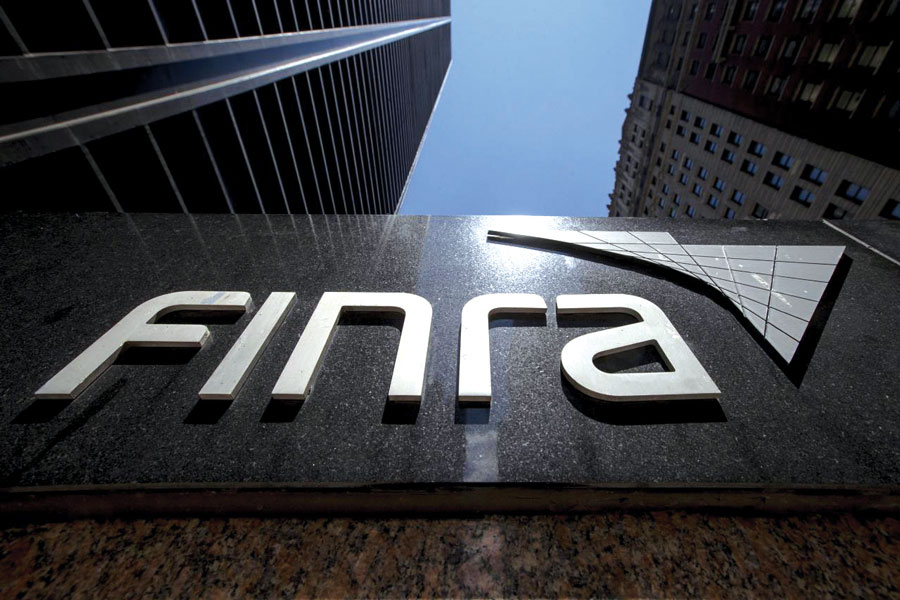
Martin Walcoe, the CEO and president of David Lerner Associates Inc., is the latest senior executive at the firm to face an investigation by the Financial Industry Regulatory Authority Inc. over the appropriate or suitable sale of proprietary energy funds to clients.
Walcoe's investigation is called a "Wells Notice" by Finra, which is essentially a letter informing the investment professional of the substance of allegations and charges the regulator intends to bring.
Two years ago, Finra said it was investigating Daniel T. Lerner, executive vice president, investor services and son of the firm's founder David Lerner, for similar reasons.
Finra's investigation of Walcoe was filed in March, according to his BrokerCheck profile. "I strongly disagree with the Finra enforcement staff's proposed allegations," he responded on BrokerCheck.
"This is definitely significant that this is a Wells Notice," said Lawrence L. Klayman, a plaintiff's attorney. "That suggests the firm violated Finra rules in relation to these energy funds."
"For a CEO to be investigated by Finra is a pretty serious red flag, traditionally," said Andrew Stoltmann, a plaintiff's attorney who has sued David Lerner Associates in the past. "Finra typically examines CEOs when something potentially troubling from a regulatory perspective pops up on the radar."
"Keeping that in mind, sometimes these investigations don't lead to anything," he added.
The regulator has made a preliminary determination to bring a disciplinary action against Walcoe for allegedly failing to supervise in a reasonable manner sales of in-house, proprietary energy funds, according to Finra, and recommending sales of those funds to clients without a reasonable basis of believing there were suitable, the industry standard for a broker to sell a client an investment product.
Finra's allegations against Walcoe are similar to those against Daniel Lerner. The funds in question are Energy 11 L.P. and Energy 12 L.P., high-risk private placements sold exclusively by David Lerner Associates financial advisors.
"The investments were suitable for the customers who purchased them, some going back as far as 2015, and those customers who hold these investments currently have net, unrealized profits and are currently receiving approximately 7% in annual distributions," a company spokesperson said in an email. "We are optimistic about the future of these investments."
Based in Syosset, Long Island, near the north shore, David Lerner Associates opened in 1976, is privately held, and controls more than $4 billion in client assets, according to the company's website.
The firm is a longtime purveyor of municipal bonds and REITs and has had problems with Finra in the past.
In 2013, Finra hit David Lerner Associates with millions in penalties for alleged unfair sales practices and excessive markups, ordered the firm to pay $12 million in restitution to clients who bought shares of a nontraded real estate investment trust known as Apple REIT 10.
Finra at the time also fined David Lerner Associates more than $2.3 million for charging unfair prices on municipal bonds and collateralized mortgage obligations. The firm's founder and owner, David Lerner, was also suspended from the securities industry at the time.
Energy 11 L.P. was formed in 2013 by Glade Knight and David McKenney of the Apple REIT companies, along with Anthony Keating and Michael Mallick, according to the company. It raised $374 million from investors over two years starting in 2015. The firm charged a 6% sales commission to clients, according to filings with the SEC.
Financial advisors right now typically charge an annual fee to clients of less than 1%, or about 80 basis points, to manage customers' funds.

$1.7M invested from an inheritance. Then the phone went dead.

The pre-IPO platform sold $430M in units while allegedly rigging prices behind the scenes.

A Nationwide survey finds 47% of GLP-1 users have never discussed the drugs’ financial impact with an advisor, even as many dip into savings.

The hundreds of millions of dollars from a sale of Inspired Healthcare properties does not mean an immediate windfall for investors.

Its SEC filings said one thing - a congressional probe said another.
Knighthead Life entered the market with a competitive MYGA. A strong launch earned advisor confidence and paved the way for FIAs.
As AI makes financial information more accessible than ever, Lana Hock explains why human judgment, trust, and empathy remain the qualities clients value most in a financial advisor

